Blog Post: Meta’s Prometheus & the 6.6 GW Nuclear Gamble: How Big Tech is Reclaiming Energy Sovereignty
Category: AI News & Trends Tags: Meta Prometheus, nuclear energy, SMR technology, data center energy, AI infrastructure 2026, energy sovereignty, Vistra Corp, TerraPower, Oklo Inc. Meta Title: Meta’s 6.6 GW Nuclear Deal: Powering the AI Sovereignty Era in 2026 Meta Tags: Meta nuclear deal, Project Prometheus, TerraPower, Oklo, Vistra energy, AI energy consumption, SMR technology 2026, energy independence, Big Tech nuclear Meta Description: Meta secures a massive 6.6 GW nuclear portfolio to fuel its Prometheus supercluster. Explore how Big Tech is bypassing the grid to achieve AI energy sovereignty in 2026 and the geopolitical stakes involved. Excerpt: In a historic pivot, Meta has announced a 6.6 GW nuclear energy agreement to power its next-generation AI clusters. From SMRs to legacy uprates, learn how Mark Zuckerberg is reclaiming energy sovereignty to fuel the race toward AGI.
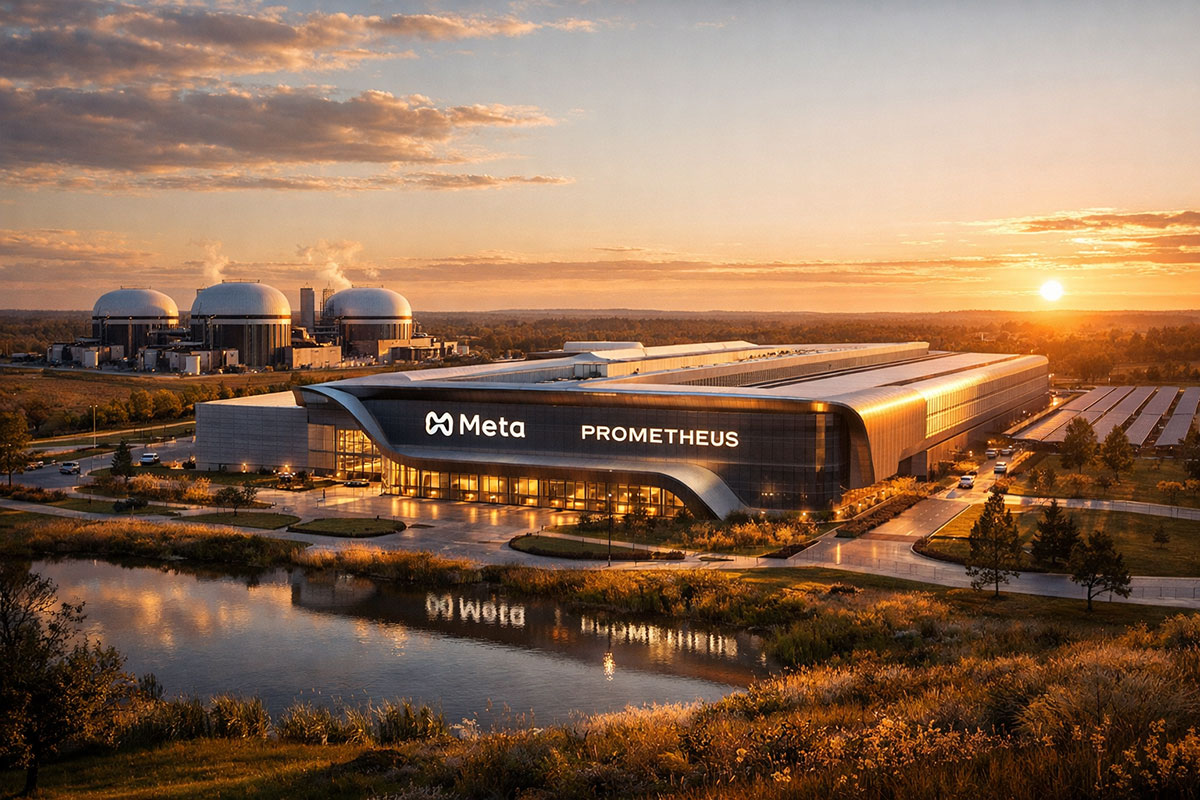
Image Prompt: A cinematic wide shot of a futuristic data center campus in Ohio, with two sleek, compact Small Modular Reactors (SMRs) glowing with a soft blue light in the foreground. In the background, massive cooling towers stand against a sunset, and a digital overlay shows the "Prometheus" logo pulsing with energy.
Content:
The Atomic Dawn of Artificial Intelligence: Why 2026 is the Year of Energy Sovereignty
In early 2026, the global technology landscape reached a definitive consensus: the bottleneck for Artificial General Intelligence (AGI) is no longer just the availability of high-end silicon or the quality of training data—it is the raw, unyielding physics of the power grid. As the MIT report on AI shifts correctly predicted, we have hit the "Compute-Energy Wall." To scale the next generation of models, the world’s hyperscalers can no longer rely on a crumbling, 20th-century electrical infrastructure. On January 9, 2026, Meta Platforms made a move that fundamentally redefined the relationship between Big Tech and the utility sector: a staggering 6.6-gigawatt (GW) nuclear energy portfolio.
This is not merely a "green energy" PR stunt designed to bolster ESG scores. It is a strategic reclamation of Energy Sovereignty. By partnering with Vistra Corp, TerraPower, and Oklo, Meta is effectively building its own private power network. This 6.6 GW capacity—equivalent to powering a city of 5 million homes—is dedicated to one singular goal: fueling the "Prometheus" and "Hyperion" superclusters. As Microsoft and Google scramble to secure their own reactors, Meta has taken a decisive lead in the "Atomic AI" race, signaling that the future of intelligence will be built on the foundation of the atom.
"The era of being a customer of the grid is over. To lead in AI, you must be the master of your own energy destiny. Secure the power, and you secure the future of intelligence." — Industry Insight, January 2026.
The Compute-Energy Wall: Why the Grid is Breaking
To understand the magnitude of Meta's 6.6 GW gamble, one must understand the crisis facing the U.S. power grid. Most of the national grid was built between the 1950s and 1970s, and as of 2026, approximately 70% of the infrastructure is approaching the end of its life cycle. Simultaneously, AI training requirements are growing at a 14% CAGR, with the agentic AI market demanding 24/7 uptime for real-time autonomous systems.
Traditional data centers are essentially massive heaters that happen to process data. However, the new "Prometheus" class of facilities requires a "flat" load—a constant, uninterruptible stream of power that solar and wind simply cannot provide without massive, cost-prohibitive battery storage. Nuclear energy is the only carbon-free source capable of providing the 99.999% uptime required for training the "World Models" that will drive humanoid robotic systems across the globe. By bypassing the traditional utility queue, Meta is effectively insulating its R&D from the skyrocketing residential utility bills and grid congestion that have plagued the Midwest throughout late 2025.
Breaking Down the 6.6 GW Deal: A Three-Pronged Strategy
Meta’s approach is sophisticated and diversified, blending the reliability of existing "legacy" nuclear power with the high-potential innovation of Small Modular Reactors (SMRs). This ensures they have power today for training Llama 4 and Llama 5, and sustainable power tomorrow for the autonomous world of AI agents.
| Partner | Technology Type | Capacity Contribution | Timeline / Strategic Goal |
|---|---|---|---|
| Vistra Corp | Traditional PWR (Existing) | 2.1 GW + 433 MW Uprates | Immediate access; extending life of Ohio/PA plants. |
| TerraPower | Natrium (Molten Salt Storage) | Up to 2.8 GW (8 Units) | Flexible output to match peak AI training cycles (2032). |
| Oklo Inc. | Aurora Powerhouse (SMR) | 1.2 GW Campus | Decentralized, modular power for the Ohio supercluster (2030). |
Project Prometheus: The Heart of the Beast
The primary beneficiary of this massive energy infusion is Project Prometheus, Meta's flagship AI data center in New Albany, Ohio. Prometheus is designed to be the world's most dense AI cluster, specifically optimized for training massive models that rival the unprecedented efficiency of DeepSeek-R1.
Prometheus is not a standard data center; it is a "liquid-to-core" cooled architecture. This means the energy is pumped directly into the silicon at densities never before seen in commercial computing. To sustain this, Meta requires a direct-line connection to Vistra's Perry and Davis-Besse plants. By funding "uprates"—technological upgrades that increase the power output of existing reactors—Meta is adding 433 MW of "new" energy to the grid without the 15-year wait time of a new large-scale build. This "Speed to Power" is the ultimate competitive advantage in 2026.
The Small Modular Reactor (SMR) Revolution
While legacy plants provide the immediate baseline, the deal with Oklo and TerraPower represents the long-term vision of Big Tech as a private utility sector. Traditional nuclear reactors are gargantuan projects that often fall victim to regulatory bottlenecks. SMRs, however, are factory-built and can be deployed directly adjacent to data center campuses.
- Natrium Technology (TerraPower): Founded by Bill Gates, TerraPower’s Natrium reactors use liquid sodium as a coolant and include a molten salt energy storage system. This allows the plant to "boost" its output from 345 MW to 500 MW during peak training loads, acting as a giant thermal battery for the AI cluster.
- The Aurora Advantage (Oklo): Backed by Sam Altman, Oklo’s Aurora Powerhouses are liquid-metal-cooled fast reactors that can run on recycled nuclear fuel. This circular economy model appeals to the sustainability mandates of the 2026 corporate landscape, while the 1.2 GW "Power Campus" in Pike County, Ohio, provides a scalable blueprint for future global deployments.
Geopolitics and the Trump Energy Policy Shift
The timing of the Meta announcement is no coincidence. In mid-January 2026, President Trump forcefully intervened in the tech-energy debate, stating that Big Tech companies must become "Energy Self-Sufficient" to prevent residential price hikes. This policy shift has pushed hyperscalers to internalize their infrastructure costs. Meta's deal reinforces America's nuclear supply chain and secures U.S. leadership in the AI race against Chinese open-source models, which are currently being fueled by a massive state-led nuclear expansion in the East.
By securing 6.6 GW of domestic carbon-free power, Meta is not just protecting its margins—it is participating in a national security imperative. The ability to train at scale without being throttled by local grid constraints or geopolitical energy shocks is what will separate the winners from the losers in the brain-inspired AI era.
Economic Impact: Rebirthing the Rust Belt
Beyond the tech specs, the Meta-nuclear alliance is an economic engine for the American Midwest. The projects in Ohio and Pennsylvania are expected to create:
- Thousands of high-skilled construction jobs through 2035.
- Hundreds of long-term operational roles at the SMR campuses.
- A localized "AI-Nuclear Hub" in New Albany, attracting secondary industries from liquid cooling manufacturers to specialized AI hardware startups.
Conclusion: The Fusion of Silicon and Atom
As we navigate the next frontier of AI, the physical reality of the technology becomes impossible to ignore. AI is no longer "in the cloud"—it is in the ground, in the reactors, and in the high-voltage lines of the PJM grid. Meta’s Prometheus project and its 6.6 GW nuclear gamble mark the moment Big Tech became an Energy Titan. In the 2026 economy, the company with the most powerful model will be the company with the most reliable reactor.
Stay Ahead with Trendflash:
- AI Global Governance Challenges in 2025/2026
- Nvidia's AI Budget Report: Where the Money is Flowing
- CMG’s 10 AI Trends: Why Brain-Inspired AI is Next
- DeepSeek-R1: The Efficiency Revolution
About the Author
Girish Soni is the founder of TrendFlash and an independent AI strategist covering artificial intelligence policy, industry shifts, and real-world adoption trends. He writes in-depth analysis on how AI is transforming work, education, and digital society. His focus is on helping readers move beyond hype and understand the practical, long-term implications of AI technologies.