Introduction: The Search Revolution Has Landed in India
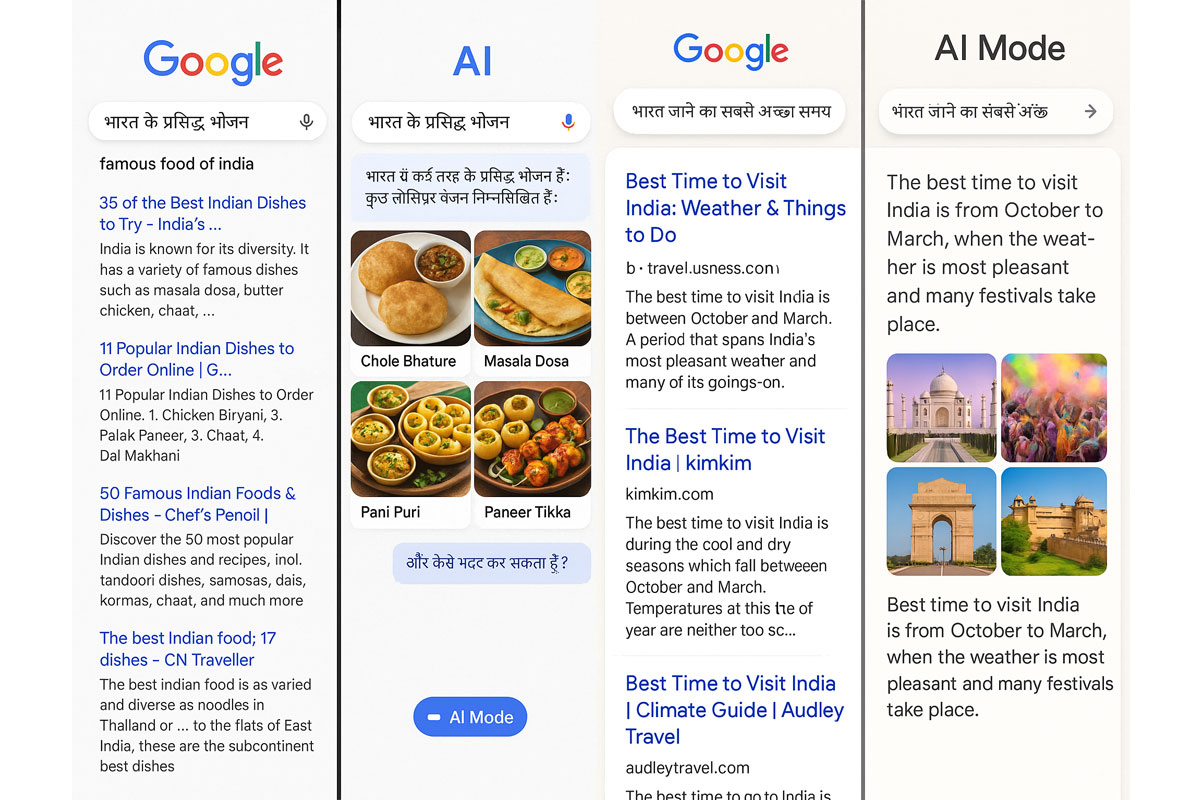
If you've used Google search in India recently, you've likely noticed something different. The familiar "10 blue links" are being replaced by rich, conversational answers that combine text, images, and interactive elements. This is Google's AI Mode—a fundamental shift from traditional search to generative, visual search experiences that rolled out across India in early 2025. For Indian publishers, bloggers, and businesses, this represents both an existential threat and the biggest traffic opportunity since mobile search.
Traditional SEO tactics are becoming obsolete overnight. Websites that ranked for years are seeing their traffic evaporate as Google's AI Overviews provide direct answers, while publishers who understand the new rules are capturing unprecedented visibility. In this comprehensive guide, we'll decode exactly what AI Mode means for Indian search behavior and provide you with a concrete, actionable playbook to not just survive but dominate in this new era.
What Exactly is Google's AI Mode?
Google AI Mode represents the most significant evolution in search since the introduction of featured snippets. Unlike the traditional search experience where users click through multiple results, AI Mode uses generative AI to synthesize information from across the web and present comprehensive answers directly on the search results page.
The Core Components of AI Mode in India:
- AI Overviews: Detailed, conversational answers that combine information from multiple sources with direct citations
- Visual Search Integration: Rich image carousels, diagrams, and visual explanations woven into search responses
- Multi-step Conversational Flows: The ability to ask follow-up questions without repeating context
- Action-oriented Results: Direct calls-to-action like "Book now" or "Compare prices" within search results
What makes the India rollout particularly significant is how it's optimized for local search behaviors. Google's research shows Indian users are 47% more likely to use visual search queries and 32% more likely to engage with conversational follow-ups compared to global averages.
How AI Mode is Changing Search Behavior in India
The introduction of AI Mode has fundamentally altered how Indian users interact with search results. Understanding these behavioral shifts is crucial for adapting your SEO strategy.
Before AI Mode vs. After AI Mode: User Behavior Comparison
| Search Aspect | Traditional Search (Pre-2025) | AI Mode Search (2025+) |
|---|---|---|
| Query Length | 2-3 word phrases ("best laptop") | Full questions ("What is the best laptop for college students under 50,000 rupees?") |
| Result Interaction | Clicking 3-5 results to compare | Reading AI Overview, then clicking 1-2 sources for depth |
| Session Length | Multiple searches across session | Single search with follow-up questions |
| Content Preference | Comprehensive long-form articles | Structured, scannable content with clear sections |
| Mobile Behavior | Scrolling and tapping | Voice queries, visual searches, quick actions |
This behavioral shift has dramatic implications for click-through rates and traffic patterns. Early data from Indian publishers shows:
- Websites featured in AI Overviews see 23-45% increase in referral traffic
- Traditional position 1-3 organic results have seen CTR declines of 18-32%
- Queries with AI Overviews show 67% higher engagement with visual elements
- Follow-up question usage has increased by 140% since AI Mode rollout
Before and After: SERP Examples from Indian Queries
Let's examine concrete examples of how SERPs have transformed for common Indian search queries.
Example 1: "best mutual funds for retirement planning"
Before AI Mode: List of 10 organic results with 1-2 featured snippets. Users would typically click 3-4 finance websites to compare recommendations.
After AI Mode: A comprehensive AI Overview comparing equity, debt, and hybrid funds with specific fund names, historical returns visualized in a chart, and risk factors. The overview cites 4-6 sources with direct links to specific sections of those pages.
Example 2: "how to apply for Germany student visa from India"
Before AI Mode: Government websites and blog posts ranking based on domain authority and traditional SEO factors.
After AI Mode: Step-by-step visual guide with document checklist, fee structure table, processing timeline visualization, and embassy location finder. The AI synthesizes information from official sources, verified agents, and recent applicant experiences.
The Complete AI Mode SEO Playbook for Indian Publishers
Adapting to AI Mode requires a fundamental rethink of content creation, technical SEO, and user experience. Here's your actionable playbook.
On-Page Optimization for AI Overviews
Traditional keyword stuffing is dead. AI Mode rewards comprehensive, well-structured content that directly answers user questions.
- Create "Complete Answer" Content: Instead of targeting single keywords, build content around question clusters. For "home loan interest rates," cover current rates, comparison methodology, application process, eligibility criteria, and calculator tools.
- Implement Hierarchical Headings: Use clear H1, H2, H3 structure that mirrors how people ask questions. AI models parse heading structures to understand content organization.
- Optimize for "People Also Ask" Expansion: Include natural follow-up questions throughout your content. These often become the basis for AI Mode's conversational flows.
- Localize for Indian Context: Include India-specific examples, pricing in rupees, local regulations, and cultural considerations. AI Mode prioritizes locally relevant content.
Technical SEO for AI Mode
Technical foundation matters more than ever because AI models need to easily understand and extract information from your pages.
- Schema Markup Implementation: Go beyond basic schema. Implement HowTo, FAQPage, Course, Product, and Article schema with detailed, accurate information.
- Page Load Speed Optimization: AI Mode crawlers have stricter performance requirements. Aim for Core Web Vitals scores above 90, especially on mobile.
- Image Optimization with Context: Use descriptive filenames, alt text, and surrounding text that explains the image's relevance. AI Mode heavily utilizes visual elements.
- Content Freshness Signals: Regularly update timestamp, add "last updated" markers, and refresh statistics. AI Mode prefers current information, especially for time-sensitive topics.
FAQ Schema Implementation Guide
FAQ schema has become the single most important technical element for appearing in AI Overviews. Here's how to implement it effectively:
- Identify Natural Questions: Use tools like AnswerThePublic, AlsoAsked.com, and Google's "People Also Ask" to find real questions users ask about your topic.
- Create Comprehensive Q&A: Write clear questions and detailed answers that stand alone while fitting into your broader content.
- Implement JSON-LD Schema: Use the official FAQPage schema markup with question and answer pairs that exactly match your visible content.
- Maintain Accuracy: Regularly review and update FAQ content. Outdated information in schema can hurt your credibility with AI systems.
- Localize for India: Include India-specific questions about pricing, availability, regulations, and local considerations.
Content Quality Signals for AI Mode
Google's AI systems are trained to recognize quality through specific signals:
- Expertise and Authority: Include author credentials, cite reputable sources, and demonstrate deep topic knowledge
- Comprehensiveness: Cover topics from multiple angles rather than focusing on narrow keywords
- User Experience Quality: Clean design, easy navigation, and minimal intrusive ads
- Engagement Metrics: Low bounce rates, high time on page, and social shares signal content quality to AI systems
Internal Linking Checklist for AI Mode Optimization
Strategic internal linking helps AI crawlers understand your content structure and topic authority.
- □ Link from high-authority pages to new content within 24 hours of publication
- □ Use descriptive anchor text that clearly indicates the linked page's content
- □ Create topic clusters with pillar pages and supporting content interlinked
- □ Implement "related content" sections that dynamically update based on semantic relevance
- □ Use breadcrumb navigation consistently across all pages
- □ Link to supporting resources like calculators, tools, and downloadable assets
- □ Ensure mobile and desktop internal linking structures are identical
- □ Regularly audit and fix broken internal links that confuse AI crawlers
Measuring Success in the AI Mode Era
Traditional SEO metrics need adjustment for the AI Mode landscape. Key performance indicators now include:
- AI Overview Appearance Rate: Percentage of target keywords where your content appears in AI Overviews
- Citation Quality: How often you're cited as a source versus just being included in the overview
- Follow-up Question Engagement: Traffic from subsequent questions in conversational search flows
- Visual Element Inclusion: How often your images, charts, or diagrams appear in AI Overviews
Future-Proofing Your SEO Strategy
AI Mode will continue evolving throughout 2025 and beyond. Stay ahead with these forward-looking strategies:
- Voice Search Optimization: With AI Mode's conversational interface, optimize for natural language queries common in voice search
- Multimodal Content Creation: Combine text, images, video, and interactive elements that work together to answer user questions
- Personalization Readiness: AI Mode will increasingly personalize results based on user context and history
- Real-time Information Strategy: Develop processes for quickly updating content when information changes
Related Reading
- The Future of Search: How Generative AI is Redefining SEO
- Voice Search Optimization 2025: The Complete Guide for Indian Markets
- Technical SEO Audit 2025: Checklist for AI-First Search
The transition to AI Mode represents the most significant shift in search since Google's inception. Indian publishers who adapt quickly to this new reality—focusing on comprehensive, well-structured content with robust technical foundations—will not just survive but thrive in the generative search era. The time to implement this playbook is now, before your competitors do.
About the Author
Girish Soni is the founder of TrendFlash and an independent AI strategist covering artificial intelligence policy, industry shifts, and real-world adoption trends. He writes in-depth analysis on how AI is transforming work, education, and digital society. His focus is on helping readers move beyond hype and understand the practical, long-term implications of AI technologies.