Introduction: The National Push for AI-Ready Students
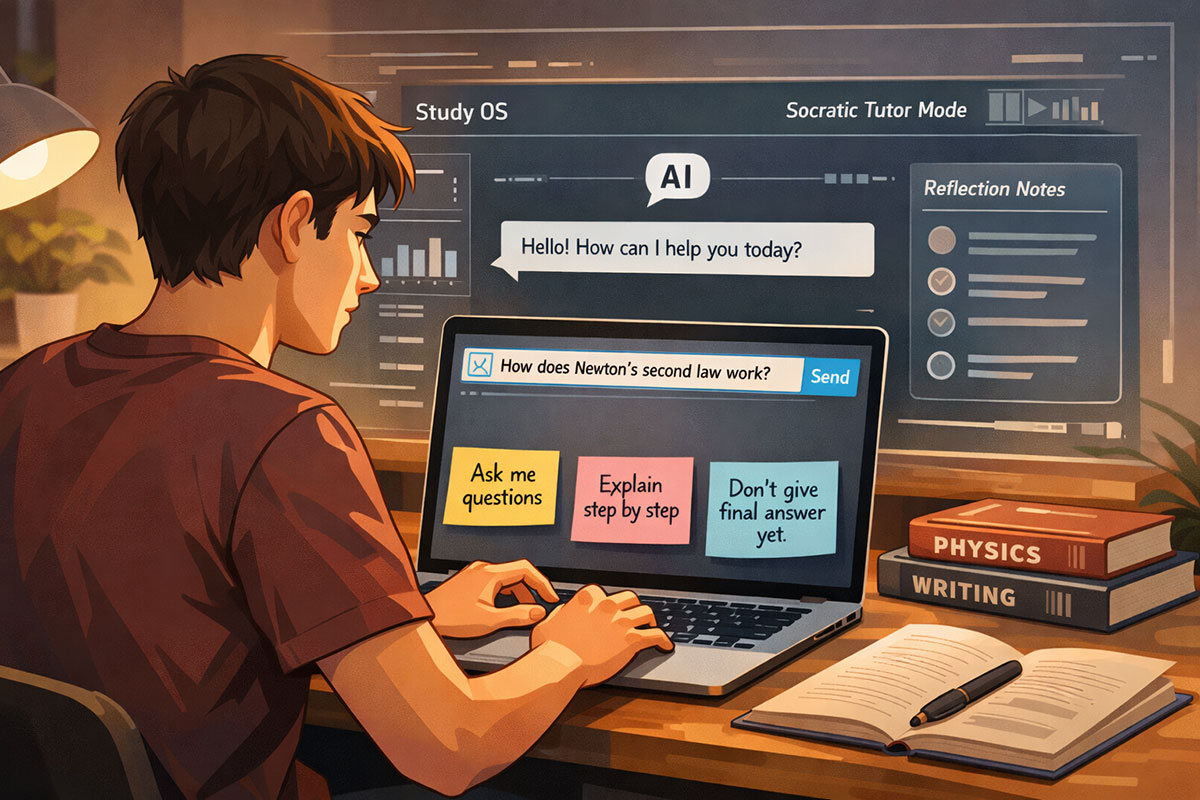
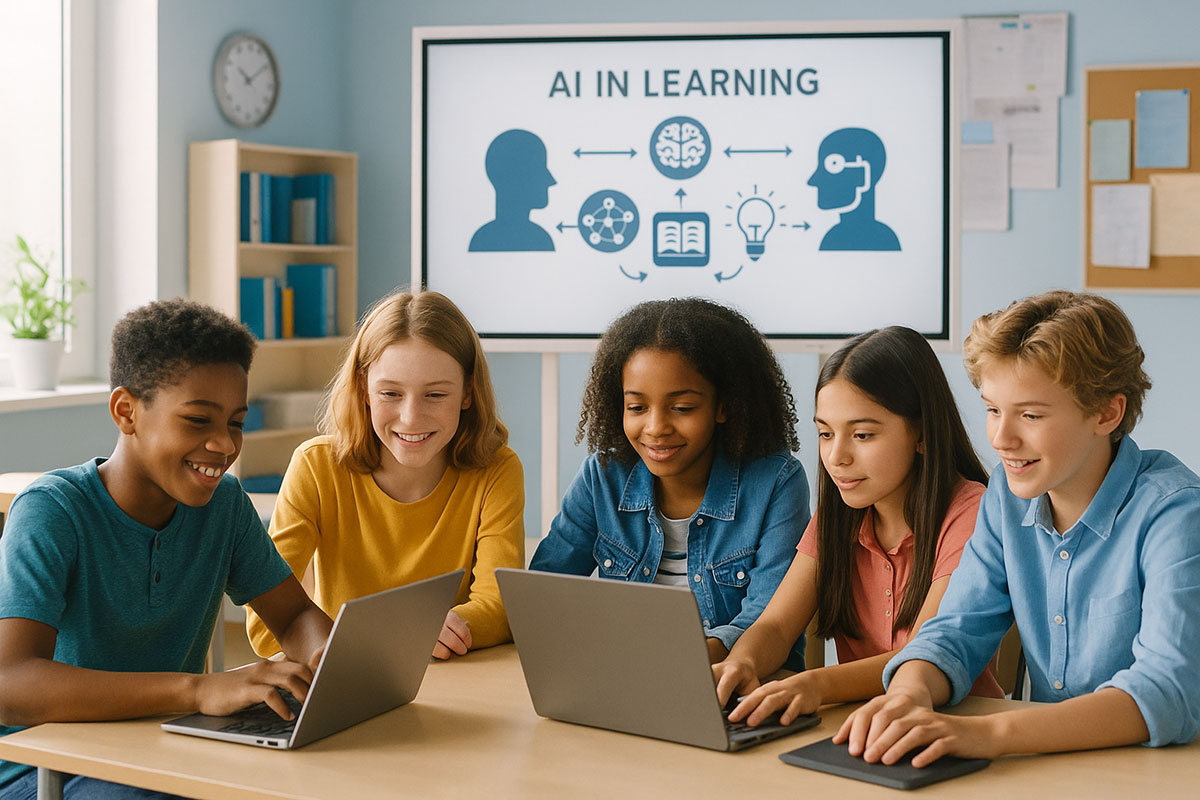
In classrooms across America, a quiet revolution is unfolding. Students are no longer just consumers of technology—they're becoming critical thinkers, ethical navigators, and creative builders of artificial intelligence. The year 2025 has marked a turning point in AI education, with significant national initiatives transforming how students understand, use, and question AI technologies. This shift comes at a crucial moment when AI tools have become ubiquitous in educational settings, making AI literacy as fundamental as traditional reading and writing skills. The United States is implementing a comprehensive strategy to ensure students develop the technical knowledge and critical perspectives needed to thrive in an AI-driven society.
As President Trump's April 2025 executive order declared, "To ensure the United States remains a global leader in this technological revolution, we must provide our Nation's youth with opportunities to cultivate the skills and understanding necessary to use and create the next generation of AI technology". This vision recognizes that early learning and exposure to AI concepts not only demystifies this powerful technology but also sparks curiosity and creativity, preparing students to become active and responsible participants in the workforce of the future.
What is AI Literacy? Beyond Basic Understanding
AI literacy extends far beyond knowing how to use ChatGPT or other popular tools. It encompasses a multifaceted understanding of what AI is, how it works, its societal implications, and how to interact with it responsibly. The U.S. Department of Education has defined AI literacy as "the technical knowledge, durable skills, and future-ready attitudes required to thrive in a world influenced by AI". This comprehensive definition highlights that true AI literacy enables learners to "engage, create with, manage, and design AI, while critically evaluating its benefits, risks, and implications."
Stanford University's Teaching Commons has developed a particularly useful framework that breaks down AI literacy into four interconnected domains:
The Four Domains of AI Literacy
- Functional Literacy: Understanding how AI works, basic prompting, and technical capabilities
- Ethical Literacy: Navigating ethical issues including bias, privacy, and academic integrity
- Rhetorical Literacy: Using natural and AI-generated language effectively to achieve goals
- Pedagogical Literacy: Leveraging AI to enhance teaching and learning processes
This framework progresses from novice to advanced levels, allowing educators to design age-appropriate learning experiences that build sophistication over time. For younger students, this might mean identifying AI in daily life, while older students might advance to analyzing algorithmic bias or customizing AI tools for specific needs.
National Initiatives Driving AI Education Forward
2025 has seen unprecedented coordination between government, industry, and educational institutions to scale AI literacy across the nation. These initiatives represent a significant investment in America's future workforce and technological leadership.
The White House AI Education Task Force
Established through presidential executive order in April 2025, this task force brings together key government agencies including the Department of Education, National Science Foundation, and Department of Labor to implement a cohesive national AI education strategy. The task force is responsible for coordinating Federal efforts related to AI education, with several key mandates:
- Establishing the Presidential Artificial Intelligence Challenge to highlight student and educator achievements
- Developing public-private partnerships to create K-12 AI resources
- Identifying existing Federal AI resources that can support state and local educational agencies
- Providing guidance on using grant funds to improve educational outcomes using AI
The task force represents the highest level of commitment to AI education, signaling that AI literacy has become a national priority on par with traditional STEM subjects.
Industry-Education Partnerships: Google's Pioneering Role
Major technology companies have stepped forward as crucial partners in the national AI literacy effort. Google's partnership with Miami-Dade County Public Schools, the third-largest school district in the United States, exemplifies this collaborative approach. The district has gone "all in on Google's Gemini initiative for schools," providing Gemini for Education to its 100,000 high school students and Google's Generative AI for Educators course to all 18,000 teachers.
This partnership includes several innovative components:
- Gemini Academy trainings and certifications for educators to use AI efficiently
- Pilot programs using AI to create personalized tutoring systems
- AI tools to help administrators interpret data and make management decisions
- New curriculum-aligned courses developed with TED-Ed and Education Through Music
As Google notes, "From K-12 education through development in the workforce, we aim to build tools and products for lifelong learning". This perspective acknowledges that AI literacy is not a one-time lesson but a continuous learning journey that extends from childhood through professional life.
Teacher Training Initiatives: Building Educator Capacity
Recognizing that teachers are the linchpin of successful AI integration, significant resources are being directed toward educator preparation. The American Federation of Teachers has partnered with Microsoft, OpenAI, and Anthropic, who are providing millions of dollars for AI training. Microsoft alone is contributing $12.5 million over five years to help build AI training hubs that will offer virtual and in-person workshops for teachers.
These training programs are designed with specific principles in mind. As AFT President Randi Weingarten emphasized, "We went to them—they didn't come to us," highlighting that educators, not tech companies, design and lead the trainings to ensure they include safety and privacy concerns alongside AI skills.
AI Literacy in Action: How Schools Are Implementing Programs
Beyond policy statements and partnerships, AI literacy is taking concrete form in schools across the country. Districts are developing age-appropriate curricula that build critical AI skills from elementary through high school.
Elementary School Foundations
In Passaic, New Jersey, students as young as kindergarten are being introduced to AI concepts through their computer-applications classes. As Selver Perez, a computer-applications teacher in the district, explains, conversations about AI often emerge naturally with younger students. When a second-grade student noticed ChatGPT bookmarked on her browser, it sparked an impromptu lesson about AI hallucinations and prompt engineering.
Joanna Antoniou, Passaic's supervisor of educational technology, emphasizes the importance of this early exposure: "It does touch base on at least giving [students] a foundational understanding of what it is [they're] interacting with, which I think is incredibly important to know—that it's not magic. It's coming from somewhere".
Middle School Skill Building
By fourth grade, Passaic students begin more structured AI lessons using resources from Learning.com and Code.org. These lessons introduce what AI is, its history, and include activities like having students suggest topics for Google Gemini to write stories about, followed by discussions about the ethics of selling AI-generated content.
In Washington County, Maryland, library media specialists have developed eight lessons adapted from Common Sense Media's AI literacy curriculum for middle school students. The lessons cover topics including what AI is, how it's trained, chatbots, AI bias, algorithms, and facial-recognition software.
High School Specialization and Ethics
For high school students, AI literacy becomes more specialized and critical. Passaic Academy for Science and Engineering offers a dedicated AI course that covers basic AI algorithms, project integration, and social and ethical aspects of the technology. The district has also implemented an AI acceptable-use rubric that teachers use to start conversations about responsible AI use, prompting, and ethics.
As Christine Hurley, a library media specialist in Washington County, notes, the goal is to continuously build upon foundational knowledge: "The idea is that over time, we're going to continue to build lessons out. But because it's all changing so fast and it's all so new, we wanted everybody to have the same start and then we're going to age it up as it goes".
The Critical Component: Teaching Students to Question AI
A distinctive feature of 2025's AI literacy initiatives is their emphasis on teaching students not just to use AI, but to critique it. This critical perspective is essential in an era of AI hallucinations, embedded biases, and misinformation.
As Stanford's AI literacy framework emphasizes, ethical literacy involves "examining research on educational ethical issues, such as academic integrity, reliability, bias, equity, accessibility, privacy, and sustainability" and "form[ing] personal ethical positions on these issues". This means students aren't just learning to prompt AI effectively—they're learning to question its outputs, understand its limitations, and recognize its potential harms.
Some skeptics, however, worry that current AI literacy efforts don't go far enough in highlighting the technology's potential harms. Benjamin Riley, founder of think tank Cognitive Resonance, argues that "It might be worthwhile to spend some time explaining the massive ethical question marks that surround how these tools are trained, the data that they're trained on, the environmental concerns, the ways in which they encode biases," while noting that AI literacy efforts often give only "a perfunctory nod to the downsides of AI".
Challenges and Controversies in AI Literacy Implementation
Despite the enthusiastic push for AI literacy, significant challenges remain in implementing these programs effectively and equitably.
The Professional Development Gap
Many teachers feel unprepared to teach AI concepts, particularly as the technology evolves at a breathtaking pace. As Richard Culatta, CEO of ISTE + ASCD, notes, "In one case, I have to train one teacher. Box checked. In the case of what I'm talking about, I gotta train all my teachers and I know that's tough". This highlights the scalability challenge of AI literacy—while it's easier to train specialized computer teachers, true integration requires building capacity across all subjects and grade levels.
Balancing Use and Critique
There's ongoing debate about the proper balance between teaching students to use AI tools effectively and encouraging healthy skepticism. Some educators worry that an overemphasis on AI's benefits might downplay legitimate concerns about its impact on critical thinking, privacy, and equity.
As Microsoft CEO Brad Smith acknowledged, teachers should have a "healthy dose of skepticism" about the role of tech companies. "While it's easy to see the benefits right now, we should always be mindful of the potential for unintended consequences," Smith said, pointing to concerns such as AI's possible impact on critical thinking. "We have to be careful. It's early days".
Infrastructure and Equity Concerns
Access to AI tools and quality instruction varies significantly across schools and districts, potentially widening existing educational inequalities. The White House executive order specifically addresses this by directing agencies to "prioritize funding for such purposes when it would further the aims of the program for which funding is available", but ensuring equitable access remains an ongoing challenge.
The Future of AI Literacy: What's Next?
As AI continues to evolve, so too will approaches to AI literacy. Several trends suggest where this field is headed:
- Earlier Introduction: Basic AI concepts will be introduced in earlier grade levels, similar to how digital literacy is now taught from elementary school
- Cross-Curricular Integration: Rather than being siloed in computer classes, AI literacy will be embedded across subjects from English to social studies
- Focus on Creation: Students will progress from using AI tools to creating and customizing their own AI applications
- Ethical Deep Dives: Curriculum will include more sophisticated exploration of AI ethics, including its environmental impact, labor implications, and effects on marginalized communities
As UNESCO's work on AI ethics emphasizes, we must pursue "a human-rights centred approach to the Ethics of AI", ensuring that AI literacy includes understanding how to protect human rights and promote ethical development of these powerful technologies.
Conclusion: Preparing for an AI-Influenced Future
The national push for AI literacy represents one of the most significant transformations in education since the introduction of computers in classrooms. By teaching students to both use and critique AI, these initiatives aim to create a generation that can harness AI's benefits while mitigating its risks.
As we look toward the rest of 2025 and beyond, the work of the White House Task Force, industry partners, and dedicated educators will continue to shape how AI literacy evolves in American schools. The ultimate goal remains clear: to ensure that every student has the knowledge, skills, and critical perspective needed to thrive in a world where artificial intelligence is an integral part of work, society, and daily life.
For those interested in exploring related topics, check out our articles on AI in US Classrooms 2025 and The Future of Work in 2025.
About the Author
Girish Soni is the founder of TrendFlash and an independent AI strategist covering artificial intelligence policy, industry shifts, and real-world adoption trends. He writes in-depth analysis on how AI is transforming work, education, and digital society. His focus is on helping readers move beyond hype and understand the practical, long-term implications of AI technologies.