The End of the 10-Year Wait: How AI is Revolutionizing Drug Discovery
The traditional path to developing a new pharmaceutical treatment has long been a test of patience and resources. On average, it takes between 10 to 15 years and costs approximately $2.6 billion to bring a single drug to market. Yet in 2025, that entire paradigm is fracturing under the weight of artificial intelligence breakthroughs that are compressing timelines from over a decade into mere months or years.
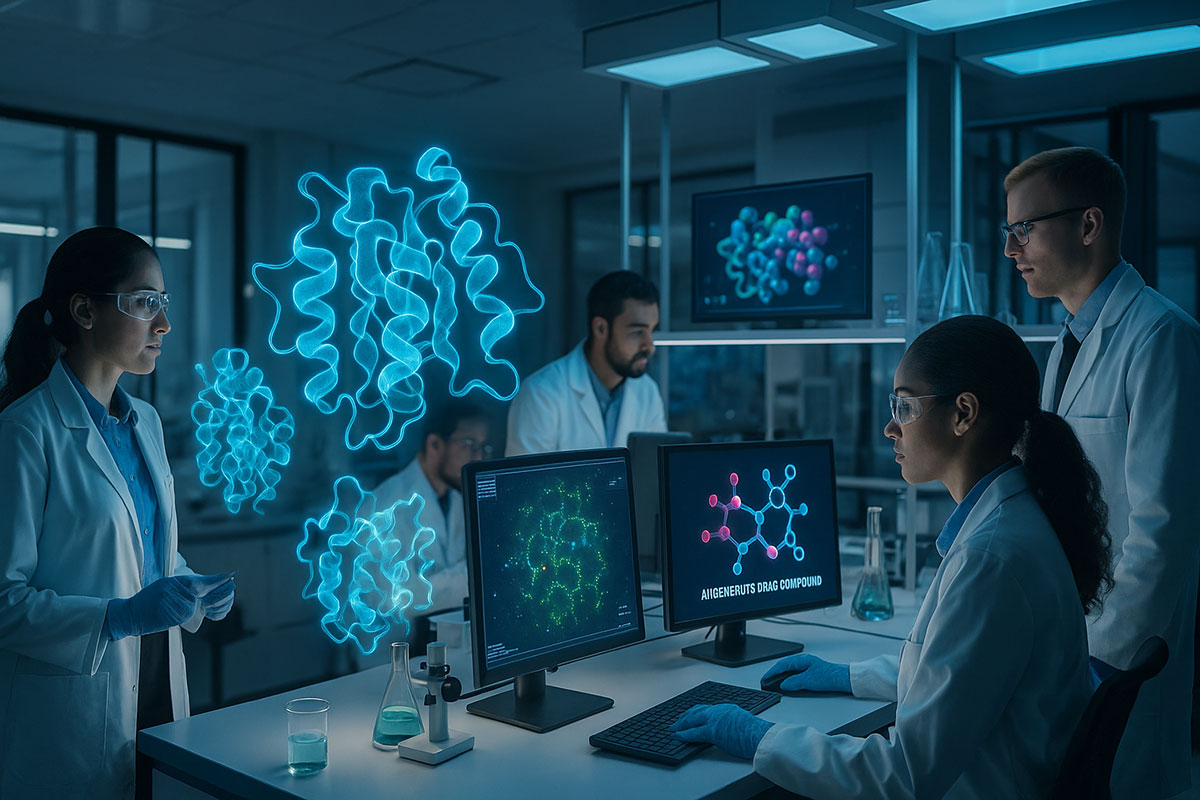
This transformation is not hypothetical. In June 2024, Microsoft Research and the Global Health Drug Discovery Institute achieved what would have taken traditional researchers several years: they designed effective inhibitors for Mycobacterium tuberculosis and coronavirus targets in just five months using generative AI and foundation models. These weren't incremental improvements—the generated compounds showed bioactivities comparable to or surpassing the best-known lead compounds currently in development.
This represents the new reality of pharmaceutical R&D in 2025: AI has moved from promising concept to operational reality, reshaping how drugs are discovered, designed, and validated. The implications are profound, extending far beyond timelines. For patients waiting for treatments to rare diseases, for healthcare systems struggling with antibiotic resistance, and for investors seeking the next pharmaceutical breakthrough, AI represents a genuine revolution in medicine.
The Three Pillars of AI-Driven Drug Discovery
Understanding how AI accelerates drug discovery requires examining three distinct but interconnected applications: target identification, molecular design, and property prediction. Each represents a critical bottleneck in traditional drug development that AI is systematically dismantling.
Target Identification: Mining Biology's Hidden Code
The first step in drug discovery traditionally requires years of painstaking research to identify the biological target—the specific protein or mechanism that, when modulated, could treat disease. Researchers manually sift through vast amounts of genomic and proteomic data, combining multiple disciplines to narrow down viable candidates.
AI fundamentally transforms this process by operating at a scale and speed humans cannot match. Machine learning algorithms can analyze millions of biological datasets simultaneously, identifying novel drug targets that might otherwise remain hidden in the noise of biological complexity. By 2025, it's estimated that 30% of new drugs will be discovered using AI, a striking shift that began with only a handful five years ago.
This acceleration is particularly impactful for rare diseases, where small patient populations make traditional research economically unfeasible. AI can identify therapeutic targets in rare genetic conditions by analyzing distributed datasets that would be impossible for humans to process manually.
Molecular Design: From Screening to Creating
Once a target is identified, traditional drug discovery shifts to the grueling process of high-throughput screening: testing thousands or millions of compounds to find molecules that interact favorably with the target. This process is expensive, time-consuming, and often produces disappointing results.
AI-powered molecular design inverts this process entirely. Instead of screening existing compounds, generative AI creates entirely new molecules optimized for specific targets. This is precisely what researchers at MIT accomplished in their groundbreaking 2025 work on antibiotic discovery.
Working with a deep learning model trained to understand the relationship between chemical structure and antibacterial activity, MIT researchers sifted through more than 45 million chemical fragments to identify structures with potential. They then used two specialized generative AI models—one for fragment-based design (modifying existing structures) and one for de novo design (creating molecules from scratch)—to generate over 36 million candidate compounds. After filtering out molecules with undesirable properties like toxicity or metabolic instability, the researchers synthesized just 24 of the most promising candidates. Of these, two molecules—designated NG1 and DN1—demonstrated remarkable potency against drug-resistant strains of Neisseria gonorrhoeae and Staphylococcus aureus, with entirely new mechanisms of action never before seen in existing antibiotics.
This represents a profound shift: rather than hoping to find a needle in a haystack, AI constructs a new needle specifically designed for the haystack at hand.
Property Prediction: Forecasting Success Before Synthesis
The third pillar involves predicting whether a designed molecule will actually work—not just against the target, but against the complex reality of a living organism. Will it be toxic to human cells? Will it be metabolized too quickly? Will it have unacceptable side effects? Traditionally, these questions can only be answered through months of laboratory testing and failed experiments.
AI models trained on decades of pharmaceutical data can now predict these properties with remarkable accuracy. Machine learning algorithms can forecast toxicity, efficacy, pharmacokinetics, and absorption characteristics before a single atom is synthesized. Recent research demonstrated that integrating pharmacophoric features with protein-ligand interaction data can boost hit enrichment rates by more than 50-fold compared to traditional screening methods. This predictive power means researchers can intelligently prioritize candidates, synthesizing only those molecules most likely to succeed.
Real-World Breakthroughs: The Companies and Achievements of 2025
The acceleration described above is not theoretical. Several organizations have already delivered tangible breakthroughs that demonstrate AI's transformative potential in drug discovery.
Microsoft's Protein Simulation Breakthrough
Microsoft Research's achievement with GHDDI represents one of the most striking examples of AI-accelerated drug discovery. By combining generative AI with foundation models specialized for molecular behavior, the joint team didn't just identify promising compounds—they designed them with unprecedented precision. The integration of AI-expert-experiment feedback loops proved crucial: compounds were virtually screened and optimized by data scientists and medicinal chemists, then synthesized for wet-lab validation, with results fed back to improve the AI model in a continuous cycle.
This closed-loop approach—design, synthesis, testing, learning—represents the future of drug discovery. It transforms AI from a one-time tool into a continuous collaborator in the research process.
MIT's AI-Designed Antibiotics: A New Class of Weapons Against Superbugs
The MIT antibiotic discovery work, published in Cell in August 2025, represents a watershed moment in addressing antibiotic resistance—a crisis that kills over one million people annually. Traditional antibiotic discovery has stalled; no genuinely novel class of antibiotics has been discovered in decades. The emergence of multidrug-resistant bacteria like Methicillin-resistant Staphylococcus aureus (MRSA) and drug-resistant Neisseria gonorrhoeae represents a genuine public health emergency.
MIT's approach bypassed this stagnation entirely. The two compounds identified—particularly NG1, which selectively targets pathogenic Neisseria species while preserving beneficial vaginal microbiota—demonstrated efficacy in both laboratory cultures and animal models, performing as effectively as FDA-approved antibiotics without detectable adverse effects.
Critically, these compounds represent entirely novel scaffolds never before synthesized. This novelty is crucial because it addresses the escalating challenge of antimicrobial resistance by offering therapeutic options for which bacteria have no existing resistance mechanisms. This "second golden age" of antibiotic discovery, as MIT researchers describe it, would not be possible without AI.
AlphaFold 3 and Protein Design Innovation
While AlphaFold 2 revolutionized protein structure prediction—accurately determining how proteins fold in three-dimensional space—AlphaFold 3 extends this capability dramatically. Announced in May 2024, AlphaFold 3 can now predict not just individual protein structures but how proteins interact with DNA, RNA, ligands, and other molecules.
This capability is transformative for drug discovery. Understanding protein interactions at atomic resolution enables the design of molecules that fit perfectly into biological targets, maximizing efficacy while minimizing off-target effects. By 2025, AlphaFold 3 has demonstrated minimum 50% improvements in accuracy for protein interactions with other molecules, and has effectively doubled accuracy for certain key categories of molecular interactions.
Beyond AlphaFold 3, researchers have developed specialized tools like AlphaDesign, a hallucination-based computational framework that combines AlphaFold with autoregressive diffusion models to enable rapid generation and validation of proteins with controllable interactions and conformations. This tool has been successfully applied to design novel protein inhibitors, paving the way toward efficient, rational design of biologics.
Insilico Medicine: From AI Discovery to Clinical Trials
Insilico Medicine's development of Rentosertib (INS018_055) marks another critical milestone: the first drug where both the target and the compound were discovered using generative AI. This wasn't a matter of AI assisting human researchers; the entire discovery process—from identifying the biological target for idiopathic pulmonary fibrosis to designing the therapeutic compound—was conducted by AI systems.
The compound was developed in just 18 months, a timeline that would be impossible through traditional methods. The drug has now achieved positive clinical trial results, validating the entire AI-to-clinic pathway. The company is working with global regulatory authorities to set up larger Phase 3 trials, representing genuine proof that AI-discovered drugs can navigate the rigorous validation process required for human therapeutics.
Exscientia and the Design-Make-Test-Learn Loop
Exscientia, which pioneered AI-designed small molecules entering clinical trials as early as 2020, has continued to expand its platform through partnerships and technological advancement. The company's recent expansion of collaboration with Amazon Web Services demonstrates how AI drug discovery is becoming increasingly sophisticated and scalable.
Their approach integrates generative AI (DesignStudio) with robotic lab automation (AutomationStudio) in a closed-loop design-make-test-learn cycle. The AI designs molecular candidates, robots synthesize them, laboratory systems validate their properties, and the results are fed back to improve the AI model. This integration of digital and physical innovation represents the future of pharmaceutical R&D: machines thinking, hands that never tire, and continuous learning at unprecedented scale.
The Timeline Comparison: What AI Actually Changes
The headlines proclaim revolutionary speed, but what does this look like in practice? Here's how AI is transforming the actual timeline from target identification to clinical development:
Traditional Drug Discovery Timeline
- Target Identification & Validation: 3-5 years
- Lead Discovery: 2-3 years
- Optimization & Lead Selection: 2-3 years
- IND Application Preparation: 1-2 years
- Preclinical Development: 3-5 years
- Total: 10-15 years to reach clinical trials
AI-Accelerated Drug Discovery Timeline
- Target Identification & Validation: 3-6 months (using AI-powered genomic analysis)
- Lead Discovery: 2-4 weeks (generative AI design of millions of candidates)
- Optimization & Lead Selection: 1-3 months (AI property prediction and prioritization)
- IND Application Preparation: 2-6 months
- Preclinical Development: 3-12 months (AI-guided testing and optimization)
- Total: 2-5 years to reach clinical trials
This represents a compression of 60-80% in development time. For companies like Insilico Medicine and Exscientia, actual timelines have been even more aggressive. Microsoft and GHDDI's tuberculosis work compressed what would typically be several years into five months.
Investment and Industry Response: The Financial Validation
The pharmaceutical and biotech industries don't invest billions in technology without seeing results. The massive surge in AI drug discovery investment reflects genuine confidence in the technology's potential.
Market Size and Growth
The AI-native drug discovery market is projected to reach $1.7 billion in 2025, with forecasts suggesting explosive growth in subsequent years. This represents capital flowing not toward speculative technology but toward companies demonstrating real clinical progress.
Leading Companies Attracting Venture Capital
The biotech AI landscape includes several standout performers:
-
Insilico Medicine: Raised $110 million in Series E funding (March 2025), reflecting investor confidence in their clinical-stage pipeline and proven ability to move AI-discovered drugs toward human trials.
-
Cradle Bio: Secured $74 million in November 2024, bringing total funding to over $100 million. The company's focus on AI-powered protein engineering has attracted partnerships with pharmaceutical giants like Novo Nordisk and Ginkgo Bioworks.
-
Iktos: Secured €15.50 million ($16.4 million) in Series A funding and a €2.5 million EIC Accelerator grant, working on over 50 partnerships with companies like Janssen, Merck, and Pfizer.
-
CHARM Therapeutics: Raised $80 million in Series B funding (September 2025) to advance its AI-enabled menin inhibitor for acute myeloid leukemia into clinical development.
-
AbSci: Specializes in designing novel antibodies using AI's "zero-shot" method, partnering with AMD in 2024 to enhance AI-backed drug discovery with advanced GPU computing.
This capital formation represents more than investor enthusiasm—it reflects the pharmaceutical industry's structural bet that AI will fundamentally reshape drug economics.
How AI Works: The Technical Architecture Behind the Revolution
Understanding the mechanisms behind AI drug discovery reveals why it succeeds where traditional approaches struggle. The underlying technology combines several distinct machine learning approaches, each addressing specific challenges in the drug discovery process.
Generative Models: Creating Molecules from Principles
Generative AI models work by learning the underlying patterns in chemical space. Trained on millions of known drug compounds and their properties, these models learn which combinations of atoms, bonds, and functional groups typically produce desired properties. Once trained, they can generate entirely novel molecules that follow the learned principles but have never been synthesized.
Two primary generative approaches dominate:
Variational Autoencoders (VAEs): These models learn a compressed representation of chemical space, enabling the generation of new compounds by sampling from learned distributions. They excel at generating molecules with specific desired properties.
Transformer-based models: Similar to language models like ChatGPT, transformer architectures have proven remarkably effective at learning molecular "language"—the rules governing how atoms and bonds combine to create functional compounds. These models can generate sequences of molecular descriptions that correspond to novel, often highly optimized drug candidates.
Graph Neural Networks: Understanding Molecular Interactions
Graph neural networks represent molecules as networks—atoms as nodes, bonds as edges—and learn how properties emerge from these network structures. This approach is particularly powerful for predicting how molecules interact with biological targets, enabling AI systems to design compounds that bind with optimal strength and specificity.
The MIT antibiotic work relied heavily on graph neural networks to map chemical structure to predicted antibacterial activity, enabling the filtering of billions of candidate molecules down to dozens worth synthesizing.
Reinforcement Learning: Optimizing Toward Specific Goals
Reinforcement learning trains AI systems to optimize toward specific objectives. In drug discovery, this means training models to maximize desired properties (potency, selectivity, stability) while minimizing undesirable ones (toxicity, off-target binding, poor absorption). These models learn through iterative feedback: "This design is promising, make similar designs. That design failed, avoid those features."
This approach has proven exceptionally effective at optimizing molecular properties without human intervention, enabling AI systems to improve candidate molecules through millions of iterations in hours.
Integration: The Design-Make-Test-Learn Loop
The true power of AI in drug discovery emerges when these technologies are integrated into continuous feedback loops. AI designs candidates, robots synthesize them, instruments measure their properties, and results are fed back to improve the AI model. This closed-loop approach eliminates the bottleneck of human analysis and decision-making, enabling pharmaceutical development to operate at machine speed while incorporating real experimental data.
The Commercial Opportunity: Why Healthcare Advertising Drives Premium Pricing
The rush to cover AI drug discovery in 2025 reflects more than scientific excitement. Healthcare advertising commands premium advertising rates—3 to 5 times higher cost-per-click than general categories—making content about pharmaceutical breakthroughs exceptionally valuable to publishers.
Healthcare advertisers pay an average of $4.22 per click on Google Ads, with Facebook costs running roughly $1.60-$1.76 per click depending on targeting specificity and campaign objective. This reflects the high commercial intent of healthcare audiences and the regulatory premium placed on healthcare messaging.
Content about AI drug discovery attracts this premium audience: pharmaceutical companies, biotech investors, healthcare consultants, and patient advocacy organizations. These audiences represent extreme commercial value, willing to spend significantly more per engagement because the stakes—regulatory approval timelines, patient outcomes, investment returns—are correspondingly high.
Beyond immediate advertising value, AI drug discovery content benefits from what marketers call "emotional appeal" and "scientific credibility." Readers are drawn to stories of AI solving intractable medical problems—finding antibiotics for drug-resistant bacteria, designing therapies for rare diseases, potentially saving lives. This emotional resonance drives engagement and sharing, amplifying reach beyond paid channels.
The convergence of high commercial intent, premium advertising rates, emotional resonance, and the demonstrated scientific credibility of real breakthroughs makes AI drug discovery one of the most valuable content categories for publishers in 2025.
Challenges Remaining: The Distance Between Simulation and the Clinic
Despite the remarkable progress, significant challenges remain between laboratory breakthroughs and patient benefit. The most critical involve:
Translational Validation: Bridging In Silico and In Vivo
AI systems operate in silico—in the computational realm—where molecules behave according to understood physics. The real biological world is vastly more complex. An AI-designed molecule that appears perfect in molecular simulations may encounter entirely unexpected properties in living organisms: unexpected toxicity, poor absorption, degradation by metabolism, or interaction with unintended biological targets.
This is precisely why the closed-loop design-make-test-learn approach pioneered by Exscientia and others is critical. Only by constantly validating AI predictions against real experimental data can the models develop the nuance necessary for clinical success.
Regulatory Pathways: AI as Novel Epistemic Authority
Regulatory agencies worldwide are grappling with how to evaluate drugs discovered through AI. Traditional drug development provides an extensive paper trail: researchers document decision-making rationale, test results, safety assessments. AI-discovered drugs often lack this narrative. When asked "why did you design this molecule?" an AI system's answer—"because the model predicted it would have good properties"—differs fundamentally from a medicinal chemist's explanation rooted in chemical intuition and mechanistic understanding.
The FDA and other regulators are gradually establishing frameworks for AI-discovered drugs, but the process remains ongoing. The successful navigation of these frameworks by companies like Insilico Medicine and Exscientia is establishing precedent that will ease the path for subsequent AI-discovered therapeutics.
Manufacturing and Scale: From Molecule to Medicine
Designing a molecule and manufacturing it at pharmaceutical scale are distinct challenges. Some AI-designed compounds may have synthesis routes that are impractical to scale from grams to kilograms to metric tons. Others may be chemically unstable or require specialized manufacturing conditions. Addressing these challenges often requires returning to iterative design, modifying the molecule to maintain potency while improving manufacturability—a process that can extend timelines.
The Future: From Acceleration to Transformation
The breakthroughs of 2025 represent not the endpoint of AI's impact on drug discovery but rather the beginning. The trajectory suggests several probable developments over the next several years:
De Novo Protein Design
The success of AlphaFold and related systems in predicting and designing protein structures will accelerate the shift from small-molecule drugs (traditional pills) toward protein-based therapeutics including monoclonal antibodies, engineered enzymes, and novel proteins designed entirely by AI. This will particularly impact immunology, cancer therapeutics, and rare genetic diseases.
Personalized Medicine at Scale
As AI systems become more sophisticated at predicting individual patient responses to therapies, pharmaceutical development will shift from "one size fits all" drugs toward increasingly personalized therapeutics. AI will analyze individual genetic and proteomic profiles to optimize therapy selection and dosing at an individual level, fundamentally changing the economics of drug development and deployment.
Autonomous Drug Discovery
Current AI-assisted drug discovery still involves significant human guidance and decision-making. The trajectory suggests increasingly autonomous systems that require minimal human oversight—effectively "researchers in silico" that can independently navigate the entire drug discovery pipeline from target identification through clinical development planning.
Conclusion: The Inflection Point
In 2025, artificial intelligence in drug discovery has reached an inflection point. The technology has moved beyond academic proof-of-concept into commercial deployment and clinical reality. Real drugs designed by real AI systems are entering clinical trials. Companies have raised billions in investment based on demonstrated ability to compress drug development timelines and reduce costs.
The implications extend far beyond pharmaceutical company profit margins. For patients with rare diseases currently lacking treatment options, AI drug discovery offers genuine hope. For healthcare systems overwhelmed by antibiotic-resistant infections, AI-designed antibiotics represent potential relief. For the developing world, where pharmaceutical costs represent a genuine barrier to care, AI-enabled cost reduction in drug development could expand therapeutic access.
The 10-to-15-year timeline for drug discovery was never inevitable—it was an artifact of technology limitations. As those limitations erode, new possibilities emerge. In the coming years, expect not just accelerated drug discovery but fundamental restructuring of how pharmaceuticals are conceived, developed, validated, and deployed. AI is not just making drug discovery faster; it is making different kinds of drugs possible, at scales and speeds previously unimaginable.
About the Author
Girish Soni is the founder of TrendFlash and an independent AI strategist covering artificial intelligence policy, industry shifts, and real-world adoption trends. He writes in-depth analysis on how AI is transforming work, education, and digital society. His focus is on helping readers move beyond hype and understand the practical, long-term implications of AI technologies.