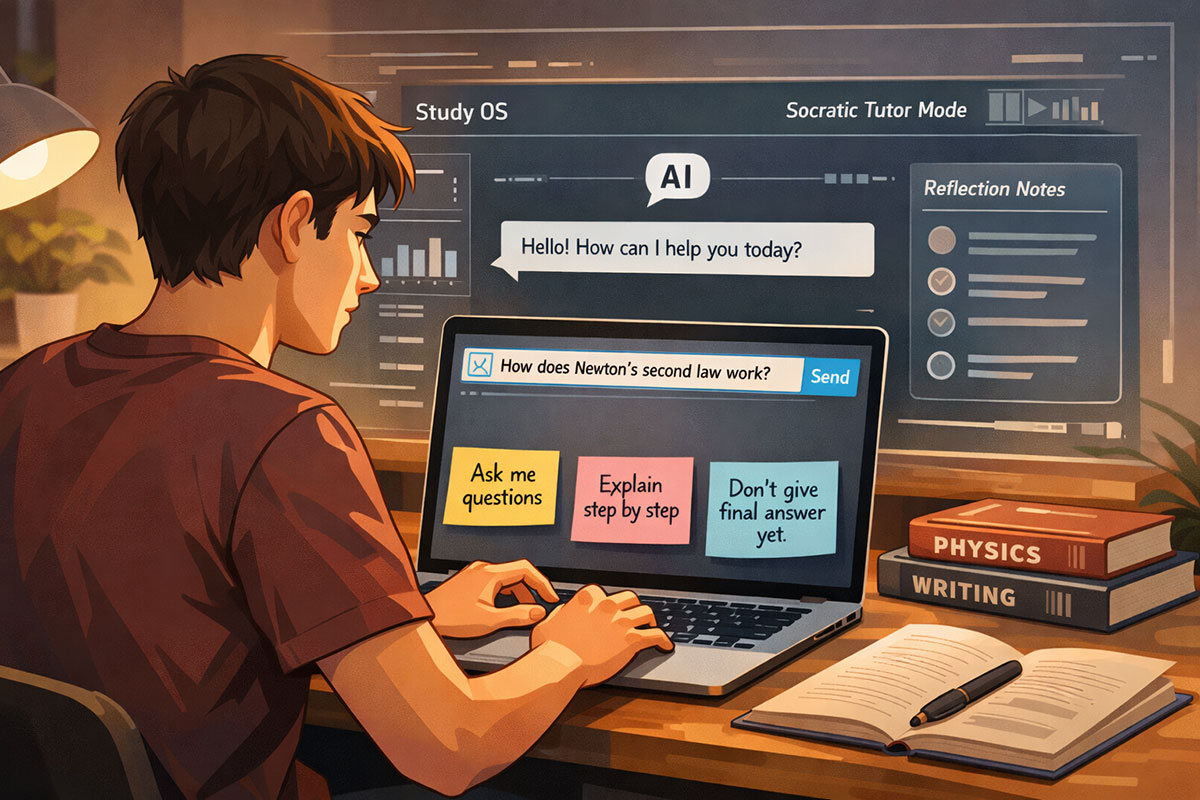
The AI Adoption Explosion in Higher Education
The numbers tell a remarkable story about the speed of technological change in education. According to the 2025 Student Generative AI Survey by the Higher Education Policy Institute (HEPI), which surveyed over 1,000 undergraduate students through Savanta, artificial intelligence adoption has skyrocketed to unprecedented levels. In just twelve months, the proportion of students using any AI tool jumped from 66% to 92%—a 26 percentage point increase that represents one of the fastest behavioral shifts the education sector has ever witnessed.
Even more striking, the proportion of students using AI specifically for academic assessments surged from 53% to 88%. This isn't a marginal increase; it's a fundamental restructuring of how students approach their coursework. Meanwhile, high school adoption isn't far behind, with 84% of secondary students now incorporating AI into their schoolwork, compared to 79% just months earlier.
What makes these statistics particularly significant is that they're not isolated to a single country or demographic. Research from the Copyleaks 2025 AI in Education Trends Report revealed that 90% of US college students across two-year colleges, four-year universities, and graduate programs have utilized AI for academic purposes. The trend is undeniably global and undeniably here to stay.
Understanding How Students Actually Use AI
The most revealing insight from the HEPI survey isn't about volume of use—it's about variety and purpose. Students aren't monolithically using AI to generate entire essays and submit them as their own work. Instead, they're deploying these tools in diverse and often legitimate ways.
The three most popular uses paint a picture of AI as a learning enhancement tool rather than purely a shortcut:
Explaining Complex Concepts (58%): Students are using ChatGPT, Gemini, and other language models as on-demand tutors, asking them to break down difficult material in ways that make intuitive sense. A student struggling with quantum physics or organic chemistry can engage with AI that meets them at their level of understanding, something traditional textbooks cannot do in real-time.
Summarizing Articles and Research (56%): Rather than passively reading lengthy academic papers or dense textbook chapters, students are leveraging AI to extract key concepts and synthesize information. This accelerates the research process while still requiring the student to engage critically with the original material.
Generating Text (64%): The most discussed use is also the most misunderstood. While generating text can include full essay writing, the HEPI data reveals a more nuanced picture. Many students use this capability to create outlines, draft opening paragraphs for brainstorming, or generate different framings of an argument before writing their own version.
The critical context here: only 18% of students have included AI-generated text directly in their submitted work without modification or disclosure. This suggests that the vast majority—about 82%—are using AI as part of their thinking and learning process rather than as a replacement for their own intellectual work.
The Motivation Behind the Shift
Understanding why students have embraced AI so rapidly provides essential context for the cheating versus learning debate. When asked their primary reasons for using AI, students consistently cite two main motivations:
Time Efficiency (51%): Students are juggling academic demands, part-time work, extracurricular commitments, and mental health challenges. AI tools offer genuine time savings that allow them to allocate effort strategically. Using AI to summarize a 40-page research paper in five minutes means students can focus their cognitive energy on analysis and critical thinking rather than initial information gathering.
Quality Improvement (50%): Half of students believe AI genuinely improves the quality of their work. When used as a collaborator—writing a draft, receiving feedback, rewriting—AI can expose students to different perspectives and more polished frameworks. A student might use AI to suggest alternative word choices for a paragraph, learning from the suggestions even if they ultimately choose their own language.
Additional motivations include receiving instant support (40%), personalized learning (40%), access to help outside traditional study hours (30%), and improving their own AI skills for future relevance in the job market (29%). These motivations reveal students thinking strategically about their education in an AI-mediated world.
The Cheating Question: Separating Signal from Noise
The emergence of AI in education has triggered understandable concern about academic integrity. The headlines have been alarming. A Guardian investigation found nearly 7,000 confirmed cases of AI-related cheating during the 2023-24 academic year in UK universities—translating to 5.1 cases per 1,000 students, up from 1.6 per 1,000 the previous year. Projections suggested this could rise to 7.5 cases per 1,000 in the current year.
These statistics, while genuinely concerning, require careful interpretation. The critical insight: while 88% of students use AI for assessments, only 7.5 per 1,000 students are caught cheating with it. This stark disparity suggests that the overwhelming majority of AI use doesn't constitute academic dishonesty.
Dr. Peter Scarfe, an associate professor of psychology at the University of Reading, offered an important perspective to The Guardian: "I would imagine those caught represent the tip of the iceberg." This acknowledgment reflects the reality that AI detection is imperfect. University assessment systems allowed AI-generated submissions to go undetected 94% of the time in some institutional testing, while even the most advanced detection tools (like GPTZero) achieve around 99% accuracy but still generate false positives and false negatives.
The real challenge for educators isn't distinguishing between AI use and human writing—it's fundamentally reimagining assessment in an age when writing, brainstorming, and research synthesis can all involve AI collaboration.
What Educators Are Actually Finding
Perhaps most reassuring is what the HEPI survey reveals about institutional responses and detection of genuine misconduct. Eighty percent of students believe their institution has a "clear" policy on AI use, and 76% believe their institution would detect AI misuse in assessments. These aren't hypothetical concerns—institutions have had time to develop frameworks, train staff, and implement policies.
The reality on campus is more nuanced than the headlines suggest. American University's business school represents a broader institutional pivot happening across higher education. Rather than banning AI, schools like American explicitly encourage students to use AI from day one, then teach them the ethical boundaries and strategic applications. As David Marchick, dean of American's Kogod School of Business, explained to Axios: "We tell them, 'Here, you will start using AI from day one.'"
This represents a fundamental philosophical shift. Instead of treating AI as a threat to be detected and punished, leading institutions are treating it as a literacy to be developed and governed. When an 18-year-old arrives at university and almost every teacher from high school warned them against using AI, but the university explicitly encourages it, students receive clear guidance about expectations.
The Skills Students Are Actually Building
When students use AI effectively—not to replace thinking, but to enhance it—they're developing crucial capabilities for an AI-mediated economy:
Critical Evaluation: Engaging with AI outputs requires assessing accuracy, identifying bias, and determining whether information is trustworthy. A student who uses ChatGPT to explain a concept must then evaluate whether that explanation is pedagogically sound.
Prompt Engineering: Asking AI the right questions is a skill. Students learning to articulate what they need, iterate on prompts, and recognize when they've asked a poorly-formed question are developing communication and problem-solving abilities.
Synthesis and Integration: Using AI to gather information or generate outlines still requires the human capability to synthesize diverse perspectives into an original argument or solution. This is where genuine learning happens.
Ethical Reasoning: Students aren't naive about the risks and limitations of AI. The HEPI survey shows that 67% of students believe AI is essential in today's world. As these tools become ubiquitous in professional environments, students who've had to think carefully about when and how to use AI ethically will be better prepared for careers where this judgment is required daily.
The Institutional Response: Training and Policy Development
While 80% of students find institutional policies clear, there's a significant gap in actual training. Only 36% of students reported receiving formal AI skills training from their institution. This represents a crucial area for universities to strengthen.
Higher education institutions are beginning to address this systematically. Jisc launched an AI Literacy Curriculum for teaching and learning staff in mid-2025, recognizing that faculty must be the first ones educated about effective and ethical AI integration. The curriculum focuses on three modules: understanding AI foundations, essential AI skills, and responsible practice including academic integrity.
Universities like the University of Florida have gone further, establishing that every student should graduate with basic AI literacy. The University of Florida's model focuses on four core competencies: knowing and understanding AI, using and applying AI, evaluating and creating AI, and AI ethics. This comprehensive approach prepares students not just to use AI tools, but to think critically about their role in society.
Addressing Parental and Educator Concerns
Parents and educators continue to voice legitimate concerns about AI's role in education. According to the 2025 American Association of Colleges and Universities survey data:
- 66% of respondents worry AI will diminish student attention spans
- 59% see increased cheating on their campuses
- 56% feel their institutions are unprepared to equip students for an AI-driven future
These concerns aren't unfounded, but they must be balanced against the reality that AI integration is inevitable and potentially beneficial. The question isn't whether to use AI in education—that decision has already been made by student adoption patterns. The question is how to use it wisely.
For parents, this means having conversations with students about AI use that go beyond "don't cheat." It means understanding what AI tools their students are using, why they're using them, and discussing the ethical frameworks that should govern that use. A student who can explain thoughtfully when they used AI to draft an outline versus when they wrote independently demonstrates the kind of meta-cognitive awareness that will serve them well.
For educators, the challenge is reimagining assessment. Open-book exams, take-home projects that emphasize synthesis and original thinking, collaborative assessments, and reflective components that require students to explain their process—these approaches are harder to "cheat" with AI because they demand demonstrated learning, not just content generation.
Creating an Ethical Framework for AI in Learning
How should students use AI ethically in their studies? The emerging consensus emphasizes transparency and intentionality:
Disclosure: If an assignment permits AI use, students should clearly indicate where they used it and how. A footnote stating "I used ChatGPT to generate initial outline" or "I used Grammarly AI for tone suggestions" maintains integrity while acknowledging collaboration with technology.
Authenticity: The work should represent genuine student thinking and learning. Using AI to generate a full essay and submitting it without modification violates this principle, regardless of whether the institution explicitly bans this practice.
Learning Orientation: Ask yourself: Is this AI use helping me learn, or helping me avoid learning? Using AI to understand a concept you'll need in future classes is different from using AI to complete busywork you'll forget by next week.
Tool Literacy: Understand what you're using. If you employ Perplexity AI for research, understand how it retrieves information and acknowledge that its citations need verification. If you use ChatGPT for brainstorming, recognize that it can generate creative ideas but sometimes presents false information with complete confidence.
Respect Institutional Guidelines: Different institutions and different assignments have different policies. What's acceptable in one context (using AI to generate code snippets in a computer science lab) might violate policy in another (using AI for a literature analysis). Students should understand these distinctions.
What the Data Really Tells Us
The headline statistic—92% of students using AI—initially sounds alarming. But the deeper data paints a more reassuring picture. Students are primarily using AI for legitimate learning purposes: explaining difficult concepts, synthesizing information, and improving the quality of their thinking. While some students do misuse AI, the data suggests this represents a small percentage of overall use.
Universities that have moved from banning or detecting AI toward integrating and teaching it are making progress. When institutions provide clear policies, faculty training, and AI literacy programming, students respond by using these tools more thoughtfully.
The transition from treating AI as a threat to treating it as a literacy represents the future of education. Students will graduate into a world where AI collaboration is standard across professions, from law to medicine to journalism. If universities spend these crucial years helping students develop judgment about when and how to use AI, rather than simply preventing its use, students will be far better prepared for that reality.
The Path Forward
The 2025 HEPI survey offers an important moment for reflection across educational institutions. Rather than viewing the 92% adoption figure as a crisis, it can be viewed as an opportunity. Students have already voted with their behavior—they're using AI because they find it genuinely useful for learning.
The institutional response should focus on three priorities:
First, Education: Implement AI literacy training for both students and faculty. The 64% of students using AI for text generation need guidance on when that's appropriate. The 58% using it to explain concepts need frameworks for evaluating whether those explanations are accurate.
Second, Assessment Redesign: Move beyond assignments that can be wholly completed by AI toward assessments that require demonstrated learning, original thinking, and reflection. This doesn't require banning AI—it requires being intentional about what you're trying to assess.
Third, Ethical Development: Create space for students to discuss the ethical complexities of AI use. When is using AI collaboration versus cheating? What's our responsibility as AI users? What do we owe to institutions and society? These conversations develop the ethical reasoning that will determine whether students become responsible, thoughtful AI users or become contributors to future problems created by AI misuse.
The 92% figure doesn't represent a crisis—it represents where education already is. The challenge for 2025 and beyond is ensuring that this transformation serves genuine learning rather than undermining it.
Related Links:
- https://www.trendflash.net/posts/ai-in-education-how-personalized-learning-models-are-evolving-in-2025
- https://www.trendflash.net/posts/10-secret-chatgpt-gemini-workflows-students-are-using-to-study-3-faster-without-cheating
- https://www.trendflash.net/posts/ai-career-moat-9-skills-that-make-you-impossible-to-replace-and-how-to-learn-them-with-free-tools
- https://www.trendflash.net/category/ai-in-health-education
About the Author
Girish Soni is the founder of TrendFlash and an independent AI strategist covering artificial intelligence policy, industry shifts, and real-world adoption trends. He writes in-depth analysis on how AI is transforming work, education, and digital society. His focus is on helping readers move beyond hype and understand the practical, long-term implications of AI technologies.