The 3D Creation Crisis: Why Marble Arrives at the Perfect Moment
The landscape of 3D content creation in 2025 presents a paradox. Digital immersion drives demand—from game studios frantically building worlds to filmmakers composing virtual sets—yet traditional 3D creation remains gatekept behind years of learning curves and premium software costs. A single game environment can demand weeks of modeling and weeks of polish. Film production budgets bleed when conceptual visualizations require expensive asset creation. Architects struggle to quickly translate designs into walkable 3D previews. Educational institutions lack the resources to create immersive learning environments.
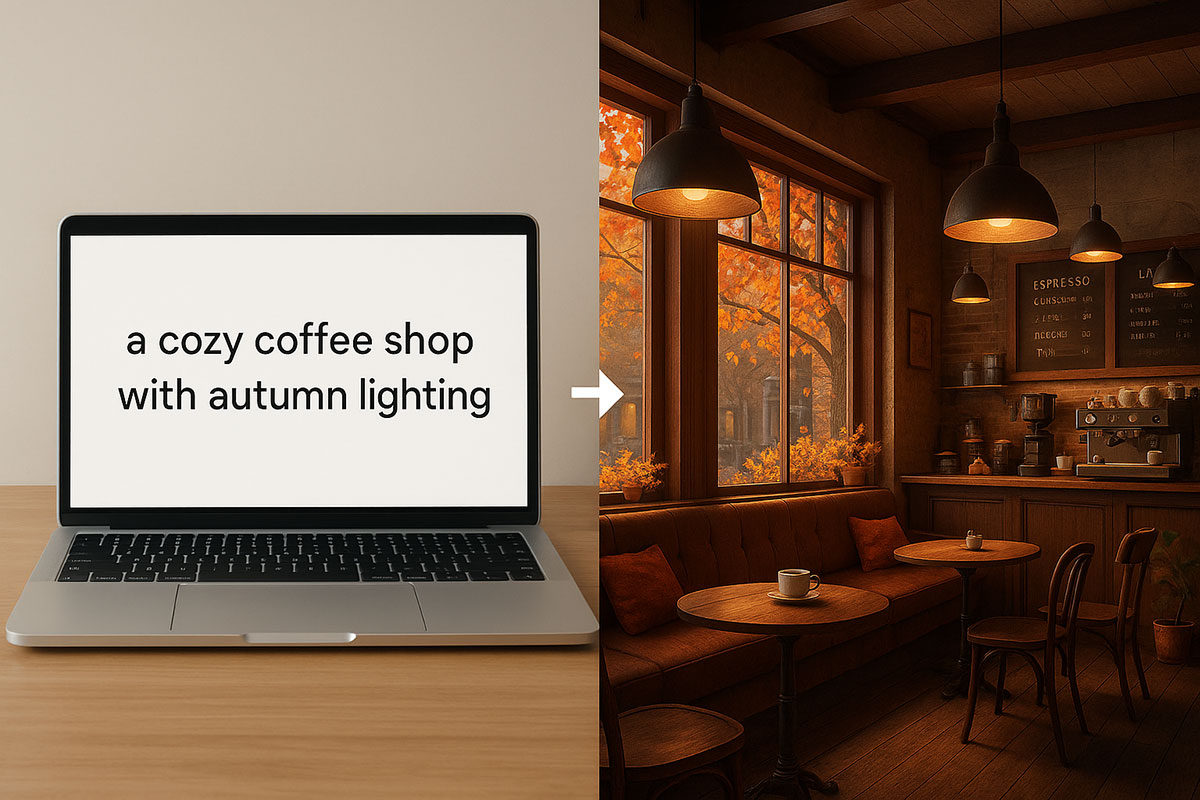
On November 11, 2025, World Labs, founded by Fei-Fei Li and her team, launched Marble—a frontier multimodal world model that decimates this friction. Marble generates persistent, spatially coherent, high-fidelity 3D worlds from whatever input you have: a single sentence, a smartphone photo, a short video, or a hand-sketched panorama. What used to take professional 3D artists weeks now takes minutes.
This isn't a gimmick. This is the moment 3D democratization actually arrives.
What Is Marble? Understanding the Technology Behind the Magic
At its core, Marble is a multimodal world model—an AI system trained to understand spatial relationships and convert diverse input types into consistent, navigable 3D environments. Unlike earlier text-to-3D experiments that generated individual objects or produced inconsistent geometry, Marble creates coherent, persistent worlds you can explore, edit, and export as production-ready assets.
The breakthrough lies in Marble's hybrid approach: it combines sophisticated spatial reasoning with multiple input modalities. Feed it a text prompt describing a medieval castle interior—the model understands not just what objects should exist, but how they relate spatially. A staircase isn't just floating; it connects floors logically. Light from windows reflects accurately on stone walls. Materials behave predictably.
Traditional AI models excel at either text comprehension or image generation but struggle with 3D reasoning. Marble bridges this gap by functioning as a "world model"—a system that builds internal representations of 3D space and maintains spatial consistency across the entire generated environment. This architectural shift explains why Marble produces explorable worlds rather than static renders or disconnected objects.
The Input Revolution: Five Ways to Generate Your Worlds
Marble's power multiplies through its input flexibility. Different creators approach world-building differently, and Marble accommodates each workflow:
Text Prompts (The Fastest Start)
Describe your vision in natural language. Include scene type, mood, materials, lighting preferences, and artistic style. A prompt like "abandoned brutalist parking garage with concrete pillars, dim emergency lighting, water dripping from above, overcast afternoon light filtering through upper levels" generates a navigable 3D space that matches your description. No 3D knowledge required.
Image to World (The Reference Method)
Upload a single photograph or illustration, and Marble lifts it into full 3D. This workflow bridges 2D concept art and 3D production. Architects upload sketches; concept artists feed in digital paintings; designers provide reference photos. Marble transforms reference materials into editable 3D environments, preserving artistic intent while adding depth and spatial navigation.
Multi-Image Prompts (The Precision Approach)
Provide multiple photos or angles of a real space—say, three shots of a historic library from different viewpoints. Marble synthesizes these perspectives into a coherent 3D model that captures the spatial essence of the original location. Museum directors can digitize heritage sites. Real estate professionals convert property photos into virtual tours. Archaeologists reconstruct historical spaces with accuracy grounded in multiple source images.
Video Input (The Dynamic Method)
Upload short video clips (under 100MB) showing real-world spaces, ideally with 360° rotational movement. Video input provides temporal and spatial richness that still images miss. The model extracts frame sequences, understands motion and spatial relationships, and generates worlds that match the video's logic. A 30-second recording of someone walking through a modernist house becomes a fully navigable digital version.
360° Panoramas (The Immersive Foundation)
For creators with panoramic cameras or access to 360° images, panorama input delivers maximum spatial control. Panoramas provide complete spherical coverage of a space, giving Marble the richest possible input for generating accurate 3D environments. Professional photographers and content creators leverage this for heritage documentation, real estate, and virtual tourism.
What You Can Build: Real-World Applications Reshaping Industries
The use cases emerging across creative and technical fields reveal Marble's transformative potential:
Game Development Acceleration
Studios traditionally spend months building game environments—modeling, texturing, lighting, optimization. Marble compresses this to hours. A game designer describes a "dystopian cyberpunk marketplace" in text, uploads concept art, and receives a fully navigable 3D environment. Artists then layer additional detail, adjust difficulty geometry, and optimize for engine performance. Tasks that consumed 6-8 weeks of artist time now require 2-3 weeks of refinement instead. Studios report throughput increases of 3-5x for environmental prototyping phases.
Film and VFX Production
Filmmakers use Marble for virtual set design and pre-visualization. Describe a location that doesn't exist or is cost-prohibitive to build physically. Generate multiple variations instantly. Directors explore camera angles, lighting approaches, and spatial compositions before crews arrive on location or expensive physical sets get constructed. Production costs drop substantially. A historical epic normally requiring £2-5 million in set construction gets conceptualized and previewed for negligible cost.
Architecture and Real Estate
Architects export Marble worlds and present clients with walkable previews of building interiors before construction begins. Real estate professionals convert property listings into immersive virtual tours. Interior designers visualize furniture arrangements and material schemes in 3D. Building commissioning becomes faster when inspectors explore 3D models of facility layouts before physical access.
Education and Training
Educators create immersive learning environments. A history teacher generates a 3D model of ancient Rome based on historical descriptions. Medical students explore anatomical spaces. Archaeological students virtually "dig" through reconstructed historical sites. Vocational training programs use 3D environments to practice skills in simulation before field work.
Architectural Visualization and Heritage Preservation
Cultural institutions document and preserve heritage spaces. Museums digitize interiors of inaccessible locations. Historians reconstruct lost architectures. Archaeological teams convert site surveys into navigable 3D models for remote research and public engagement.
The Step-by-Step Workflow: From Prompt to Export in Five Minutes
Step 1: Access and Create
Navigate to marble.worldlabs.ai or Marble Studio, and authenticate. Select "Create" and choose your input method (text, image, video, panorama, or 3D structure).
Step 2: Input Your Foundation
Provide your input—write a detailed text prompt, upload an image, paste video, or sketch a 3D layout using Chisel (Marble's built-in 3D editor for blocking out spatial structures). For text prompts, include specificity: scene type, mood, materials, lighting conditions, and artistic style yield better results than generic descriptions.
Step 3: Generate and Preview
Submit your request. Marble queues the generation and begins processing (typically 2-10 minutes depending on generation mode and server load). Two quality modes are available—fast preview for rapid iteration or high-fidelity for production work. Preview your generated world in the interactive viewer, moving through the environment from any vantage point.
Step 4: Edit and Refine
Marble's AI-native editing tools let you make targeted refinements. Panoedit allows local replacements—select a couch and move it; adjust material properties; modify lighting; restructure spatial elements without regenerating the entire world. For larger changes, expand your world by moving to environment edges and requesting expansion—Marble generates additional terrain or space seamlessly.
Step 5: Compose or Export
Combine multiple worlds using Composer Mode (advanced feature) to build larger connected spaces. Then export in your required format: Gaussian splats for real-time visualization, high-quality meshes (GLB format with up to 1M triangles) for game engines, or video renders for presentations. Collider meshes provide simple physics for interactive applications.
Who This Is For: The Creator Categories Transforming Workflow
Game Developers and Level Designers
Marble eliminates environmental art bottlenecks. Prototype game locations in hours instead of weeks. Export directly into Unity or Unreal with collision geometry ready for gameplay implementation. Small indie teams punch above their weight; AAA studios accelerate production velocity.
Filmmakers and VFX Artists
Pre-visualize locations before location scouting or set construction. Generate virtual sets for impossible or expensive-to-build environments. Marble-generated environments serve as backgrounds or supplementary elements in compositing pipelines. Concept-to-visualization timelines shrink dramatically.
Architects and Urban Designers
Present client concepts as navigable 3D models rather than static renderings. Evaluate design decisions through spatial immersion. Communicate spatial intent to construction teams with clarity impossible through 2D drawings alone.
Digital Artists and Concept Creators
Build portfolios faster. Create environmental artwork for book illustrations, game mod collections, or generative art projects. Explore artistic styles through rapid generation and refinement cycles.
Educators and Content Creators
Generate educational environments for history, science, and geography. Create engaging visual content for YouTube, social media, or educational platforms. Produce immersive learning experiences without 3D software expertise.
Photographers and VR Content Creators
Convert real-world photography into immersive 3D experiences. Create professional virtual tours for real estate, hospitality, and heritage sites. Build VR content libraries with production velocity previously impossible.
Navigating Marble's Pricing: Finding Your Right Tier
Marble's subscription structure aligns with creator needs across scale:
Free Tier ($0/month)
4 world generations monthly from text, image, or panorama input. Ideal for exploring Marble's capabilities, testing generation quality, and understanding your specific workflow before investment. No commercial use rights. Preview and basic exports included.
Standard ($20/month)
12 world generations monthly plus multi-image and video-to-world inputs. Advanced AI editing tools and world expansion become available. Export options improve for game engine compatibility. No commercial rights (requires Pro tier minimum).
Pro ($35/month)
25 world generations monthly with full Standard features plus scene expansion via Composer Mode. Crucially, Pro includes commercial use rights—essential for client work, game shipping, or film production. Priority for new experimental features. Recommended for freelancers and small studios.
Max ($95/month)
75 world generations monthly. Includes full Chisel 3D editor access for spatial layout control before AI fills visual details. All Pro features unlocked including highest generation quality. Commercial rights included. Designed for high-volume studios and demanding production pipelines.
Practical Guidance: Solo creators testing the tool start with Free. Weekly or biweekly generation needs fit Standard ($20). Client work or commercial projects require Pro minimum ($35). Studios generating 20+ environments monthly should consider Max ($95) for unlimited iterations without credit anxiety. Contact World Labs directly for enterprise scaling beyond Max tier.
The Limitations Honest Creators Should Know
Marble's breakthroughs exist within constraints:
Interior Dominance
Marble excels at interior spaces—rooms, caves, buildings, structures. Generating consistent outdoor environments (endless landscapes, distant horizons) proves more challenging. Complex exterior geography and weather effects remain experimental.
Character and Creature Absence
Marble specializes in environmental generation, not character creation. Populate your worlds with characters using other tools (character generation AI or manual modeling) and compose them into Marble exports.
Edge Handling
Generated world edges sometimes need refinement. Extended environments sometimes show thinning detail at boundaries. The expansion feature addresses this but requires additional iteration.
API Access Timeline
Currently, Marble operates via web interface only. No API exists yet for programmatic access or direct game engine integration. Developers export finished worlds rather than streaming generation in real-time.
Exporting and Integrating: Making Marble Worlds Production-Ready
Marble's export flexibility ensures compatibility across creative pipelines:
Gaussian Splats
Export worlds as point cloud representations for real-time interactive visualization. Gaussian splats render efficiently, enabling VR/AR experiences and interactive applications. Web-based viewers display splat exports immediately.
High-Quality Meshes (GLB)
Export as detailed 3D mesh models in GLB format. Two quality levels available: standard quality (≈600k triangles) with texture maps, or premium quality (≈1M triangles) with vertex colors. Offline generation takes up to an hour for premium exports but produces production-ready geometry. Import directly into Unity, Unreal, Blender, or any engine supporting GLB standard.
Collider Meshes
Export simplified collision geometry alongside visual splats. Enables physics simulation and player collision detection in games and interactive applications.
Video Renders
Generate cinematic video previews of your worlds. Share with stakeholders, use for presentations, or compose into post-production pipelines.
Marble's Competitive Position and Why Now Matters
Three factors make Marble's November 2025 launch particularly significant:
World Models vs. Object Models
Unlike earlier text-to-3D systems generating isolated objects, Marble generates coherent persistent worlds. This category shift—from individual asset generation to full environment creation—represents genuine AI capability advancement, not incremental improvement.
Multimodal Integration
Marble accepts diverse inputs, reducing friction between creative tools. Designers using photographs, architects with sketches, and filmmakers with reference videos all find natural workflows. This input flexibility was absent from earlier systems.
Commercial Viability
Previous world generation research existed behind academic previews. Marble launches as commercial product with defined pricing, professional export options, and explicit support for game/film production. The technology becomes immediately accessible to creators making professional decisions.
The Democratization Inflection Point
Marble represents a threshold moment where sophisticated 3D creation stops being exclusive to teams with 3D expertise and budgets for premium tools. A solo artist with creative vision but no 3D modeling skills can now generate environments competitively with small professional teams from years past.
The creative bottleneck shifts from "can we build this 3D world" to "can we imagine and refine this world and make it narratively effective." This represents genuine democratization—not hyperbole, but structural industry change.
Getting Started: Three Actions This Week
Week 1: Explore Free Tier
Spend an hour experimenting with Marble's free tier. Test a text prompt describing your ideal environment. Try uploading a reference image. Experience the tool before any financial commitment.
Week 2: Define Your Workflow
List your next 4-6 weeks of 3D creation needs. Count required environments. Identify input types you'd naturally provide (photos, descriptions, video). Assess timeline pressures that justify paid access.
Week 3: Choose Your Tier
If exploration confirms value, upgrade accordingly. Standard ($20) works for creative exploration. Pro ($35) becomes necessary for client work or commercial projects. Max ($95) suits studios generating 20+ environments monthly.
The Bottom Line: Marble Isn't Perfect, But It Changes the Equation
Marble solves a real problem faster than previous solutions. Not every use case fits perfectly—exterior environments and character integration require workarounds. API access doesn't exist yet for deep integration.
But for the overwhelming majority of 3D environment needs—game levels, film backgrounds, architectural previews, educational spaces—Marble collapses complexity and cost. Tasks measured in weeks now measure in hours. Professional results no longer demand professional 3D expertise.
That changes creative possibility fundamentally. For filmmakers, game developers, architects, and educators, that change becomes operative immediately.
About the Author
Girish Soni is the founder of TrendFlash and an independent AI strategist covering artificial intelligence policy, industry shifts, and real-world adoption trends. He writes in-depth analysis on how AI is transforming work, education, and digital society. His focus is on helping readers move beyond hype and understand the practical, long-term implications of AI technologies.