Introduction: The Web Scraping AI Revolution Powered by Browserbase
If you've been keeping tabs on AI tool adoption in 2025, you've likely noticed one name repeatedly surfacing in developer communities: Browserbase. This November, it quietly crossed a remarkable milestone: 99X growth year-over-year and 8,100+ monthly searches on Google. While Nano Banana 2 captured consumer attention through viral memes, Browserbase has been capturing something equally valuable: enterprise data pipelines and business automation workflows.
The fundamental problem Browserbase solves is simple but profound: How do you build AI agents that can browse, read, and extract data from websites at scale without being blocked by anti-bot defenses? Traditional web scraping with tools like Selenium requires significant infrastructure investment, manual browser management, and constant tweaking to evade CDN blocking. Browserbase abstracts all of this complexity into a single API, enabling developers to launch thousands of virtual browser instances, automate interactions, and extract structured data—all with built-in stealth and anti-detection capabilities.
This guide provides a complete technical and business overview of Browserbase, including pricing tiers, real-world use cases, hands-on tutorials, and insights into how agencies and startups are monetizing this capability at $500-$5,000+ per month.
What Exactly Is Browserbase? Core Technology Explained
Browserbase is a cloud-based browser orchestration platform specifically designed for AI agents and automation workflows. Rather than managing browser instances on your own servers, Browserbase provides:
Serverless Browser Infrastructure
You don't need to maintain, scale, or provision browsers. Browserbase handles all underlying infrastructure. You request a browser instance via API, perform actions (navigate, click, fill forms, scrape), and release it. The infrastructure scales automatically based on demand.
Advanced Stealth Mode and Anti-Bot Evasion
Websites use sophisticated anti-bot defenses: IP-based rate limiting, JavaScript fingerprinting, and behavioral analysis. Browserbase's built-in stealth mode mimics human browsing behavior, rotates browser signatures, and includes automatic CAPTCHA solving capabilities. This means your scraping jobs aren't immediately detected and blocked by Cloudflare, Akamai, or other protective layers.
Structify: Automatic Data Extraction
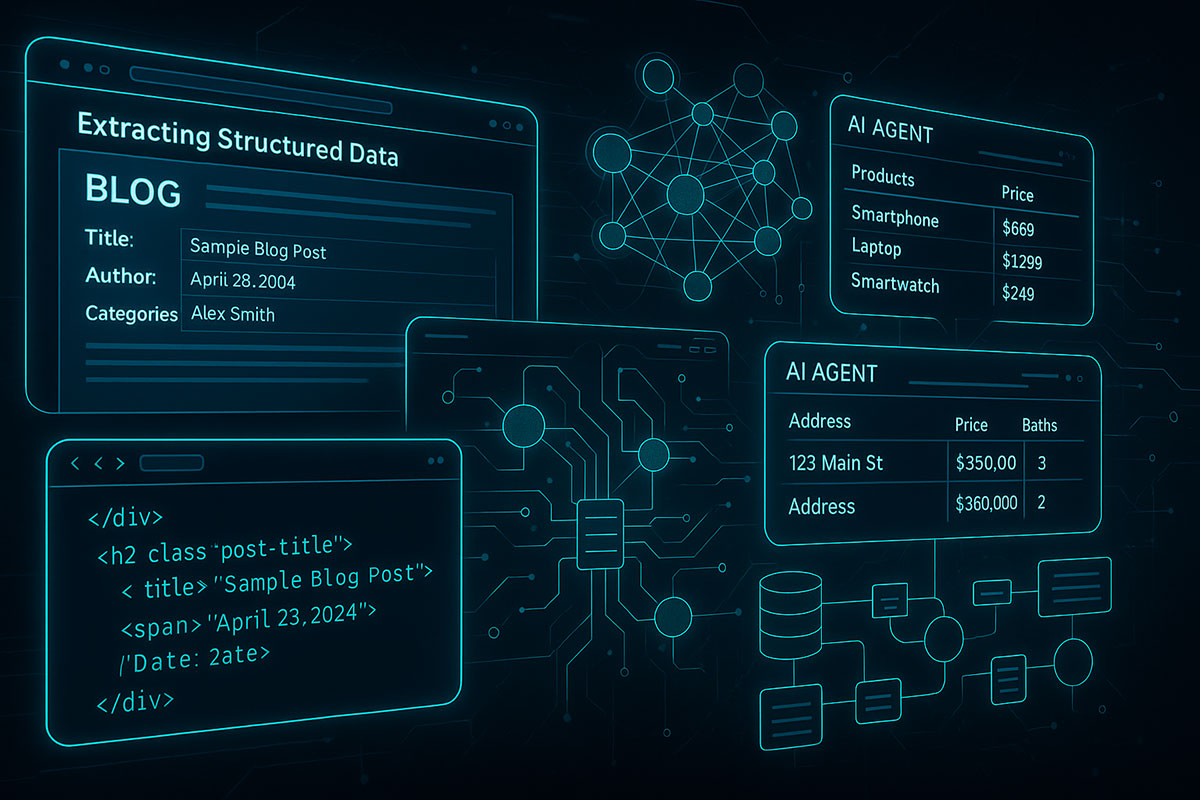
One of Browserbase's standout features is Structify—an intelligent data extraction system that converts unstructured HTML into clean, structured datasets (JSON, CSV). Instead of parsing HTML manually, you describe what data you want, and Structify extracts it automatically.
Proxy Integration and IP Rotation
Browserbase includes 5GB of proxy bandwidth on mid-tier plans, allowing you to route traffic through rotating IP addresses. This is essential for scraping sites that block repeated requests from the same IP.
Session Replay and Debugging
Every browser session is recorded and replayed, allowing developers to debug scraping jobs visually. If a script fails, you can watch exactly what happened and identify the problem.
Why Browserbase Is Trending Now: Market Timing and Enterprise Demand
The 99X growth and soaring search volume aren't random. Several factors converged in 2025 to make web scraping infrastructure suddenly critical:
1. Agentic AI Explosion
AI agents (systems that autonomously plan and execute multi-step tasks) have become central to enterprise AI strategies. These agents need to access real-time web data to function effectively. Browserbase provides the browser layer that agents rely on. For more on agentic AI, see The Rise of AI Agents in 2025: From Chat to Action.
2. Data-Driven Decision Making
Companies increasingly make decisions based on real-time market data: competitor pricing, sentiment analysis, supply chain tracking. This data lives on websites. Browserbase enables automated, at-scale extraction of this information.
3. Enterprise AI Adoption
The global AI-driven web scraping market reached USD 886 million in 2025 and is projected to grow to USD 4.37 billion by 2035—a 17.3% CAGR. Enterprise spending on automation infrastructure is accelerating, and Browserbase is positioned at the center of this shift.
4. Regulatory Compliance Demand
Law firms, compliance teams, and regulatory bodies use web scraping for evidence gathering, monitoring, and audits. Browserbase's session replay and audit trail features make it attractive for regulated industries.
Real-World Use Cases: How Companies Deploy Browserbase
1. Lead Generation at Scale
B2B SaaS companies use Browserbase to scrape business directories, LinkedIn (via permitted methods), industry databases, and company websites to generate targeted lead lists. An agent can visit 1,000+ websites per day, extract contact information, company size, and decision-maker titles, all automatically.
2. Competitive Intelligence & Monitoring
A SaaS founder schedules a Browserbase job to run daily at 7:00 AM. The agent opens Product Hunt, Hacker News, and Crunchbase, identifies new startups that compete with their product, analyzes overlaps, and sends a Slack summary with links to deep-dive. This replaces hours of manual research.
3. Real Estate Investment Analysis
Real estate investment firms use Browserbase agents to scrape Zillow, Redfin, MLS databases, and property tax records. The agent extracts prices, historical trends, neighborhood demographics, and school ratings. This data feeds into investment models that identify undervalued properties.
4. E-Commerce Price Monitoring and Dynamic Pricing
Online retailers deploy Browserbase to monitor competitor pricing across the web. An agent scrapes Amazon, Shopify stores, and marketplaces hourly, updating your product pricing automatically to stay competitive.
5. Market Research and Sentiment Analysis
Research firms use Browserbase to scrape product reviews, Reddit threads, Twitter discussions, and news articles. The extracted text feeds into NLP models that analyze sentiment, identify trends, and surface insights for client reports.
6. Legal Evidence Gathering
Law firms, particularly those handling disability rights cases, use Browserbase to gather evidence of discriminatory online behavior, accessibility violations, or regulatory non-compliance. Session replay provides auditable proof for legal proceedings.
Browserbase Pricing: Complete Breakdown and Cost Analysis
| Plan | Monthly Price | Browser Hours | Proxy (GB) | Concurrent Browsers | Best For |
|---|---|---|---|---|---|
| Free | $0 | 1 hour/month | 0 GB | 1 | Experimentation, proof-of-concept |
| Developer | $20 | 100 hours/month | 1 GB proxy | 10 concurrent | Individual developers, small projects |
| Startup | $99 | 500 hours/month | 5 GB proxy | 100 concurrent | Growing SaaS, moderate-scale scraping |
| Scale | $1,000+ | Custom usage | Custom | 250+ concurrent | Enterprises, large-scale operations |
Overage Costs (Additional Usage):
- Browser hour overage: $0.12/hour (Developer), $0.10/hour (Startup)
- Proxy GB overage: $12/GB (Developer), $10/GB (Startup)
Cost Example: A Startup plan ($99/month) includes 500 browser hours. If you use 600 hours, you're charged 100 × $0.10 = $10 additional. For a company running 24/7 light scraping, a Startup plan plus $100-200/month in overages (~$300-400 total) is typical.
Browserbase vs Alternatives: Competitive Comparison
| Tool | Pricing Model | Ease of Use | Stealth Capabilities | Scalability | Best For |
|---|---|---|---|---|---|
| Browserbase | Subscription + usage | Simple API, documentation strong | Advanced, CAPTCHA solving included | Handles 1000+ concurrent | AI agents, enterprise automation |
| Scrapeless | $0.6-$1.8 per GB | Simple, pay-as-you-go | Good, not as advanced | Moderate, ~100 concurrent | Small teams, budget-conscious scraping |
| Selenium | Free, open-source | Moderate, high learning curve | None (detectable as bot) | Requires self-hosting & scaling | Small projects, full customization |
| Puppeteer | Free, open-source | Complex, Node.js only | None (easily detectable) | Self-managed, infrastructure heavy | Developers who want full control |
Step-by-Step Tutorial: Building Your First Browserbase Scraper
Step 1: Sign Up and Get API Key
- Go to browserbase.com and click "Sign Up."
- Choose the Developer plan ($20/month) to get started.
- Verify your email and retrieve your API key from the dashboard.
Step 2: Install the SDK
In your terminal, run:
npm install @browserbase/sdkStep 3: Write a Simple Scraper
import Browserbase from "@browserbase/sdk"; const client = new Browserbase({ apiKey: process.env.BROWSERBASE_API_KEY, }); async function scrapeExample() { // Launch a browser instance const session = await client.sessions.create(); // Navigate to a website await session.goto("https://example.com"); // Extract data const data = await session.evaluate(() => { return { title: document.title, links: Array.from(document.querySelectorAll("a")).map(a => ({ text: a.textContent, href: a.href })) }; }); console.log("Scraped data:", data); // End session await session.close(); } scrapeExample(); Step 4: Run Your Scraper
In your terminal:
BROWSERBASE_API_KEY=your_key_here node scraper.jsThe scraper navigates to example.com, extracts the page title and all links, and logs them to your console.
Step 5: Scale to Multiple Sites (Simple Loop)
const sites = [ "https://site1.com", "https://site2.com", "https://site3.com" ]; async function scrapeMultiple() { for (const site of sites) { const session = await client.sessions.create(); await session.goto(site); const data = await session.evaluate(() => { return document.title; }); console.log(`${site}: ${data}`); await session.close(); } } scrapeMultiple(); This simple loop scrapes multiple sites sequentially. For massive scale (1000+ sites), use concurrent batching with Promise.all() or a queue-based approach.
How Agencies Monetize Browserbase: $5K+ Monthly Revenue
Specialized agencies have built lucrative businesses on top of Browserbase. Here's how the business model works:
Service Structure
- Discovery & Requirements ($2-5K): Understand client's scraping needs, target websites, data fields, frequency.
- Setup & Development ($5-15K): Configure Browserbase, write custom scrapers, test against target sites.
- Monthly Recurring Revenue ($1-5K/month): Operate scrapers, monitor for failures, deliver data in client's format (JSON, CSV, API).
Real Example: Lead Generation Service
An agency offers a "LinkedIn Lead Scraping Service" (within legal/ethical bounds). They charge clients $2,000/month to deliver 500+ qualified B2B leads daily. Their costs: Browserbase ($100), proxies ($50), labor ($300), profit margin ($1,550). This scales to 5-10 clients = $10-20K MRR.
Why Agencies Can Charge Premium Rates
- Complexity: Building reliable scrapers requires expertise in web technologies, API design, and debugging.
- Anti-Bot Arms Race: Websites constantly update defenses; agencies maintain scrapers through changes.
- Data Quality: Agencies ensure data is clean, deduplicated, and actionable—not raw HTML.
- Legal Compliance: Agencies navigate Terms of Service, robots.txt, and regulatory requirements.
Enterprise Adoption and the Competitive Landscape
In 2025, large enterprises began openly adopting Browserbase for production workloads. Companies like Vercel, PromptLoop, Coframe, and Aomni publicly mentioned using Browserbase in their tech stacks. This mainstream adoption validation drove interest from mid-market companies and VCs funding AI infrastructure startups.
For deeper insights into how AI is transforming business operations, see AI in Business & Startups.
Security, Legal, and Ethical Considerations
Robots.txt and Terms of Service
Responsible scraping respects websites' robots.txt rules and terms. Browserbase doesn't bypass these—it's up to users to ensure they're acting legally. Public, non-authenticated data is generally safer to scrape than authenticated content.
Rate Limiting
Scraping 1,000 pages per second is technically possible but unethical (and often illegal). Best practices: scrape during off-peak hours, respect Crawl-Delay directives, and add delays between requests.
Data Privacy
If scraping personal data (emails, addresses), ensure compliance with GDPR, CCPA, and local regulations. Browserbase provides audit trails to demonstrate compliance.
Future Roadmap: What's Next for Browserbase
Industry leaks suggest Browserbase is planning:
- Direct LLM Integration: Agents will reason about page structure natively, improving extraction accuracy.
- Enhanced Video & PDF Support: Not just HTML scraping, but extraction from multimedia content.
- Compliance Tools: Built-in GDPR/CCPA logging and anonymization features for regulated industries.
- No-Code Interface: Visual scraper builder for non-technical users.
Market Size and Growth Trajectory
The global AI-driven web scraping market is projected to grow from $886 million (2025) to $4.37 billion (2035). This represents a compound annual growth rate of 17.3%. Key growth drivers include:
- E-commerce and retail adoption for price monitoring
- Financial services using web data for market analysis
- Healthcare and pharmaceutical research
- Legal and compliance use cases
Browserbase's position as the developer-friendly, AI-native scraping infrastructure means it's well-positioned to capture significant market share as this market explodes.
Key Takeaways: Why Browserbase Matters Now
- 99X Growth: Trending hard with 8,100+ monthly searches, signaling explosive demand.
- Enterprise Validation: Adoption by Vercel, PromptLoop, and others proves production-readiness.
- AI Agent Critical Layer: As agentic AI becomes mainstream, Browserbase becomes essential infrastructure.
- Monetization Opportunity: Agencies earning $5K+/month by providing scraping services build on Browserbase.
- Market Timing: $4.37B projected market by 2035 means early adopters capture significant value.
- Low Barrier to Entry: $20/month Developer plan enables anyone to build; scales to enterprise.
Related Reading
- The Rise of AI Agents in 2025: From Chat to Action
- Top Agentic AI Careers in 2025: Skills, Salaries & How to Prepare
- Best AI Startup Ideas for 2025: Where Investors Are Betting
- AI in Business & Startups Category
About the Author
Girish Soni is the founder of TrendFlash and an independent AI strategist covering artificial intelligence policy, industry shifts, and real-world adoption trends. He writes in-depth analysis on how AI is transforming work, education, and digital society. His focus is on helping readers move beyond hype and understand the practical, long-term implications of AI technologies.