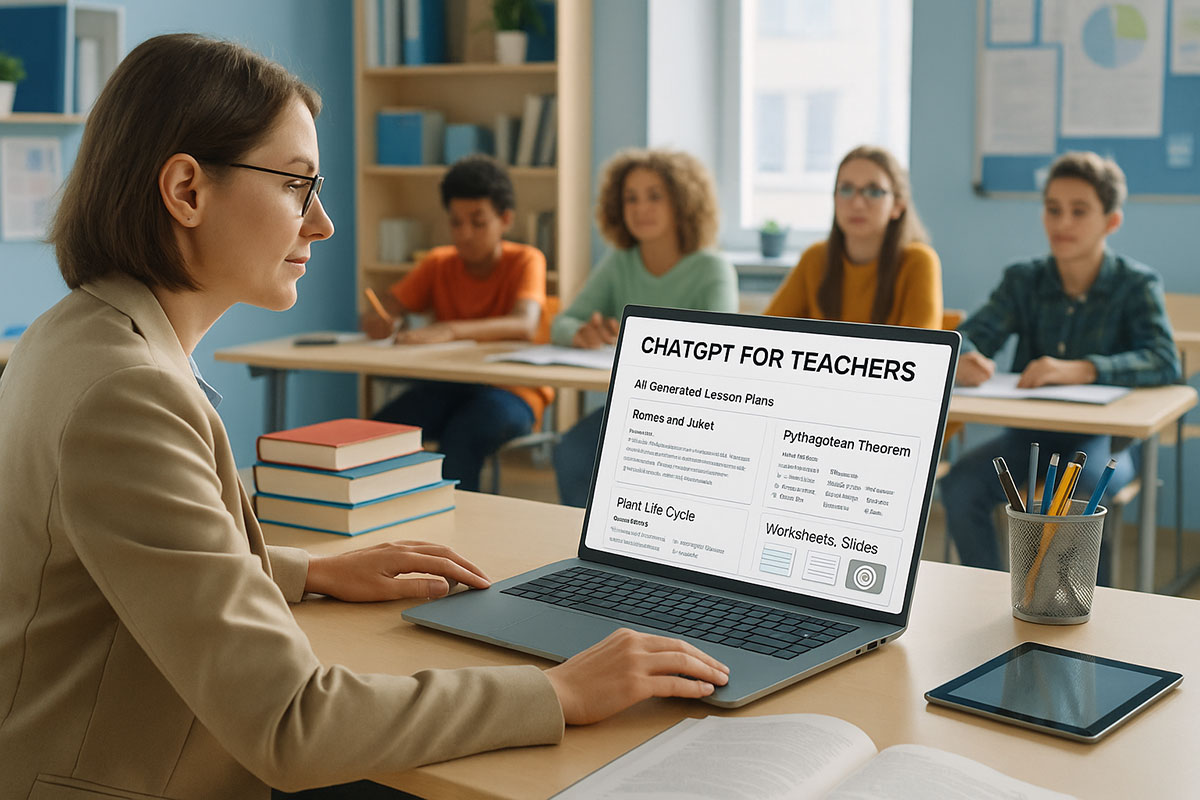
What Just Happened: OpenAI's Biggest K-12 Move Yet
On November 18-19, 2025, OpenAI did something that surprised the education sector: it released a purpose-built version of ChatGPT designed specifically for K-12 educators. This isn't a minor feature release. It's a fundamental acknowledgment that classrooms need different tools than consumers do, and that teachers—not just students—should be at the center of how AI enters education.
The initial rollout is targeting approximately 150,000 educators across the United States. Districts in California (Capistrano Unified School District), Texas (Dallas ISD, Houston ISD, and Rio Grande Valley schools), and Virginia (Fairfax County Public Schools) are first movers. Teachers in these districts, once verified through SheerID, can access the platform completely free until June 2027. After that, OpenAI has promised to keep pricing "as affordable as possible" for schools, though specific costs haven't been announced yet.
This launch comes nearly two years after ChatGPT entered mainstream classrooms in early 2023. In that time, the conversation shifted dramatically. Initial concerns about cheating gave way to recognition that AI in classrooms is inevitable. What followed was a harder question: how do you actually implement it responsibly? ChatGPT for Teachers is OpenAI's answer.
How ChatGPT Edu Differs from Free ChatGPT: The Features That Matter
If you've been using the free version of ChatGPT, here's what changes with ChatGPT for Teachers:
Model access and capability: Teachers get access to GPT-5.1 Auto, the latest reasoning-enhanced model. Free users get access to GPT-4o (the free tier's most advanced option). The difference is meaningful for complex instructional design tasks that involve multiple variables and constraints.
Usage limits: The free version of ChatGPT has soft limits that kick in during peak usage times. ChatGPT for Teachers provides substantially higher usage limits, designed for educators who need to generate dozens of lesson plans, assessment rubrics, and student communications daily.
Integration ecosystem: This is where the distinction becomes practically significant. ChatGPT for Teachers includes connectors to the tools teachers actually use: Google Drive, Microsoft 365, and Canva. This means you can generate a lesson plan in ChatGPT and automatically save it to your Google Drive, or pull student documents from Microsoft Teams directly into ChatGPT to analyze their work. The free version doesn't have these integrations. You have to copy and paste manually.
Teacher-specific memory and context: ChatGPT for Teachers maintains context about you as an educator. It remembers your grade level, your subject area, your school's curriculum standards, even your teaching style preferences. Instead of explaining all this context every time you use it, the system builds a profile that makes every interaction faster and more tailored. Free ChatGPT has limited memory features, and nothing designed specifically for educational context.
Privacy and security architecture: This is the crucial difference for school districts. ChatGPT for Teachers meets FERPA (Family Educational Rights and Privacy Act) requirements, meaning student-related information is protected under federal law. The platform operates in a secure workspace where school administrators have governance controls. Critically: anything teachers share inside ChatGPT for Teachers is not used to train OpenAI's models. With free ChatGPT, OpenAI can use your conversations for model improvement (though they say they don't train on sensitive content). For schools, this distinction matters enormously.
Administrative controls: School districts get the ability to claim their domain, implement SAML SSO (Single Sign-On) authentication, and manage access at the district level. This allows IT departments to ensure all educator accounts are properly provisioned and deactivated appropriately. Free ChatGPT is an individual consumer product with no organizational management features.
Custom GPT creation and sharing: Teachers can build custom versions of ChatGPT tailored to specific classroom needs—a GPT for AP Biology teaching, for instance, or one specialized in special education scaffolding. Teachers can then share these custom GPTs with colleagues. Free users can use custom GPTs created by others, but cannot create or share their own easily. In schools, the ability to collaborate and share AI tools across departments is valuable for creating institutional knowledge.
File uploads and image analysis: Both versions support file uploads, but ChatGPT for Teachers has higher limits and integrations that make workflow smoother. You can upload a stack of student essays and ask the system to identify common misconceptions across them, or upload curriculum documents and ask it to suggest AI-enhanced lesson activities aligned to standards.
To put it practically: the free version is like having a knowledgeable colleague you can chat with. ChatGPT for Teachers is like having that colleague deeply integrated into your institutional workflows.
Why Teachers Actually Want This (And Why It Matters)
The announcement has been met with genuine enthusiasm from educators, which is noteworthy. Teachers are generally skeptical of edtech promises. So why are they excited about this?
It addresses the biggest pain point: administrative burden. Teachers spend roughly 25-30% of their work time on administrative tasks—grading, writing documentation (especially for special education IEPs), designing assessment rubrics, creating lesson plans, drafting parent communications. These are necessary but time-consuming work that pulls away from actual teaching. Early pilot feedback indicates that ChatGPT for Teachers can meaningfully reduce this burden. Teachers in districts already using AI report saving 5-10 hours per week on administrative work.
Special education teachers especially welcome this tool. Creating individualized education plans (IEPs) and documentation to support special education compliance is notoriously time-consuming and complex. An AI tool designed for schools, with knowledge of federal special education law built in, is genuinely useful for this work. Dallas ISD explicitly cited reducing the burden of IEP development as a priority for their ChatGPT for Teachers implementation.
It provides institutional support for what teachers are already doing informally. A 2025 Carnegie Learning report found that 50% of K-12 teachers already use some form of AI in their teaching. But they're using free ChatGPT, which is not designed for schools and creates privacy risks. Many teachers use it because they recognize it's useful, but they're doing so without institutional support, training, or governance. ChatGPT for Teachers legitimizes this work and provides guardrails around it.
It treats teachers as the primary users, not students. This is subtle but important. The narrative around AI in education often focuses on students using AI to learn. ChatGPT for Teachers centers the teacher's experience: how does AI help you teach better? This distinction matters because it places human judgment at the center of the equation. Teachers use the tool; they decide when and how students use AI. This is fundamentally different from just making ChatGPT available to everyone.
It comes with security and governance that schools can actually implement. School IT directors have been managing a nightmare: ChatGPT being used throughout their district informally, with student data potentially being shared, and no institutional oversight. ChatGPT for Teachers gives them a solution they can actually roll out at the district level with appropriate governance.
What ChatGPT Edu Is NOT (Important Clarifications)
As important as understanding what ChatGPT for Teachers does is understanding what it doesn't do.
It is not designed for students to use directly. OpenAI was explicit about this. ChatGPT for Teachers is for educators. It's a tool to help teachers teach better, not a replacement for classroom instruction or a student-facing tutoring system. This distinction addresses one of the biggest concerns districts have: not "Will students cheat with this?" but rather "How do we help teachers use AI responsibly?" ChatGPT for Teachers answers the second question.
It is not a complete AI integration solution. Schools still need to develop policies about AI use, provide teacher training (OpenAI's materials help, but districts need to customize), and think about how AI fits into their curriculum. The tool itself is one piece of a larger institutional puzzle.
It does not have automatic classroom management features. Teachers still need to think intentionally about when students use AI, when they shouldn't, and how to use AI for assessment. The system provides capabilities; it doesn't provide pedagogical answers to complex questions about how to teach with AI.
It is not free forever. The free tier lasts through June 2027 for verified K-12 teachers. After that, OpenAI will introduce pricing. The company committed to keeping costs "affordable," but that term is relative. Schools accustomed to free tools may face budget questions when pricing is announced.
The Rollout Timeline and Which Schools Get It First
OpenAI launched this to a cohort of early-adopter districts. As of late November 2025, the confirmed districts receiving immediate access include:
In Texas: Dallas Independent School District, Houston Independent School District, and schools in the Rio Grande Valley region. Texas's large districts and forward-thinking education policy made it a natural starting point.
In California: Capistrano Unified School District in Orange County, an affluent suburban district known for embracing edtech.
In Virginia: Fairfax County Public Schools and Prince William County Public Schools—the state's two largest districts, serving the Washington, D.C. metro region.
These are not random selections. They represent a mix of large urban districts (Houston, Dallas), suburban affluent districts (Capistrano, Fairfax), and growing districts (Rio Grande Valley). OpenAI is testing rollout with districts that have adequate IT infrastructure, teacher populations generally open to technology, and administrative capacity to manage implementation. This is smart strategy: success in these districts will demonstrate proof-of-concept and make the case for broader adoption.
The rollout plan is phased. OpenAI says it will expand access to more districts based on learnings from early adopters. If you're in a district not yet included, the timeline for access is unclear, but realistically, you're probably looking at mid-2026 at earliest before widespread availability.
How to Advocate for ChatGPT Edu in Your School
If your district hasn't been selected for early access but you want your school to adopt ChatGPT for Teachers, here's a practical approach:
Build a case with data on current pain points. Survey teachers about the time they spend on grading, lesson planning, and documentation. Quantify the burden. When you present this to administration, you're not asking for "fancy new technology." You're proposing a solution to a documented problem that costs your district productivity and contributes to teacher burnout.
Highlight the privacy and security advantages. If your district is currently concerned about informal ChatGPT use, frame ChatGPT for Teachers as a solution that provides institutional control and FERPA compliance. IT directors and compliance officers will appreciate this framing.
Connect to recruitment and retention. Teacher shortages are severe in many regions. Administrative burden is consistently cited as a reason experienced teachers leave the profession. Present ChatGPT for Teachers as a retention tool that shows your district is investing in teachers' professional experience.
Request a pilot program. Even if your district can't access the full rollout immediately, you might request permission to enroll a cohort of volunteer teachers in the free tier (through the June 2027 deadline). Use this as a learning opportunity to understand what works, what training teachers need, and what governance structures make sense for your context.
Partner with your teachers' association. If your district has a teachers' union, work with leadership. Unions are increasingly recognizing that thoughtful AI integration, with proper training and support, can improve teachers' working conditions. This makes AI adoption a collective bargaining point, not just an administration initiative.
Early Adopter Feedback: What Teachers Are Saying
Districts piloting ChatGPT for Teachers in November 2025 reported preliminary observations:
Teachers are using the tool for lesson planning more than any other function. A teacher working on unit design can describe the learning objectives, the student population, and the constraints (time, materials, standards to address), and ChatGPT for Teachers generates multiple lesson frameworks to choose from. This is meaningful time savings.
Special education and intervention teachers are using it heavily for documentation and scaffolding. Creating multiple versions of a lesson at different complexity levels—something special educators do constantly—that previously took hours now takes minutes with AI assistance.
Teachers are discovering unexpected uses. One teacher reported using ChatGPT for Teachers to analyze patterns in student misconceptions. She fed the system a week's worth of student responses to a particular physics question and asked it to identify common reasoning errors. The system generated a list of misconceptions and suggested teaching moves to address each one. This kind of data-informed instruction is precisely what teachers say they wish they had time for.
Importantly, teachers using it report that the tool is most useful when they're expert at what they're teaching. A teacher can recognize when ChatGPT's suggestion is pedagogically sound and when it's not. Teachers with less experience in a subject are more likely to be confused about whether the tool's output is accurate. This suggests that implementation without teacher training could be problematic.
The Broader Context: AI Tools Evolving, Not Replacing Education
ChatGPT for Teachers represents a significant moment for two reasons. First, it signals that OpenAI is genuinely committed to education, not just capitalizing on it. The free tier through June 2027 comes at real cost to OpenAI. They're betting that building goodwill and use cases in education will pay off long-term.
Second, it demonstrates that AI companies are listening to school concerns. The emphasis on FERPA compliance, privacy, institutional governance, and teacher-centered design shows that OpenAI heard the critiques from educators and adjusted accordingly. That's noteworthy in an industry often perceived as moving too fast and ignoring stakeholder concerns.
But let's be clear about what this tool isn't: it's not a cure-all for education, not a replacement for teacher judgment, and not a solution to the deeper challenges schools face—chronic underfunding, inequitable resources, declining social-emotional support. AI tools are most effective when schools have the foundational resources to implement them well: adequate teacher compensation, reasonable class sizes, professional development time, and a clear vision of how technology serves pedagogy rather than driving it.
That said, if you're a teacher overwhelmed by administrative burden, or a school leader trying to help teachers be more effective, ChatGPT for Teachers is worth serious attention.
Getting Access and Getting Started
If you're a verified K-12 teacher: Go to the OpenAI website and verify your educator status through SheerID. Once verified, you can access ChatGPT for Teachers free through June 2027. The verification process takes minutes and simply requires proof of current teaching status (employee ID, school email, or similar credentials).
If you're in an early adopter district: Your IT department or instructional technology office will likely reach out with information about access and training. If they haven't yet, your building principal or instructional coach is the person to ask.
If you're not yet in an early adopter district: Bookmark this tool. The rollout will expand. In the meantime, experiment with free ChatGPT if you're comfortable doing so, and start thinking about how you'd want to use a teacher-specific tool if your district adopted it. Many teachers find that imagining concrete use cases—"I'd use this to create multiple versions of worksheets for differentiation" or "I'd use this to generate quiz questions aligned to standards"—helps when they actually get access to the tool.
Looking Ahead: ChatGPT for Teachers as Inflection Point
ChatGPT for Teachers isn't the endpoint of AI in education. It's an inflection point. Five years from now, having purpose-built AI tools for different roles in education—teachers, administrators, instructional coaches, special educators—will be standard. The question will not be "Should schools use AI?" but "How are your AI tools integrated into your instructional vision?"
What ChatGPT for Teachers demonstrates is that this integration can be done thoughtfully, with privacy, security, and educator voice at the center. Not every edtech company operates this way. The fact that OpenAI did—that they built something for teachers, with teachers' actual needs in mind—is genuinely significant.
For educators feeling anxious about AI, this tool offers something concrete: not a threat to your profession, but a tool designed to make your profession more sustainable and more focused on what actually matters—helping students learn and grow.
Related Reading