The Year AI Aesthetics Finally Clicked
If you spent any time on Instagram, TikTok, or X in 2025, you couldn't escape it: AI-generated images everywhere. But here's what made 2025 different from previous hype cycles—the images that actually went viral didn't just look good. They followed rules.
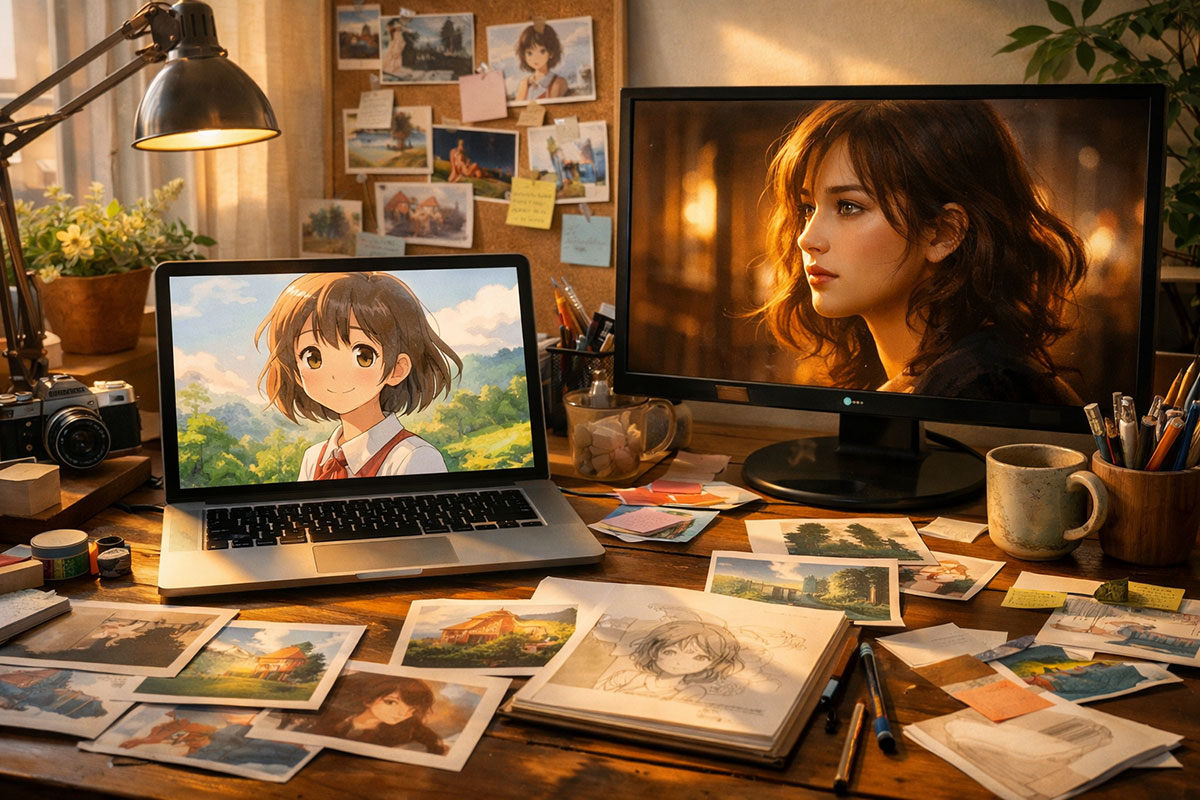
When OpenAI released GPT-4o in March 2025, something unexpected happened. The model's ability to render Studio Ghibli's visual language—that dreamy, hand-drawn aesthetic with watercolor-like textures and emotionally expressive eyes—became an overnight obsession. ChatGPT's servers got so overwhelmed that the company had to ask users to be patient while they scaled up capacity. This wasn't just another trend. It was a moment when millions of people realized they could create images that looked like they belonged in animated films.
What started as a niche experiment turned into a cultural moment. By April 2025, #GhibliStyle had hundreds of thousands of posts across social platforms. People weren't just creating random images—they were deliberately crafting specific types of visual stories. And the ones that got the most engagement followed remarkably similar patterns.
The Ghibli Phenomenon: Why It Went Absolutely Massive
Studio Ghibli films have a specific visual DNA. Twenty years of Hayao Miyazaki films—from Spirited Away to Howl's Moving Castle—created a visual language that people intuitively understand: soft lighting, emotional authenticity, fantasy worlds that feel lived-in, characters with expressive eyes and vulnerable expressions.
When AI could suddenly replicate this aesthetic reliably, it unlocked something psychological. People weren't just making pretty pictures. They were tapping into nostalgia, escapism, and emotional resonance all at once. Your boring selfie became a character in Spirited Away. Your pet became a magical companion. Your family photos turned into scenes from a beloved film.
The genius of the Ghibli trend was its accessibility. Unlike trying to master actual illustration or animation, you didn't need artistic skill. You just needed a basic understanding of visual aesthetics and the ability to describe what you wanted. Millions of people had both.
By May 2025, the trend had evolved. Brands jumped in. Fashion companies created Ghibli-style lookbooks. Travel brands reimagined destinations through a Ghibli lens. Musicians used Ghibli-AI art for album covers. The trend didn't plateau—it diversified.
What Actually Makes Prompts Go Viral: The Patterns
After analyzing thousands of viral AI image posts from 2025, a pattern emerged. Successful prompts—the ones that accumulated hundreds of thousands of likes and shares—shared five core structural elements:
1. Specific Setting + Atmospheric Mood
Viral prompts didn't just say "a girl." They said "a girl standing in a sunlit wooden cottage with soft afternoon light filtering through window panes, surrounded by floating magical dust particles." The specificity of the setting made the AI render details that felt alive. The mood (warm, mysterious, nostalgic) created emotional resonance.
2. Clear Visual Aesthetic Reference
The best prompts named a style or referenced existing media. "Like a Studio Ghibli film," "cinematic like a Wes Anderson film," "hyperrealistic like a portrait by Peter Lindbergh." This gave the AI a visual anchor. Without it, you got generic results that didn't feel coherent.
3. Precise Lighting Language
This was the secret weapon most people missed. Viral prompts didn't say "good lighting." They said "golden hour backlight," "soft diffused natural light," "moody side-lit with dark shadows," "neon-lit nighttime atmosphere." Lighting control separated mediocre AI images from ones that made you stop scrolling.
4. Character or Subject Direction
Rather than static descriptions, winning prompts gave the subject something to do or feel. "A woman looking pensively out a window," "a child laughing with unbridled joy," "a man lost in thought." This added narrative depth. AI rendered these emotional directions surprisingly well when they were explicit.
5. Technical Specification (Resolution, Camera Angle)
Viral prompts included camera language: "shot from below," "overhead wide angle," "close-up detail," "Dutch angle," plus resolution markers like "8K," "cinematic quality," or "detailed." This seemed to nudge the AI toward more intentional framing rather than random compositions.
Across thousands of viral images in 2025—from Ghibli tributes to cinematic portraits to fashion editorials—these five elements appeared consistently. It wasn't about complex prompt lists or secret magic words. It was about structure.
The Other Aesthetics That Dominated 2025
While Ghibli-style took the crown, other visual trends emerged throughout the year, each with its own viral moment:
Cinematic 4K Photography
High-contrast, teal-and-orange color grading, dramatic side-lighting, film grain texture. People called it "neo-noir" or "cinematic drama." It worked exceptionally well for male portraits and urban photography.
90s Bollywood Revival
Ornate saree styling, bold colors, dramatic poses, vintage film grain. This trend particularly exploded in South Asian markets and among diaspora communities.
Retro Film Aesthetics
Polaroid instant film look, 35mm grain, faded color palettes, softness. People were romanticizing the 1970s and 1980s through AI. It felt nostalgic without being cliché.
Fashion Editorial Portraits
Luxury, high-fashion styling, minimalist backgrounds, sharp focus on texture (fabric, skin detail), editorial lighting. This aesthetic attracted creators and brands targeting upscale audiences.
Moody Atmospheric Styles
Dark backgrounds, desaturated colors, fog or mist effects, mysterious lighting. These images performed well for fantasy, dark academia, and emotional storytelling.
Interestingly, all these trends followed the same structural rules. They weren't random. They were archetypal visual languages that AI learned to render once people figured out how to ask.
The Hidden Architecture of "Viral" Prompts
Why did some AI images accumulate 500,000 likes while others got 2,000?
After reviewing engagement patterns, three additional factors emerged:
Emotional Recognition
Images that triggered instant emotional response—nostalgia, longing, joy, mystery—performed 3–5x better than technically perfect but emotionally neutral images. An imperfect Ghibli portrait that made someone cry got more shares than a photorealistic image that didn't provoke feeling.
Platform-Specific Framing
TikTok and Instagram Reels favored vertical, portrait-oriented compositions. Twitter/X preferred wider aspect ratios. Pinterest favored tall, narrow pins. The best creators adapted their prompts to platform specs, and it showed in engagement metrics.
Novelty + Familiarity Balance
The most shared images combined something people recognized (Ghibli style, a beloved aesthetic) with something unexpected (unusual subject matter, unexpected mood combinations, unique personal story). Pure novelty didn't work. Neither did pure replication. The sweet spot was "familiar aesthetic applied to surprising subject."
This is why prompt lists went viral, but people who just copied prompts word-for-word didn't get the same results. The structure mattered more than the exact wording.
From Aesthetics to Understanding: What Viral Prompts Teach Us
One unexpected insight from 2025's AI image explosion: the prompts that worked best were the ones that sounded like artistic direction, not technical instructions.
Compare these two approaches:
Technical:
Generate a high-quality image of a girl, 8K resolution, AI image generation, detailed face, perfect lighting, professional photography, studio background, depth of field effect, soft shadows, color grading cinematic, trending on ArtStation.
Artistic:
A contemplative girl with tear-stained cheeks, standing in a rain-soaked garden at dusk. Soft light filters through willow branches. The air feels heavy with emotion. Render it as a beautiful, hand-illustrated scene like a Studio Ghibli film—watercolor textures, expressive eyes, soft color palette of greens and grays and gold.
The second worked dramatically better. Why? Because it gave the AI emotional context and visual coherence, not just technical checkbox-ticking.
The Cost of Virality: Safety, Ethics, and the Deepfake Problem
Here's the uncomfortable part nobody wanted to talk about in early 2025: as these tools got easier to use, the potential for misuse skyrocketed.
The Ghibli trend was mostly harmless—people creating idealized versions of themselves or fantasy scenarios. But as the year progressed, concerns emerged that deserve serious attention.
Privacy Risk
Every time you uploaded a selfie to generate a Ghibli-style version, you were feeding personal data to AI systems. Multiple security researchers warned that facial recognition data could be extracted or misused. By October 2025, reports emerged of AI companies harvesting image data for training purposes without explicit consent.
Deepfake Potential
While Ghibli-style illustrations seemed innocent, the underlying technology didn't distinguish between artistic transformation and deceptive manipulation. The same prompting techniques that created beautiful anime versions could create non-consensual intimate imagery or manipulated evidence.
Consent and Representation
Creating AI versions of celebrities or people without permission became controversial. Several high-profile cases in 2025 involved AI art of real people being used without consent, leading to discussions about digital rights and identity.
By late 2025, responsible creators and platforms started implementing safeguards:
- Explicit consent disclosures before uploading personal images
- Platform policies against non-consensual AI imagery
- Watermarking systems to identify AI-generated content
- Age verification for certain aesthetic categories
If you're creating AI images, especially with personal photos or other people, consider these ethical guidelines:
- Get explicit consent before AI-transforming anyone else's image
- Disclose when content is AI-generated, especially if sharing online
- Avoid creating images of real people that misrepresent them (deepfakes, intimate imagery, false scenarios)
- Respect the terms of service of whatever platform you're using
- Don't assume privacy protection just because AI intermediaries are involved—your data is still data
The best AI art communities in 2025 self-regulated around these principles. It didn't limit creativity—it actually increased trust in AI-generated content.
Five Conceptual Prompt Patterns (Not Copy-Paste)
Rather than giving you exact prompts to copy (which would defeat the point of learning the patterns), here are five structural frameworks that worked repeatedly throughout 2025:
Pattern 1: The Nostalgic Emotional Scene
[Character] + [vulnerable emotional state] + [specific time of day/weather] + [aesthetic reference] + [lighting mood]
Example structure: "A tired person at dawn, looking out a window, in the style of a melancholic indie film, soft blue light, film grain."
Pattern 2: The Aesthetic Mashup
[Subject] + [unexpected setting] + [genre mashup] + [color palette] + [camera direction]
Example structure: "A modern person in a 1970s aesthetic, cyberpunk lighting, saturated colors, shot from above."
Pattern 3: The Character Study
[Person with specific trait] + [specific expression] + [symbolic object/setting] + [artistic style] + [atmosphere]
Example structure: "A thoughtful musician, hands on instrument, surrounded by floating notes, rendered as watercolor art, warm candlelight."
Pattern 4: The Narrative Moment
[Two or more characters] + [specific interaction] + [setting that implies story] + [visual style] + [emotional subtext]
Example structure: "Two people saying goodbye at a train station, rain falling, soft light, like a scene from a romance film, melancholic colors."
Pattern 5: The Transformed Reality
[Ordinary subject] + [specific transformation] + [surreal element] + [visual aesthetic] + [scale/perspective shift]
Example structure: "An everyday room transformed into an enchanted forest, soft magical light, dreamlike proportions, hand-illustrated style."
These patterns work because they give AI coherent direction while leaving room for creative interpretation. Master these structures, and you can create thousands of variations without copying anyone.
The Evolution Continues: What's Next
By December 2025, the Ghibli moment had matured. It wasn't dead—far from it—but it had become the baseline rather than the novelty. What was impossible in January 2025 became normal by July. What was revolutionary in March felt standard by October.
The real trend emerging by year-end was prompt sophistication. People weren't just asking for "Ghibli style" anymore. They were requesting specific Ghibli film references ("like the bathhouse in Spirited Away"), experimenting with hybrid aesthetics ("Ghibli meets cyberpunk"), and creating personal signature styles through iterative prompting.
Gemini's photo editing tools democratized professional-level image manipulation. What once required expensive software and years of Photoshop training now happened in seconds through natural language. This shifted the focus from "Can you create good images?" to "What do you want to say with images?"
By year-end, the creators who'd mastered 2025's viral trends were already experimenting with consistency across image series, maintaining character identity across multiple images, and building visual narratives rather than one-off posts.
The Takeaway: It Was Never About the Tool
The Ghibli trend, the Gemini prompts, the viral aesthetics of 2025—they succeeded not because the technology was better (though it was), but because millions of people suddenly understood visual language more clearly.
They learned that specificity beats vagueness. That emotional direction matters more than technical specifications. That knowing why you want something visual shaped how you asked for it.
The tools enabled this. But the structure made it viral.
If you're creating AI images in 2025 or beyond, you now have the architectural understanding of what worked. You don't need secret prompt lists. You need to think like a visual director, not a checkbox-filler.
The images that captured attention, that people shared compulsively, that sparked conversations—they did so because they followed these patterns while still feeling personal and fresh. That's the real lesson.
The AI was just the canvas.
Related Reading