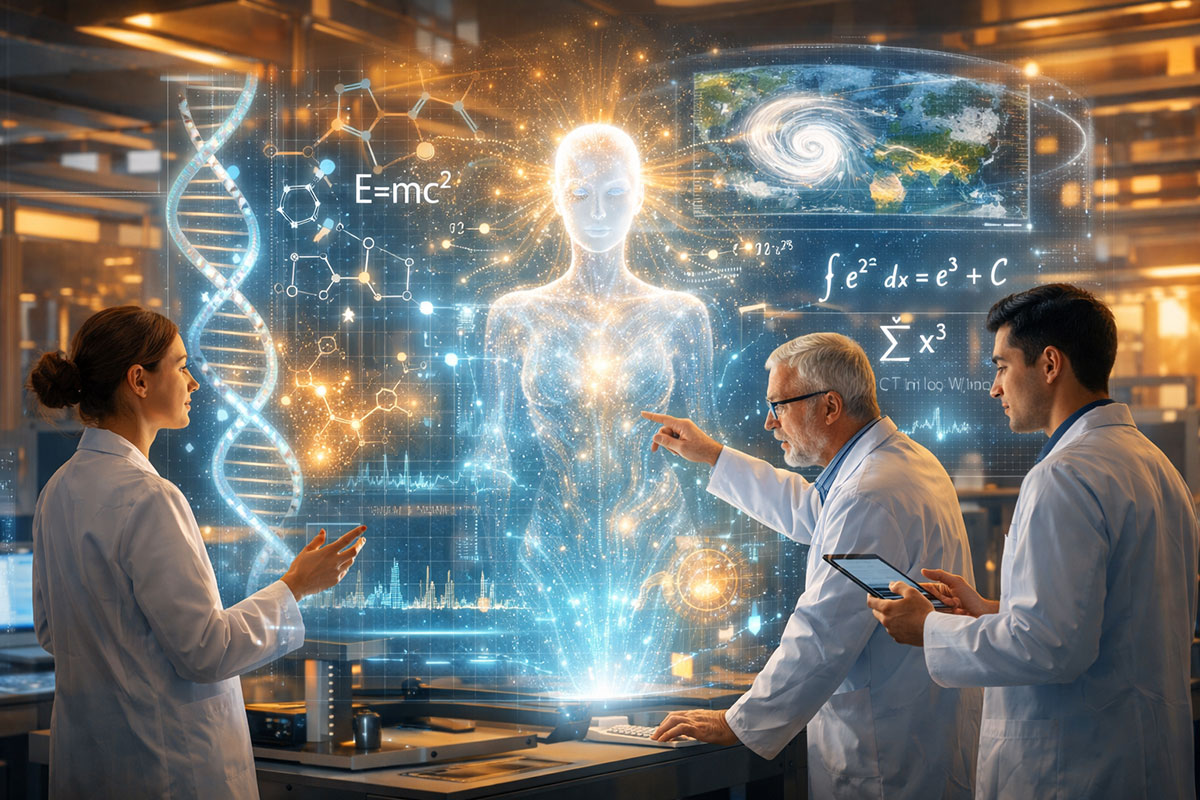
Introduction: When Science Meets Silicon
On December 17, 2025, the White House announced something that will fundamentally reshape how America does science. Google DeepMind revealed its partnership with all 17 U.S. Department of Energy national laboratories in what's being called the "Genesis Mission"—a historic effort to double the productivity and impact of American science within a decade.
This isn't another press release about AI doing cool tricks. This is about putting the world's most advanced AI tools directly into the hands of 40,000 scientists, engineers, and researchers who are working on everything from revolutionizing healthcare to cracking the code on sustainable fusion energy. The implications ripple far beyond laboratory walls—they touch your life, your future, and the planet's survival.
The Genesis Mission: America's Scientific Moonshot
The Genesis Mission represents a fundamental shift in how scientific research is conducted. Led by Under Secretary for Science Darío Gil, this initiative will mobilize the Department of Energy's 17 National Laboratories, industry partners, and academic institutions to build what officials are calling "the world's most complex and powerful scientific instrument ever built."
The goal is audacious: harness the current AI and advanced computing revolution to compress decades of research into years, and years into days. The mission focuses on three critical pillars—American energy dominance through advanced nuclear and fusion power, advancing discovery science through quantum computing ecosystems, and ensuring national security through AI-powered defense technologies.
What makes this partnership different from typical government-tech collaborations? Speed and scale. Scientists at all 17 national labs now have accelerated access to DeepMind's frontier AI models starting immediately, with expanded access rolling out in early 2026. This isn't a pilot program or a limited trial—it's an all-in bet on AI agents as scientific co-workers.
AI Co-Scientist: The Virtual Lab Partner Already Saving Lives
The first tool deployed is already showing results that sound like science fiction. The "AI co-scientist" is a multi-agent virtual scientific collaborator built on Google's Gemini models, trained on the company's world-class Tensor Processing Units (TPUs). Think of it as having a tireless research assistant who has read every scientific paper ever published, can synthesize vast amounts of information instantly, and proposes novel hypotheses that human researchers might never consider.
The early results are stunning. In collaboration with Stanford University, the AI co-scientist proposed novel drug repurposing candidates for liver fibrosis—and when researchers actually tested these proposals in laboratory experiments, they worked. The AI identified epigenetic targets that showed significant anti-fibrotic activity in human hepatic organoids, which are 3D, multicellular tissue cultures designed to mimic the structure and function of the human liver.
Even more impressive: the system predicted complex antimicrobial resistance mechanisms that matched experimental results before those experiments were even published. We're talking about compressing research timelines from years to days. For patients waiting for treatments, for families dealing with rare diseases, this acceleration isn't just about science—it's about hope.
AlphaEvolve: The Algorithm That Designs Algorithms
When early 2026 arrives, national lab scientists will gain access to AlphaEvolve—a Gemini-powered coding agent that represents something genuinely new in the world of AI. This isn't an AI that helps you write code; it's an AI that invents entirely new algorithms from scratch.
AlphaEvolve pairs the creative problem-solving capabilities of large language models with automated evaluators that verify answers, using an evolutionary framework to improve upon the most promising ideas. It leverages an ensemble approach: Gemini Flash (Google's fastest model) maximizes the breadth of ideas explored, while Gemini Pro (the most powerful model) provides critical depth with insightful suggestions.
Real-World Impact: Already Transforming Google's Infrastructure
The proof isn't theoretical—AlphaEvolve has already enhanced Google's data centers, chip design, and AI training processes. In one deployment, it discovered a remarkably effective heuristic to help Google's Borg system orchestrate data centers more efficiently. This solution has been in production for over a year, continuously recovering an average of 0.7% of Google's worldwide compute resources. That might sound small, but at Google's scale, it translates to hundreds of millions of dollars in operational savings and enormous energy efficiency gains.
In chip design, AlphaEvolve proposed a Verilog rewrite that removed unnecessary bits in a key arithmetic circuit for matrix multiplication. This proposal was integrated into an upcoming Tensor Processing Unit (TPU), Google's custom AI accelerator. By finding smarter ways to divide large matrix multiplication operations into manageable subproblems, it sped up a vital kernel in Gemini's architecture by 23%, leading to a 1% reduction in Gemini's training time. Given that developing generative AI models requires substantial computing resources, every efficiency gained translates to considerable cost and energy savings.
Breaking Mathematical Records That Stood for Decades
Perhaps most impressively, AlphaEvolve broke a 56-year-old mathematical record. It discovered an algorithm to multiply 4x4 complex-valued matrices using 48 scalar multiplications, improving upon Strassen's 1969 algorithm that was previously considered the best in this setting. This demonstrates a significant advance over DeepMind's previous work, AlphaTensor, which specialized in matrix multiplication algorithms.
The system also made progress on the "kissing number problem"—a geometric challenge that has fascinated mathematicians for over 300 years concerning the maximum number of non-overlapping spheres that can touch a common unit sphere. AlphaEvolve discovered a configuration of 593 outer spheres and established a new lower bound in 11 dimensions.
For national labs working on fusion energy, materials science, and quantum computing, AlphaEvolve could be transformative. The complex mathematical models required for simulating fusion plasma dynamics or discovering new superconducting materials often push human intuition to its limits. Having an AI that can evolve algorithms specifically tailored to these problems could be the difference between theoretical understanding and practical breakthroughs.
AlphaGenome: Decoding the 98% of DNA We Barely Understand
While AlphaFold won DeepMind co-founders Demis Hassabis and John Jumper the 2024 Nobel Prize in Chemistry for predicting protein structures, AlphaGenome tackles an even more complex challenge: understanding the non-coding regions of DNA that make up 98% of the human genome.
These vast stretches of DNA don't directly code for proteins, but they're far from "junk DNA." They're the control panel—the switches, dimmers, and timers that orchestrate when and where genes get turned on and off. Many genetic variants linked to diseases live in these non-coding regions, making them crucial for understanding everything from cancer susceptibility to rare inherited disorders.
Technical Capabilities That Push Boundaries
AlphaGenome can analyze up to 1 million DNA letters (base-pairs) as input and make predictions at the resolution of individual letters. This combination of long sequence context and high resolution was previously impossible—earlier models had to trade off one for the other. Remarkably, training a single AlphaGenome model took just four hours and required half the compute budget used to train the original Enformer model.
The model predicts thousands of molecular properties characterizing regulatory activity: where genes start and end in different cell types, where they get spliced, the amount of RNA being produced, which DNA bases are accessible, and which proteins are binding to specific locations. It can also score the effects of genetic variants or mutations by comparing predictions of mutated sequences with unmutated ones—and it does this in about a second.
Performance benchmarks demonstrate state-of-the-art results. When producing predictions for single DNA sequences, AlphaGenome outperformed the best external models on 22 out of 24 evaluations. When predicting the regulatory effect of a variant, it matched or exceeded top-performing external models on 24 out of 26 evaluations. Importantly, this comparison included models specialized for individual tasks—AlphaGenome was the only model that could jointly predict all of the assessed modalities.
From Cancer Research to Crops
The applications span an extraordinary range. For disease understanding, AlphaGenome could help researchers pinpoint the potential causes of disease more precisely and better interpret the functional impact of variants linked to certain traits, potentially uncovering new therapeutic targets. In one case study, researchers used AlphaGenome to investigate a cancer-associated mutation in patients with T-cell acute lymphoblastic leukemia (T-ALL). The model predicted that mutations would activate a nearby gene called TAL1 by introducing a MYB DNA binding motif, replicating the known disease mechanism.
For synthetic biology, the predictions could guide the design of synthetic DNA with specific regulatory functions—for example, engineering DNA sequences that activate genes only in nerve cells but not muscle cells. With additional training data on plant genomes, AlphaGenome could potentially be extended to help improve crop resistance to climate change, develop sustainable biofuels, and create advanced biomaterials.
The connection to AlphaFold is clear: while AlphaFold told us how proteins fold, AlphaGenome tells us when and where those proteins get made in the first place. Together, they provide an unprecedented view of the molecular machinery of life.
WeatherNext: Predicting Tomorrow's Storms With Yesterday's Patterns
Climate change has made extreme weather events more frequent and more severe. Traditional weather forecasting models, built on complex physics equations run on supercomputers, are struggling to keep pace. WeatherNext represents a fundamentally different approach to weather prediction—one that's already partnered with the U.S. National Hurricane Center to support cyclone forecasts and warnings.
How AI Weather Models Work Differently
Traditional numerical weather prediction simulates the physics of the atmosphere step by step, solving enormous sets of equations that describe how air moves, how heat transfers, and how water changes state. It's computationally expensive and time-consuming. AI weather models like WeatherNext take a radically different approach: they learn patterns from historical weather data spanning decades, then use those patterns to predict future states.
WeatherNext 2 uses what's called a Functional Generative Network (FGN) architecture combined with a large ensemble to deliver probabilistic forecasts that are 8 times faster than the previous version. It makes predictions of several variables—temperature, pressure, humidity, wind speed—at the surface and at 13 different heights, on a grid that divides the world into 0.25-degree regions. The system generates 15-day global trajectories and takes just 8 minutes on a single Tensor Processing Unit.
The approach handles uncertainty in a sophisticated way. Instead of producing a single forecast, it generates an ensemble of multiple plausible forecasts by sampling different neural network configurations. This captures both the inherent variability in the atmosphere and the limits of our ability to predict chaotic systems.
Performance That Outpaces Physics
The real-world results are compelling. During Hurricane Lee in 2023, Google DeepMind's earlier GraphCast model predicted the Nova Scotia landfall 9 days ahead of time, while the European Centre for Medium-Range Weather Forecasts (ECMWF)—widely considered the gold standard—only determined landfall 6 days in advance. Those extra three days of warning can save lives and property.
According to Nature research published on GenCast (a related DeepMind weather model), the probabilistic approach creates more accurate forecasts than the best numerical weather prediction system in the world for medium-range forecasts. This is particularly valuable for tropical cyclone track prediction and local wind power forecasts, where accurately identifying joint spatial patterns is crucial.
There are limitations, of course. AI models rely on having extensive historical data for training, which means they can struggle with truly unprecedented weather events that fall outside their training distribution. Traditional physics-based models can still be better for certain extreme events and long-range seasonal forecasts. The future likely involves hybrid approaches that combine the speed and pattern-recognition capabilities of AI with the physical understanding of traditional models.
For communities in hurricane zones, for farmers planning harvests, for energy grid operators preparing for heatwaves—the difference between a good forecast and a great forecast, between 6 days of warning and 9 days of warning, can be measured in lives saved and disasters averted.
What This Means for You: Science That Touches Lives
It's tempting to think of national laboratories as distant ivory towers disconnected from everyday concerns. The reality is quite different. The work happening at these 17 labs ripples through your life in countless ways.
The fusion energy research supported by AlphaEvolve could eventually provide the abundant, carbon-neutral power that makes electric vehicles truly sustainable and keeps your electricity bills affordable. The drug discoveries accelerated by AI co-scientist and AlphaGenome could lead to treatments for diseases that currently have none—maybe for a rare condition affecting someone you love. The weather forecasts powered by WeatherNext could give your coastal community that critical extra warning before a hurricane hits.
Beyond individual impacts, there's a workforce transformation underway. The emerging field of human-AI collaboration is creating entirely new job categories. Labs will need AI fluency specialists who can bridge the gap between domain scientists and AI systems. Demand for "AI fluency" skills has grown sevenfold in two years, faster than for any other skill in US job postings. The World Economic Forum estimates that by 2030, work tasks will be nearly evenly divided: 47% performed primarily by humans, 22% handled mainly by technology, and 30% involving collaborative effort between humans and AI.
The Genesis Mission itself could unlock about $2.9 trillion in economic value in the United States by 2030—but only if organizations prepare their people and redesign workflows around humans, agents, and robots working together. This isn't just about technology; it's about reimagining work itself.
The Global Race for Scientific Leadership
The timing of this announcement matters. We're in the midst of a global race for technological and scientific leadership. China has made massive investments in AI and quantum computing. Europe is coordinating research efforts across borders. The Genesis Mission is America's answer—a bet that the combination of world-class research institutions, cutting-edge AI, and private sector innovation can maintain U.S. leadership in the technologies that will define the 21st century.
The partnership also builds on a history of collaboration between national labs and industry. The foundational work by DOE's Brookhaven National Laboratory on the Protein Data Bank was crucial for developing AlphaFold, which has now been used by more than three million scientists in over 190 countries to accelerate research on everything from malaria vaccines to groundbreaking gene therapies.
Oxford University researchers used AlphaFold to determine the first full-length structure of Pfs48/45, a protein crucial for developing malaria vaccines. As one researcher put it, "The crucial AlphaFold information enabled us to decide which bits of the protein we want to put in a vaccine and how we want to organize those proteins. AlphaFold has allowed us to take our project to the next level, from a fundamental science stage to the preclinical and clinical development stage."
These are the kind of breakthroughs that happen when you give brilliant people better tools.
Challenges and Open Questions
No technology is without challenges, and it's important to acknowledge them. AI models, no matter how sophisticated, can make mistakes. They can hallucinate results, misinterpret data, or fail in edge cases. Human oversight remains critical, especially for high-stakes decisions in healthcare and national security.
There are also questions about equity and access. Will the benefits of these AI-accelerated discoveries flow to everyone, or only to those who can afford them? Will the job transformations create opportunities for workers, or leave many behind? How do we ensure that the AI systems themselves are trained on diverse data and don't perpetuate existing biases?
The energy consumption of AI systems is another concern. While AlphaEvolve makes Google's operations more efficient, the overall energy footprint of training and running large AI models is substantial. Balancing the benefits of AI-accelerated science against the environmental costs requires careful consideration.
Looking Toward 2026 and Beyond
As these tools roll out in early 2026, expect to see a surge in scientific publications and patent filings from the national laboratories. We're likely to see breakthroughs in materials science—new battery technologies, more efficient solar cells, superconductors that work at higher temperatures. In drug discovery, the combination of AI co-scientist and AlphaGenome could identify therapeutic targets for diseases that have resisted traditional research approaches.
The fusion energy work is particularly exciting. Since the National Ignition Facility at Lawrence Livermore National Laboratory achieved fusion ignition in December 2022—producing 3.15 megajoules of fusion energy output from 2.05 megajoules of laser energy input—the race has been on to make fusion practical and commercial. AlphaEvolve's ability to optimize complex algorithms could help solve the intricate challenges of containing plasma, extracting heat efficiently, and maintaining stable fusion reactions.
This represents a new scientific method, one where the hypothesis comes from a human but the path to testing it is co-created with AI. It's collaborative discovery at a scale and speed we've never seen before.
Related Reading
To dive deeper into the AI technologies transforming science and society, explore these related articles:
- The Rise of AI Agents in 2025: From Chat to Action
- The Future of Work in 2025: How AI is Redefining Careers and Skills
- AlphaFold 3 and the Future of Protein Prediction: What You Need to Know
- AI in Healthcare: How Machine Learning is Revolutionizing Diagnosis and Treatment
- Top Agentic AI Careers in 2025: Skills, Salaries and How to Prepare
Conclusion: Science at the Speed of Thought
The Google DeepMind partnership with America's national laboratories isn't just about faster research—it's about expanding what's possible. It's about asking questions we couldn't ask before, testing hypotheses we couldn't test before, and solving problems we couldn't solve before.
The scientists in those labs aren't being replaced by AI; they're being augmented by it. They're getting tools that amplify their creativity, accelerate their experiments, and free them from the tedious parts of research so they can focus on the insights that only humans can provide.
In early 2026, when AlphaEvolve, AlphaGenome, and WeatherNext fully deploy across all 17 national laboratories, we'll start to see whether this ambitious vision can deliver on its promise. The potential is extraordinary: diseases cured, energy crises solved, disasters predicted and prevented.
This is what happens when silicon meets science, when algorithms meet atoms, when the digital revolution finally comes for the hardest problems humanity has ever faced. The Genesis Mission is betting that the future of discovery isn't human or machine—it's both, working together at the speed of thought.
About the Author
Girish Soni is the founder of TrendFlash and an independent AI strategist covering artificial intelligence policy, industry shifts, and real-world adoption trends. He writes in-depth analysis on how AI is transforming work, education, and digital society. His focus is on helping readers move beyond hype and understand the practical, long-term implications of AI technologies.