The AI Video Revolution is Actually Here (And It's Easier Than You Think)
For years, creating professional-looking video content meant investing thousands of dollars in equipment, hiring experienced videographers, or spending hours learning complex editing software. For the vast majority of creators—YouTubers, social media managers, small business owners, indie filmmakers—the barrier to entry felt insurmountable.
Then came Sora.
On December 18, 2025, the reality of AI-generated video has shifted from "someday soon" to "available right now." OpenAI's Sora video generator is live for US users, invite-only but rapidly expanding, and the results are genuinely remarkable. Within a week of expanded availability, creators have already posted videos generated from simple text descriptions that look like they required professional cinematography teams.
The question isn't whether Sora works anymore. It does. The real questions now are: Should you be using it? How do you get access? And is this finally the tool that democratizes video creation?
What Exactly Is Sora, and How Does It Actually Work?
Sora is an AI video generator built on diffusion model technology—the same underlying approach that powers image generators like DALL-E and Midjourney, but extended to video. Here's the practical version of how it works:
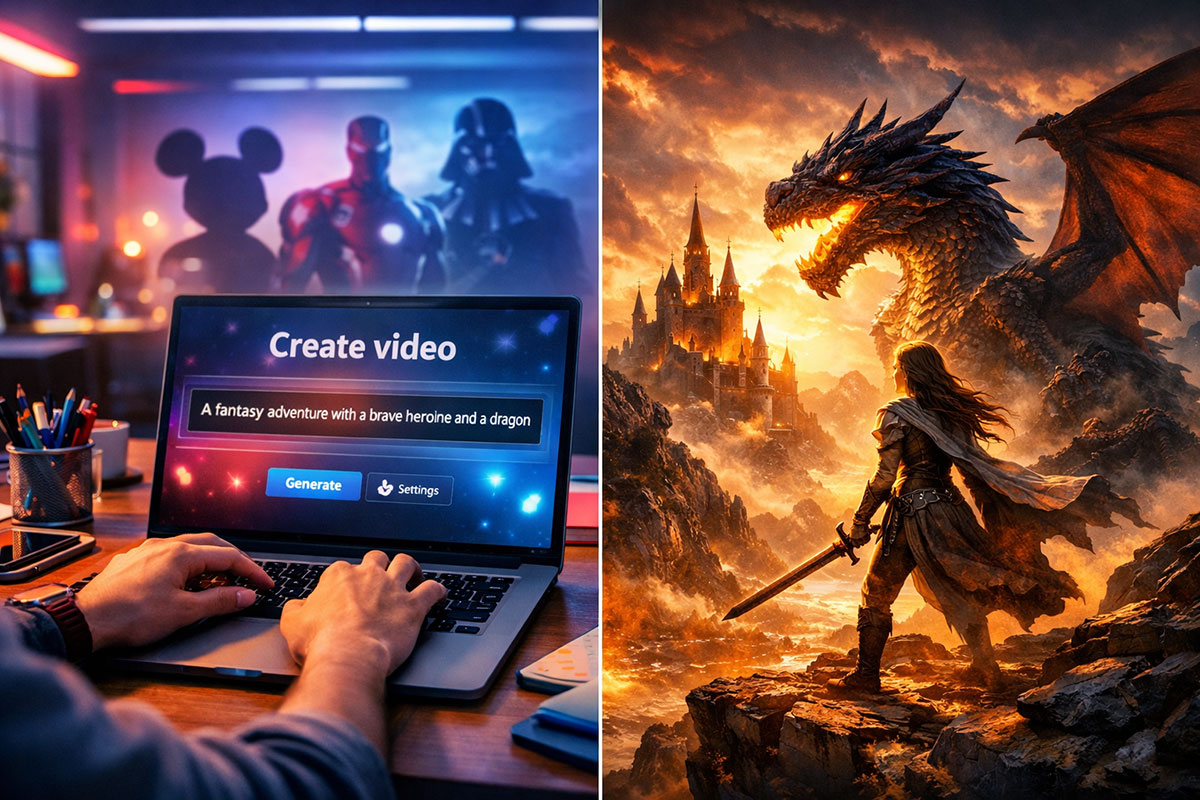
You type a description. You don't need to be specific with technical filming jargon. You don't need to know about aspect ratios or frame rates or color grading. You just describe what you want to see. Examples: "A serene mountain lake at sunrise with mist rising off the water" or "An energetic dance performance in a neon-lit nightclub" or "A cooking show segment where someone makes chocolate cake with close-up shots of the ingredients."
Sora processes your description. The AI system breaks down your text description into a complex 3D representation, understanding spatial relationships, object movements, lighting, and timing. It's not just matching keywords—the model understands language deeply enough to interpret nuanced creative descriptions.
The model generates the video frame-by-frame. Rather than creating one image and stretching it into video, Sora generates video sequences with realistic motion, physics, and visual continuity. Objects don't teleport or behave unnaturally. People move like humans actually move. Water flows. Wind affects objects. The physics feel right.
You get a finished video in seconds to minutes. Depending on which Sora plan you're using, video generation happens in real-time or within a few minutes. You can download it, edit it further, or regenerate if you want variations.
The technical achievement here is genuinely remarkable. Video generation at this quality level requires understanding not just what things look like, but how they move and interact over time. That's exponentially more complex than image generation.
"We're trying to create something that has a deep understanding of language and can interpret that into compelling video," OpenAI has stated. "Sora represents a foundation model that understands the visual world and can simulate how things evolve over time."
The Actual Quality: Does It Really Look Like "Hollywood"?
Here's where you might be skeptical. AI-generated content has a reputation for looking fake or falling apart at the edges. Is Sora different?
Yes. Noticeably so.
Early examples from Sora's rollout show videos with cinematic composition, natural lighting, realistic motion, and visual coherence that genuinely looks professional. A generated video of a woman walking through a rainy Tokyo street at night with neon reflections on the pavement? It has the visual quality of a B-roll shot from an indie film. A video of multiple shots of a space cowboy in a spacecraft, with different angles and close-ups? The continuity is clean, and the visual storytelling makes sense.
This doesn't mean Sora is perfect. It's not replacing cinematographers. There are still edge cases where generated videos look slightly off—sometimes the background can get weird, sometimes hand movements aren't perfectly natural, sometimes physics quirks appear. But these aren't common, and they're not significantly different from errors you'd find in early digital effects shots from a decade ago.
For content creation purposes—YouTube videos, social media content, marketing materials, indie film production—Sora's quality level is production-ready. That's the breakthrough.
Getting Access: How to Actually Use Sora Right Now
This is the practical hurdle: Sora isn't available to everyone yet. It's invite-only in the US and Canada, though the invite waitlist is moving relatively quickly.
Option 1: The iOS App Route - Download the Sora app from Apple's App Store and join the waitlist. You can request an invite code, and wait times have been averaging 1-3 weeks as of mid-December 2025.
Option 2: Skip the Waitlist - If you're willing to pay for it immediately, subscribe to ChatGPT Pro ($200/month). ChatGPT Pro subscribers get instant access to Sora without waiting. That's a significant advantage if you're planning to create content professionally or have time-sensitive projects.
Option 3: Web Access - Once you get an invite or a Pro subscription, you can also access Sora through sora.com. Web access is now available in the US, making it accessible from any device.
Option 4: Android - Android version is coming, expected in the coming weeks in select regions. If you're Android-only, the wait is shorter than it was, but it's not here yet.
The regional expansion is happening quickly. If you're outside the US and Canada, you're likely to see access within weeks to months, but official timelines haven't been announced.
Pricing: What Does Sora Actually Cost?
This is where creators need to make a decision based on their use case.
Free Tier - Sora offers limited free access for invite-only users. You can create basic videos with restrictions on length, resolution, and generation speed. It's genuinely free, but the limits mean it's more for testing than production use.
ChatGPT Plus - $20/month gets you:
- 1,000 credits per month (enough for multiple videos)
- Videos up to 5 seconds long
- 720p resolution
- Watermarked downloads
- Access to basic Sora features
- Non-priority generation queue (videos generate when you're not busy)
If you're creating social media content, short clips, or experimental videos, Plus is the sweet spot for price versus capability.
ChatGPT Pro - $200/month gets you:
- 10,000 credits per month (significant volume)
- Videos up to 25 seconds long
- 1080p resolution (much sharper, usable for bigger screens)
- Watermark-free downloads
- Priority generation queue (videos generate almost immediately)
- Full access to Sora Pro features, plus GPT-4, advanced voice mode, and other Pro benefits
If you're creating for YouTube, professional marketing, or any commercial use, Pro makes sense. The ability to create 25-second videos without watermarks at 1080p changes what's possible. You could create an entire YouTube short or TikTok video directly from Sora without additional editing.
The Math - For a YouTuber creating 8-10 videos per month, Pro ($200/month) comes out to $20-25 per video. Hiring a videographer for a single professional video costs $500-2000+. Sora Pro pays for itself immediately.
What Makes Sora Different From Competitors?
By December 2025, Sora isn't alone anymore. Google has Veo 3, Meta has Vibes, Runway has Gen-3, and Pika has version 1.5. The AI video space is crowded.
Sora's Advantages:
- Video quality and physics simulation - Sora's understanding of how things move and interact is noticeably superior. Objects don't clip through each other. People move naturally. Cloth and water flow realistically.
- Disney integration - This is huge and unique. Starting early 2026, Sora users will be able to create videos featuring Mickey Mouse, Elsa, Iron Man, Yoda, and 200+ other licensed characters. No other video generator has this.
- Integration with ChatGPT - If you already use ChatGPT for writing or brainstorming, the workflow is seamless. You can chat with GPT to develop your video idea, then create it directly.
- Accessibility - The interface is genuinely easy to use. You don't need to understand video production terminology.
Where Competitors Win:
- Runway offers more professional features and greater fine-grained control for advanced editors.
- Google Veo 3 produces extremely high-quality cinematic output and includes 4K options.
- Pika is cheaper ($10/month) and good for quick social media content.
If you're just starting out, Sora has the best combination of quality, ease-of-use, and ecosystem integration. If you're a professional filmmaker who needs maximum control, Runway might be better. If you're on a tight budget, Pika works. But for most creators, Sora's positioning is compelling.
The Disney Factor: Why December 2025's Announcement Matters
On December 11, 2025, Disney and OpenAI announced a partnership that fundamentally changes the calculus around Sora. Disney is investing $1 billion in OpenAI—a significant vote of confidence—and in exchange, Disney is licensing over 200 of its intellectual properties to Sora.
This means starting in early 2026, Sora users will be able to generate videos featuring:
- Disney Characters - Cinderella, Snow White, Belle, Elsa, and dozens of others
- Pixar Characters - Woody and Buzz from Toy Story, Mike and Sulley from Monsters Inc., Remy from Ratatouille
- Marvel Characters - Iron Man, Black Panther, Spider-Man, Captain America
- Star Wars Characters - Yoda, Darth Vader, Luke Skywalker, Rey
To understand why this is significant, imagine being able to create a "custom birthday video" where your kid appears in a scene with Buzz Lightyear from Toy Story. Or imagine creating a social media video where you're inserted into a lightsaber duel. These weren't possible before because using these characters without permission would be copyright violation. Now they're built in.
OpenAI CEO Sam Altman said demand for Disney characters in Sora is "off the charts." There's enormous pent-up demand for this capability.
This integration also suggests a future where other media companies might follow Disney's lead. If Netflix licenses its properties, or Marvel does separate deals, or Paramount partners with OpenAI, the creative possibilities expand exponentially.
The Disney integration isn't just feature addition—it's a signal about the future direction of AI video. Licensing and integration with existing IP is becoming central, not an afterthought.
Real-World Use Cases: What People Are Actually Doing With Sora
Early adopters are already using Sora in production. Here are real examples:
Marketing Teams - Companies are generating product demonstration videos and marketing clips. Instead of booking a film crew for a 30-second product video, marketing managers are writing scripts and generating videos directly. Iteration is instant—don't like how the product looks in sunlight? Regenerate it in different lighting. Saves weeks of production time.
Content Creators - YouTubers are using Sora to generate B-roll footage they'd normally have to source from stock libraries or film themselves. A video about "5 incredible nature scenes" can now be Sora-generated nature videos, edited into commentary. The process that took days takes hours.
Indie Filmmakers - Film students and independent filmmakers are experimenting with Sora as a rapid prototyping tool. Generate a rough storyboard as video to test concepts before committing to full production. It's transforming pre-production.
Social Media - TikTok creators are generating short videos that feel polished and cinematic with minimal effort. A creator can batch-generate 10 video concepts in an afternoon and post the best ones.
Training and Education - Companies are generating instructional videos. Imagine an IT department generating training videos for new software features without needing an expensive training video production team.
These use cases are happening now, in December 2025, with Sora 2 in the wild.
Advanced Features That Make Sora Powerful
Beyond basic text-to-video generation, Sora includes several sophisticated features:
Remix - Edit existing generated videos by changing specific elements. Don't like the sunset color? Remix it with "more vibrant orange sunset." The AI regenerates just that element, leaving the rest of the composition intact. No need to regenerate the entire video.
Storyboard - Create complex multi-shot sequences with specific scenes at designated points. You can control the narrative flow and ensure visual continuity across shots.
Loop - Generate seamless loops for background videos or music videos. The transitions are smooth, with no visible cuts or jumps.
Blend - Combine multiple prompts or references to create hybrid videos that incorporate elements from different concepts.
Style Preset - Apply consistent visual styles across multiple videos. Generate in "cinematic" mode or "animation" mode or "documentary" mode, maintaining coherence across your project.
These aren't gimmicks—they're legitimate production tools. A YouTuber could theoretically produce an entire 10-minute video using only Sora, combining different remixes, storyboards, and blends into a cohesive narrative.
The Business Opportunity: Why 600K+ Creators Are Searching for Sora Weekly
By mid-December 2025, Sora searches are hitting 300,000+ weekly searches globally, with particularly high search volume from content creators, YouTubers, marketing professionals, and small business owners. That volume signals genuine demand.
The business opportunity is real: anyone who can produce high-quality video content faster and cheaper than competitors has a significant advantage. A freelance videographer who masters Sora can take on 10x the projects. A marketing agency can produce more client work with the same staff. A content creator can publish more frequently while maintaining quality.
This creates both opportunities and challenges. The barrier to entry for video creation is collapsing. That's liberation for creators with limited budgets. It's also threat to professional videographers if they don't adapt.
Quality Concerns: What About Copyright and Authenticity?
There are legitimate questions around AI-generated video that are worth addressing directly.
Copyright Issues - This is being handled through licensing. The Disney partnership shows the direction: obtain rights from IP holders, integrate licenses into the tool, creators can use IP legally. This solves copyright problems through business arrangements rather than technology restrictions. For original content (not licensed characters), creators are responsible for ensuring they're not inadvertently generating content that infringes on existing copyrights.
Authenticity and Disclosure - There's an emerging norm that content generated with AI should be disclosed as such. This is still evolving, but the expectation is that creators will note when videos are AI-generated. Misrepresenting AI content as human-created footage is ethically problematic and potentially legally risky as regulations develop.
Deepfake Concerns - Sora has safety restrictions that prevent generating videos of real people without explicit prompting for specific actors. The tool includes content filters to prevent generating videos of graphic violence, illegal activity, or explicit content. These aren't perfect, but they represent genuine safety architecture.
Quality Concerns - As with any generative AI tool, Sora can make mistakes. Generated videos can have physics inconsistencies, impossible geometry, or just plain weird outputs if the prompt is vague. The remedy is iteration—regenerate with a better prompt.
These are real issues, but they're being addressed through a combination of technical safeguards, business partnerships, and emerging norms around AI disclosure. Not perfect, but functional.
The Landscape in December 2025: Sora's Position
Sora isn't the only AI video tool available, but it's arguably the most accessible and most capable for the median creator. Google's Veo 3 produces stunning visual quality but has more limited access and higher pricing. Runway is more powerful for professionals but steeper learning curve. Pika is cheaper but lower quality.
Sora occupies a sweet spot: genuinely excellent quality, relatively easy to use, integrated into ChatGPT ecosystem, and now with Disney licensing on the horizon. For creators asking "which tool should I learn first?" Sora is the obvious answer in December 2025.
Getting Started: A Practical Guide
If you want to try Sora:
-
Get on the waitlist - Download the iOS app and request an invite code. Wait 1-3 weeks.
-
Or skip waiting - Subscribe to ChatGPT Pro ($200/month) for instant access.
-
Write specific prompts - Describe what you want to see with sensory details. "A woman walking through rain with neon reflections" is better than "rainy street."
-
Iterate - Your first generation might not be perfect. Remix it or regenerate with refined prompts.
-
Integrate into your workflow - Think about how video generation fits into your content creation process. Is it B-roll generation? Full video creation? Rapid prototyping?
-
Plan for Disney characters - Save some budget for the Disney character feature launching early 2026. The licensing opens new creative possibilities.
Looking Ahead: What's Next for Sora
The trajectory is clear: Sora will expand globally, pricing will evolve, Disney integration will launch, and competitors will keep improving their own products. What's likely to happen in early 2026:
- Global expansion - UK, Europe, Asia-Pacific regions get access
- Android app - Full Android parity with iOS
- Disney character integration - The 200+ character library goes live
- API access - Developers can integrate Sora into their own applications
- New features - Longer video generation, higher quality options, new creative tools
- Pricing evolution - Model will likely adjust as usage patterns become clear
The question isn't whether AI video generation will be central to content creation. That's certain. The question is whether creators adapt now or lag behind competitors who did.
The Bottom Line: Should You Use Sora?
If you create video content professionally or seriously as a hobbyist: Yes, absolutely. Sora isn't replacing human creativity or professional production teams, but it's transforming how production happens. Learning Sora is now as valuable as learning any video editing software.
If you're in marketing and need to produce video content regularly: Yes. The ROI on a $200/month Pro subscription is immediate when it replaces hiring an external videographer.
If you're a small business owner who occasionally needs video content: Maybe. The free tier or Plus plan ($20/month) might be sufficient.
If you're just curious about the technology: Start with the free tier. Spend an hour experimenting. See what's possible.
If you're a professional cinematographer worried about disruption: Learn Sora and position yourself as someone who can guide clients through AI video production and know how to use Sora intelligently rather than fight against it.
Sora isn't perfect, and it's not for everyone. But as of December 2025, it represents the most accessible and capable AI video generation tool available for creators. The Hollywood-quality videos you imagined generating on your own timeline? That's not coming soon anymore. It's here now.