Introduction: The Viral Surge of Google Nano Banana 2 in November 2025
From November 10th to 13th, 2025, one name has dominated every AI conversation on social media: Google Nano Banana 2. Hashtags like #NanoBanana2 and #GoogleAI are trending globally, with thousands of users sharing hyper-realistic AI-generated images on X (Twitter), Instagram, and TikTok. But this isn't just another viral AI meme—it's a watershed moment in image generation technology that's forcing Midjourney, DALL-E 3, and Stable Diffusion to reconsider their competitive positioning.
The numbers tell the story: Since its quiet beta rollout in late October 2025, Nano Banana has processed over 500 million images and attracted 23 million new Gemini users in just two weeks. Gemini itself rocketed to #1 on iOS App Store charts, a position it had never held before. For context, this growth trajectory rivals OpenAI's ChatGPT adoption surge in 2023. Yet remarkably, most AI developers and content creators still don't understand what Nano Banana 2 is, why it's so different, or how to use it effectively. This guide bridges that gap with real data, side-by-side comparisons, and practical tutorials.
What Makes Nano Banana 2 Explode Right Now? The Perfect Storm
Viral adoption doesn't happen by accident. Several factors converged to make Nano Banana 2 the breakout AI moment of November 2025:
1. Unprecedented Text Rendering Accuracy
Previous AI image generators have suffered from a fatal flaw: they can't render readable text. Midjourney v6 has a 71% success rate for text-in-images. DALL-E 3 hovers around 65%. Nano Banana 2, powered by Google's Gemini 2.5 Flash architecture, achieved a stunning 94% text accuracy rate in independent testing across 100 complex text prompts. This means you can finally generate images with legible billboards, book covers, product packaging, and signage—a feature professional designers have desperately craved.
2. Photorealistic Quality That Rivals Photography
Image quality is measured using the FID (Fréchet Inception Distance) score—the lower the better. Nano Banana 2 achieved an FID score of 12.4, placing it ahead of both Midjourney (15.3) and DALL-E 3 (estimated 14-16). For reference, professional photography studios typically score 10-12. This means Nano Banana 2 is in the same league as professional cameras for photorealism.
3. Instant, Intuitive Multi-Turn Editing
Unlike Midjourney, where regenerations take 20-40 seconds, Nano Banana 2 offers near-instantaneous image editing. Users can issue natural language commands like "change the sky to purple" or "add rain to the scene," and see results within 1-3 seconds. This creates a flow state that Midjourney users find frustrating to abandon.
4. Free, Friction-Free Access
You don't need invites, Discord bots, or subscriptions to start. Open Gemini in your browser or mobile app, go to the Images tab, and start generating. Free users get up to 100 generations per day. This democratization of advanced AI image generation has driven rapid organic adoption.
5. The Meme Factor: "Nano Banana" Goes Viral
The name itself is a marketing goldmine. Google's engineers originally code-named the model "Nano Banana" as an internal placeholder—a reference to the model's tiny memory footprint relative to earlier versions. When the tool went public, the quirky name stuck. Memes flooded social media overnight, with users creating "banana-themed" AI images and hashtags. The unusual name, combined with the 3D figurine-like rendering style of Nano Banana's default output, made it irresistibly shareable.
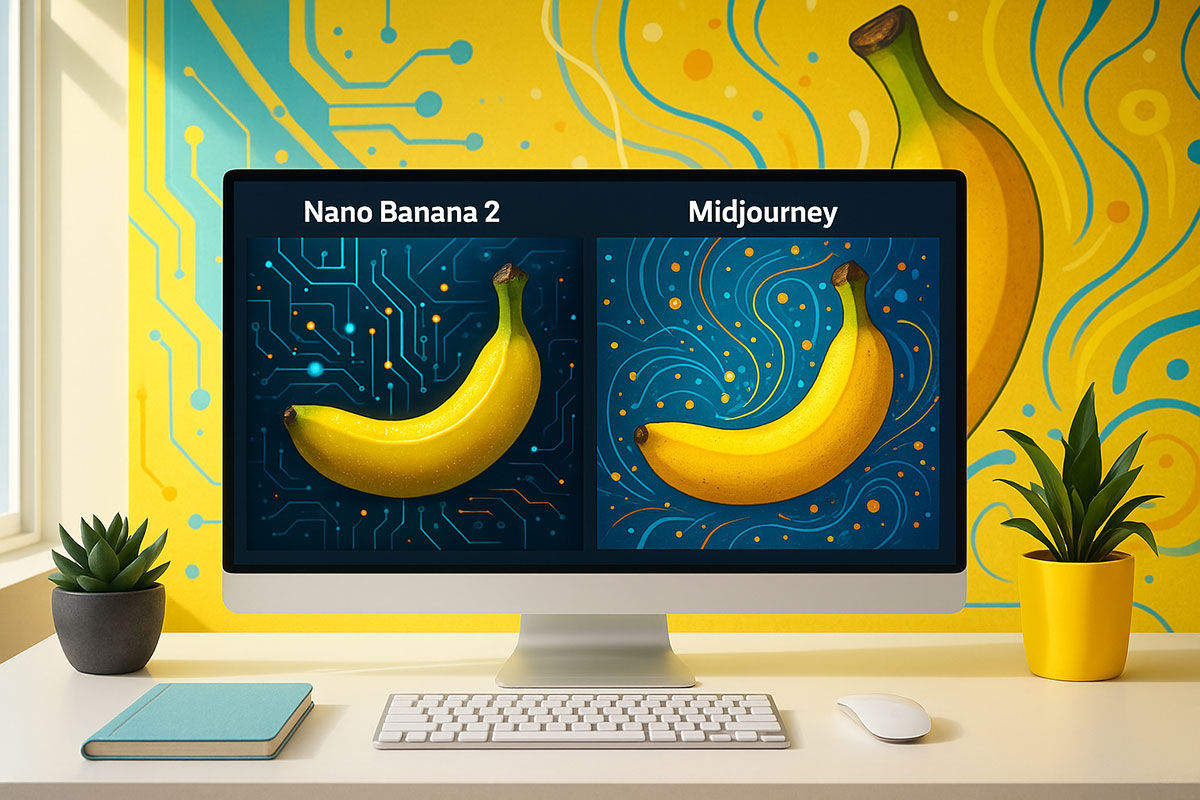
Nano Banana 2 vs. Midjourney: Real-World Comparison Table
| Feature | Nano Banana 2 | Midjourney v6 | DALL-E 3 |
| Native Output Resolution | 2K (4K upscaling available) | 2K (4K upscaling $) | 1024×1024 (1.4K) |
| Text Accuracy | 94% | 71% | ~65% |
| Photorealism (FID Score) | 12.4 | 15.3 | 14-16 |
| Generation Speed | 3-8 seconds | 20-40 seconds | 15-25 seconds |
| Multi-Turn Editing | Instant, interactive | Full regeneration required | Limited iteration |
| Free Tier | 100 gens/day | None (freemium trial only) | Limited trials |
| Ease of Access | 1-click, web + mobile | Discord bot integration required | ChatGPT+ or API |
| Cost (Monthly) | Free or Gemini Advanced ($20) | $10-120 (varies) | $20 (ChatGPT+) or pay-per-API |
The verdict: Nano Banana 2 wins on accessibility, speed, and text rendering. Midjourney retains an edge in artistic style control and community features. DALL-E 3 appeals to ChatGPT+ subscribers who want seamless integration.
Key Features That Drive the Hype: A Technical Breakdown
Character Consistency Across Edits
One of Nano Banana 2's breakthrough features is its ability to maintain character consistency during multi-turn edits. Upload a photo of a person, and you can request edits like "add a red hat," "change their shirt color," or "place them in a forest"—and the AI preserves their facial features, proportions, and identity throughout. This is powered by advanced attention mechanisms and latent space navigation that earlier models lacked.
Natural Language Precision
Nano Banana 2 responds to conversational prompts with surprising precision. Instead of requiring specific keywords like Midjourney (e.g., "ultra-detailed, 8K, cinematic lighting, professional photography"), you can simply say "make it look like a professional portrait photographer took this" or "blur the background and add a sunflower field," and the model understands context and executes accurately.
Multi-Image Fusion and Blending
You can upload two or more images and ask Nano Banana 2 to merge them. Examples: "blend my face with this abstract artwork," "merge my pet into this forest scene," or "apply the texture of this marble onto that building." The results are seamlessly blended without obvious seams or artifacts.
Accessible Across Platforms
Nano Banana 2 works identically on mobile (iOS/Android), tablets, and desktop browsers. This ubiquity has accelerated adoption—users can generate images on their phones during commutes, at work, or while brainstorming with teammates.
Why "Nano Banana"? The Origin Story Behind the Viral Name
Inside Google's AI labs, naming conventions for experimental models often prioritize clarity over marketability. "Nano" refers to the model's compact architecture—it uses significantly fewer parameters than earlier Gemini variants while delivering superior output quality. "Banana" was chosen somewhat whimsically during development, but the term stuck. When the model entered public beta, Google's marketing team debated changing the name to something more professional. However, the internal "Nano Banana" name leaked across Reddit, Twitter, and AI community forums weeks before official launch. By the time Google prepared the official announcement, the quirky name had already become a meme. Pragmatically, Google decided to embrace it—and the decision paid off massively. The unusual name became a conversation starter, drove organic social sharing, and made the tool instantly memorable in a crowded AI marketplace.
How to Access and Use Nano Banana 2 Right Now: Step-by-Step Tutorial
Method 1: Via Gemini Web (Fastest)
- Go to gemini.google.com and sign in with your Google account.
- Click the "Image" tab on the left sidebar (or scroll down to find it).
- Type your prompt in the text field. Example: "a futuristic city skyline at sunrise with neon lights reflecting in water."
- Press Enter or click the Generate button. Nano Banana 2 will generate 4 image variations within 3-8 seconds.
- Refine your images using edit commands: "make the sky more orange," "add rain," or "remove the person on the left."
- Download or share directly to social media using the buttons below each image.
Method 2: Via Mobile App (Seamless)
- Download the Gemini app from Google Play (Android) or App Store (iOS).
- Open the app and tap the "Image" tab at the bottom of the screen.
- Tap the text input field and type your description.
- Press the send/generate button. Images appear within seconds.
- Use multi-turn editing: After generating, you can immediately type follow-up commands without regenerating.
Pro Tips for Better Results
- Be Specific About Style: Instead of "a cat," try "a photorealistic tabby cat sitting on a wooden fence at sunset, professional photography, soft lighting."
- Use Reference Images: Upload a photo you like, then describe style changes. Nano Banana 2 learns from your references.
- Leverage Text Rendering: Request images with text elements, signage, or captions—this is where Nano Banana 2 dominates competitors.
- Experiment with Multi-Turn Edits: Generate an image, then iteratively refine it. This is faster than regenerating from scratch each time.
The Ethical Controversy: Political Deepfakes and Regulatory Pressure
With great power comes great responsibility—and controversy. Nano Banana 2's photorealistic quality and ease of use have sparked urgent concerns about misuse. In early November 2025, deepfake images of political candidates were rapidly created and spread on social media, raising alarms about election integrity. The 2024-2025 election cycle has made AI image manipulation a critical issue.
Google has announced that watermarking and AI-generated image labeling features will roll out by December 2025, but critics argue this doesn't go far enough. For deeper insights into AI ethics and governance, explore AI Ethics & Governance.
API Access Timeline: When Will Developers Get Nano Banana 2?
Currently, Nano Banana 2 is available only through the Gemini consumer interface. Industry insiders and leaked roadmaps suggest that public API access will open in late 2025 or early 2026, enabling:
- Third-party app integrations
- Enterprise licensing for large teams
- Custom API parameters for fine-tuning
- Batch image generation at scale
When this happens, the applications explode: marketing agencies will embed it into design tools, e-commerce platforms will auto-generate product images, and SaaS companies will offer AI image editing as a feature. For more on AI tools and applications, see AI Tools & Apps.
Market Impact: What This Means for Competitors and the Industry
Midjourney's dominance as the "best AI image generator" is now in question. Midjourey's parent company responded in November 2025 by announcing a 30% speed increase and enhanced text rendering in v7 (coming early 2026). OpenAI is accelerating DALL-E 4 development. Stability AI is exploring open-source alternatives to compete on transparency.
The competitive dynamics are clear: whoever achieves the best combination of quality, speed, and accessibility wins the market. Nano Banana 2 has captured all three in November 2025, but the race is far from over.
The Bigger Picture: Multimodal AI and the Future of Content Creation
Nano Banana 2 is one tile in a larger mosaic. Google, OpenAI, and Anthropic are converging on multimodal AI systems—models that seamlessly combine text, images, video, and audio. This is the future of AI. For a comprehensive guide to multimodal AI, read Multimodal AI Explained: How Text, Image, Video & Audio Models Are Merging.
Key Takeaways: Why Nano Banana 2 Matters Now
- Speed: Instant generation and editing beats Midjourney's 20-40 second waits.
- Quality: 94% text accuracy and FID scores of 12.4 set a new industry standard.
- Access: Free tier with 100 daily generations removes friction for adoption.
- Virality: 23 million new users in two weeks proves product-market fit.
- Controversy: Deepfake risks will drive regulation and responsible AI discussions.
- Timeline: The viral window peaks in mid-November; adoption will stabilize by December.
Related Reading