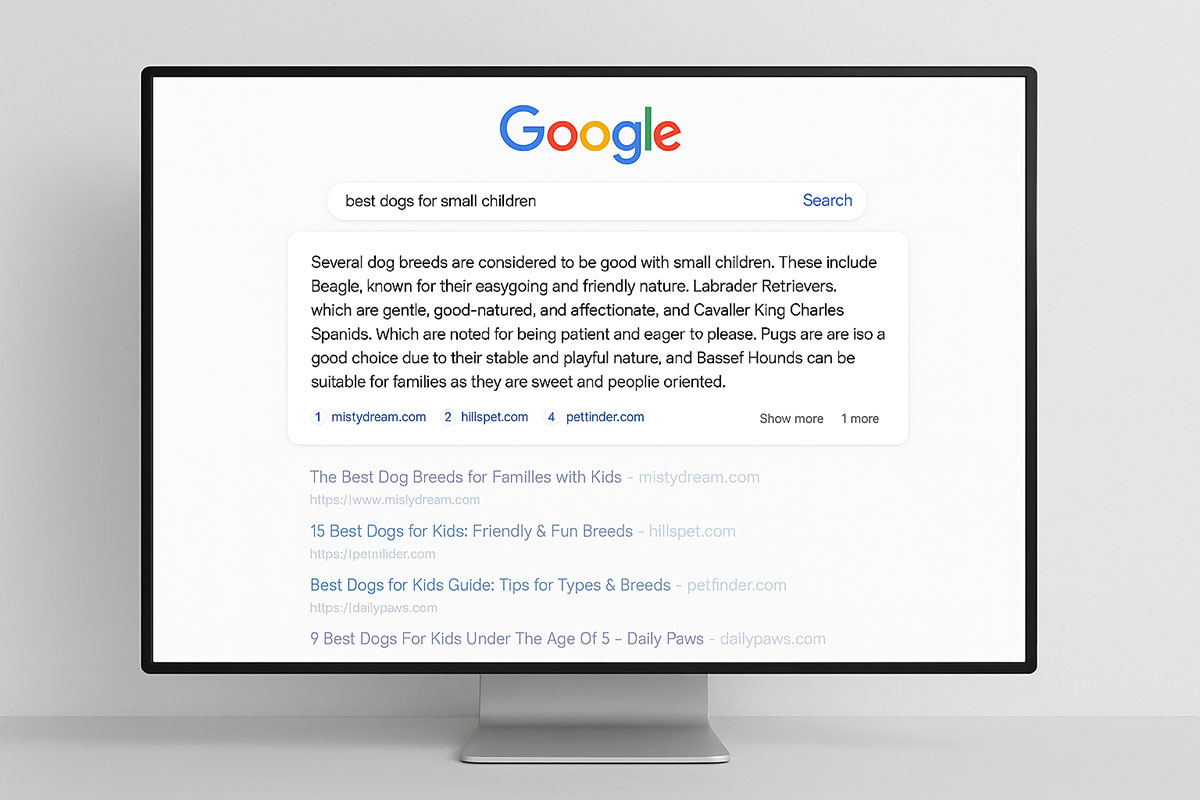
Introduction: The Search Landscape Has Changed—Permanently
Search optimization just entered a new era. For over two decades, SEO meant improving your rankings in a list of blue links. You optimized for position 1, occasionally claiming that elusive featured snippet, and watching organic traffic flow from search results to your website.
That playbook is becoming obsolete in real time.
Google's AI Mode, launched at Google I/O 2025 and now live across the United States and India with global expansion underway, has transformed search from a link list into a conversational assistant. And the adoption is stunning: search interest in "AI overview" has exploded with 99x growth in search volume—making this the single most trending AI topic of 2025.
For digital marketers, content creators, and business owners, this represents both crisis and opportunity. Traffic patterns are shifting fundamentally. But those who understand the mechanics of AI Mode and implement the right content strategies will capture disproportionate visibility in this new landscape.
What Is Google AI Mode? Understanding the New Search Experience
Google AI Mode isn't just a feature—it's a structural reimagining of how search functions.
The Technical Architecture
AI Mode uses "query fan-out"—a technique where Google's system breaks your search question into 50+ related sub-queries and searches for each simultaneously. For example, if you search "best affordable running shoes for long distance," AI Mode internally searches for shoe recommendations, affordability benchmarks, distance running science, injury prevention, and brand comparisons—all in parallel.
Google then synthesizes this distributed information into a single, coherent AI-generated summary powered by Gemini 2.5. The result is a response that feels like consultation with a knowledgeable assistant rather than scanning a list of links.
Multimodal and Interactive
Unlike AI Overviews (the precursor feature showing static summaries), AI Mode accepts:
- Text queries in natural language
- Voice input
- Image uploads for visual search
- Real-time data integration (shopping comparisons, current prices, live event information)
- Interactive follow-up questions
Users can ask clarifying questions, request deeper explanations, or shift direction mid-session. It's genuinely conversational.
Data Integration at Scale
Google has integrated 250M+ place database entries and 50B+ product graph entries into AI Mode. This means shopping queries now include live pricing, inventory status, and competitor comparisons. Search for "Italian restaurants with wine selection in my area" and AI Mode returns synthesized recommendations with current reservations availability.
The Scale of Adoption: Why This Matters Now
Understanding the adoption trajectory explains why this matters for business strategy in November 2025.
By the Numbers
- 84% of U.S. search queries now trigger AI-powered results through Search Generative Experience (SGE) or AI Mode
- 1.5 billion monthly users interact with AI Overviews globally across 200+ countries
- 30% decline in clickthrough rates from search results, according to BrightEdge research
- 92-94% of AI Mode sessions result in zero-clicks—meaning users find answers directly in the AI response without visiting any website
- 24% of traffic now comes from AI-powered systems, down from 60% in 2021 (representing both growth of non-Google LLM alternatives like ChatGPT and Perplexity, plus internal Google traffic shifting to AI Mode)
The zero-click phenomenon is the critical metric. In traditional search, even ranking position 1 doesn't guarantee clicks—but at least you're visible to searchers. In AI Mode, you might be the source cited in the AI summary yet have zero traffic because the user got their answer directly.
How AI Mode Differs From Traditional Search—And Why It Matters
The architectural differences between traditional search and AI Mode create fundamentally different SEO requirements.
| Factor |
Traditional Search |
AI Mode |
Implication |
| Source visibility |
Position-based ranking determines visibility |
Multiple sources cited equally in summary |
Ranking position matters less; citation matters more |
| Click probability |
Position 1 = 30-40% CTR; position 10 = <5% |
92-94% zero-click rate regardless of source |
Traffic depends on user intent, not ranking |
| Content length |
Long-form content (3000+ words) advantages |
Concise, structured answers (200-300 words) |
"Skimmable" content outperforms walls of text |
| Keywords |
Exact keyword matching important |
Semantic intent and context matter |
Topic modeling beats keyword targeting |
| Featured content |
Featured snippets critical for visibility |
AI synthesizes from 5-10+ sources |
Being "the" answer matters less |
| Visual content |
Images drive engagement |
Visual search up 65% year-over-year on 300M+ devices |
Diagrams and charts now essential |
The SEO Impact: What's Actually Changing for Your Traffic
Industry research reveals concerning trends for traditional SEO sites.
Traffic Reduction
Early adopters report:
- 20-60% traffic declines on informational query keywords
- Reduced visibility for news content—Wikipedia sources consistently replace original reporting in AI summaries
- Zero-click semantics: Users finding answers in AI Mode never visit websites
- Lower intent signals: Fewer follow-up searches mean less opportunity to appear on secondary queries
However, this paints an incomplete picture. The shift isn't uniform.
Sectors Hit Hardest
- News and journalism: Original reporting gets absorbed into summaries with Wikipedia getting the citation
- Consumer reviews: Shopping-focused AI Mode pulls product information from multiple sources, reducing individual review site traffic
- General information: How-to guides, definitions, FAQs lose traffic as AI synthesizes answers
- Comparison content: "X vs Y" posts see reduced clicks as AI Mode creates comparisons directly
Sectors Experiencing Growth
- Deep expertise content: Specialized guides requiring insider knowledge remain valuable
- Local business: Google Maps integration continues driving traffic for businesses (especially with AI Mode's local database integration)
- Brand-specific queries: Direct brand searches still drive traffic
- Niche communities: Highly specific, expert content addressing underserved audiences gains relative advantage
Content Strategy Framework: How to Win in AI Mode Era
The new reality demands rethinking content fundamentally.
1. Optimize for Citation, Not Ranking
Traditional SEO optimizes for search ranking. AI Mode SEO optimizes for being cited as an authoritative source.
To get cited:
- Establish clear topical authority by clustering related content
- Create definitive, comprehensively accurate content on core topics
- Implement schema markup so Google understands your expertise
- Earn citations from high-authority sites (links now signal authority more than ranking position)
- Create original data and research—AI Mode differentiates original findings from rehashed content
2. Structure Content for AI Extraction
AI models parse page structure to extract relevant information. Optimize for this by:
- Using clear hierarchy (H1 for topic, H2 for subtopics, H3 for details)
- Creating content "clusters" where main articles link to depth articles on related subtopics
- Using short paragraphs (2-3 sentences) rather than dense blocks
- Implementing tables, comparison matrices, and structured data
- Creating bulleted lists for procedural content
- Using examples and case studies prominently (AI Mode weights concrete examples)
3. Shift From Keyword Optimization to Semantic Comprehensiveness
Search for "best running shoes for flat feet" in AI Mode and watch: the system doesn't just find articles about "running shoes" or "flat feet." It finds content covering biomechanics, specific shoe models, expert opinions, user reviews, and injury prevention.
To compete:
- Create comprehensive content addressing all angles of a topic
- Include related concepts and terminology naturally
- Answer related questions within single pieces (rather than splitting into separate articles)
- Use latent semantic indexing by including synonyms and related terms organically
4. Prioritize Original Content and Data
AI Mode differentiates and privileges original research, data, and insights over regurgitated information.
- Conduct original surveys or studies
- Create proprietary data visualizations
- Publish research findings or case studies
- Develop unique frameworks or methodologies
- Share insider industry perspectives
5. Optimize for Visual Search Integration
Visual search traffic on Google increased 65% year-over-year on 300M+ devices. AI Mode integration with visual search means:
- Invest in high-quality, descriptive images and diagrams
- Add detailed alt text with semantic context (not just keyword stuffing)
- Create visual comparisons, flowcharts, and infographics
- Use schema markup for images (ImageObject, Product, Recipe, etc.)
Technical SEO Adjustments for AI Mode
Beyond content, technical factors influence AI Mode citation.
Schema Markup
Implement rich schema for your content:
- ArticleSchema for news and blog content
- FAQSchema for Q&A content
- ProductSchema for e-commerce
- LocalBusinessSchema for geographic relevance
- VideoSchema for video content
Schema helps Google understand your content structure and increases citation probability in AI Mode.
Entity Recognition
Make entities explicit in your content:
- Define people, organizations, locations, concepts clearly
- Link related entities contextually
- Use consistent terminology for entities
- Structure biographical/organizational information prominently
Structured Data Validation
Use Google's Schema Markup Validator and Rich Results Test to ensure proper implementation. Any schema errors reduce citation probability.
The Featured Snippet Question: Has It Become Obsolete?
Interestingly, featured snippets haven't disappeared—they've evolved.
Featured snippets remain valuable because:
- They still drive clicks (users viewing snippets often click for more detail)
- In 7.4% of searches, featured snippets appear alongside AI Overviews, creating dual visibility
- They maintain importance on some query types where AI Mode hasn't fully deployed
However, their value has diminished:
- AI Mode outperforms snippets for complex queries requiring synthesis
- Snippet strategies (shorter, more concise answers) conflict with AI Mode strategies (comprehensive, semantic depth)
The strategy: pursue both by creating comprehensive content that contains snippet-worthy concise answers within deeper semantic context.
Real-World Examples: What's Actually Happening in Search Results
Understanding specific use cases clarifies the shift.
Example 1: Product Comparison Queries
Traditional: User searches "Samsung Galaxy S25 vs iPhone 16," clicks through to TechRadar review earning the featured snippet, reads comparison, decides on brand.
AI Mode: User searches the same query. AI Mode synthesizes specifications from manufacturer sites, pulls user reviews from Reddit, includes expert opinions from 5+ tech sites, integrates current prices, and presents unified comparison with expandable sections for detailed specs. User never clicks through unless interested in specific reviewer's long-form opinion.
SEO Implication: Being cited beats ranking position 1.
Example 2: Medical Information
Traditional: User searches "symptoms of vitamin D deficiency," lands on Mayo Clinic's article (ranked #1), reads detailed symptoms section, might explore related articles.
AI Mode: User gets AI synthesized answer pulling from Mayo Clinic, NIH, and Johns Hopkins simultaneously. The AI summary mentions symptoms, risk factors, who's at risk, and next steps—without user needing to visit any website. The click-through rate to the actual Mayo Clinic article may drop despite Mayo being cited.
SEO Implication: Your expert content gets used, but traffic may not flow accordingly.
Example 3: Local Business Search
Traditional: User searches "Italian restaurants near me," sees local pack results, clicks on website for hours/menu, calls to book.
AI Mode: User gets restaurants from Google Maps integrated with AI summaries of reviews, current wait times, current reservations availability, menu samples, and neighborhood info. May call directly or book through Google without visiting restaurant website.
SEO Implication: Local businesses benefit from integrations and phone call tracking more than website traffic.
Comprehensive Content Strategy for 2025
Building a forward-looking content strategy requires balancing traditional and AI Mode optimization.
For Publishers and Media Companies:
- Create original reporting that adds unique perspective, not just summary
- Build email lists (less dependent on search traffic)
- Develop direct audience relationships and community
- Focus on narrative and storytelling (harder for AI to replicate than factual summaries)
For E-commerce Businesses:
- Optimize product pages with rich schema, detailed specifications, and original photography
- Create unique product comparisons rather than relying on generic content
- Build user-generated content (reviews, Q&A) prominently
- Use AI Mode shopping integration advantages (pricing, inventory)
For SaaS and B2B Companies:
- Create comprehensive resource guides and knowledge bases
- Develop proprietary industry benchmarks or research
- Build expert positioning through original insights
- Use structured data to increase discoverability
For Local Businesses:
- Optimize Google Business Profile with current information
- Build local authority through citations and reviews
- Create content addressing local-specific questions
- Use location-based schema markup
Metrics That Matter in the AI Mode Era
Traditional SEO metrics (ranking position, organic clicks) require supplementation.
New Metrics to Track:
- Visibility in AI Mode: Google Search Console now includes AI Mode data (though not yet separated from traditional search)
- Citation frequency: How often your content appears as a source in AI summaries
- Zero-click rate: Accepting that some searches won't generate clicks, regardless of optimization
- Search traffic composition: Traditional ranking clicks vs. AI Mode citations
- Answer quality: Did the AI Mode summary incorporate your content accurately?
Evolving Metric Interpretation:
Position 1 traditional ranking with zero AI Mode citations might represent wasted optimization effort. Position 15 with frequent AI Mode citations represents success.
The Competitive Landscape: Who's Winning the AI Mode Transition
Early winners share characteristics:
Wikipedia: Dominates as primary source for broad informational queries. AI Mode frequently cites Wikipedia as trusted, verifiable source for factual information.
Official sources: Mayo Clinic, NIH, government agencies benefit from authoritative positioning and existing authority signals.
Niche experts: Specialized blogs addressing specific audience gaps see maintained traffic from their devoted following.
Losing positions: General information sites, low-authority content mills, and heavy keyword-optimization content see significant traffic declines.
The pattern: authority, originality, and comprehensiveness win in AI Mode era. Thin content, keyword stuffing, and derivative content lose.
Implementation Roadmap: How to Adapt Your Site Now
Phase 1: Audit and Analysis (Week 1-2)
- Analyze which queries trigger AI Mode vs. traditional results
- Identify high-traffic keywords shifting to AI Mode summaries
- Check if your content is being cited in AI summaries
- Review current schema implementation
Phase 2: Quick Wins (Week 3-4)
- Add/improve schema markup on high-priority pages
- Restructure existing content for better AI extraction (headers, lists, tables)
- Strengthen topical clusters and internal linking
- Improve content comprehensiveness on priority topics
Phase 3: Content Repositioning (Month 2-3)
- Rewrite key articles emphasizing semantic comprehensiveness
- Create original data, research, or unique perspectives
- Build expertise signals through clustered content
- Develop visual assets and diagrams
Phase 4: Ongoing Optimization (Ongoing)
- Monitor AI Mode representation in Search Console
- Adjust strategy based on citation patterns
- Build direct audience relationships (email, social) less dependent on search
- Develop community features and user-generated content
Looking Forward: The Future of SEO Beyond AI Mode
The trajectory points to continued AI integration in search. Future considerations:
AI-Generated Content Penalties
Google's stance on AI-written content is evolving. Expect continued emphasis on original, human-perspective content.
Multimodal Optimization
As AI Mode handles visual, audio, and text queries equally, optimization must address all modalities.
Personalization Expansion
AI Mode personalizes results more than traditional search, making demographic and behavioral signals more important.
Alternative Search Channels
ChatGPT, Perplexity, Claude, and other non-Google search alternatives growing. Distribution strategy requires multi-channel thinking.
E-E-A-T Formalization
Experience, Expertise, Authoritativeness, and Trustworthiness signals become increasingly central to visibility.
Related Reading
For additional context on AI transformation and business strategy: