Introduction: The Path to AI Mastery
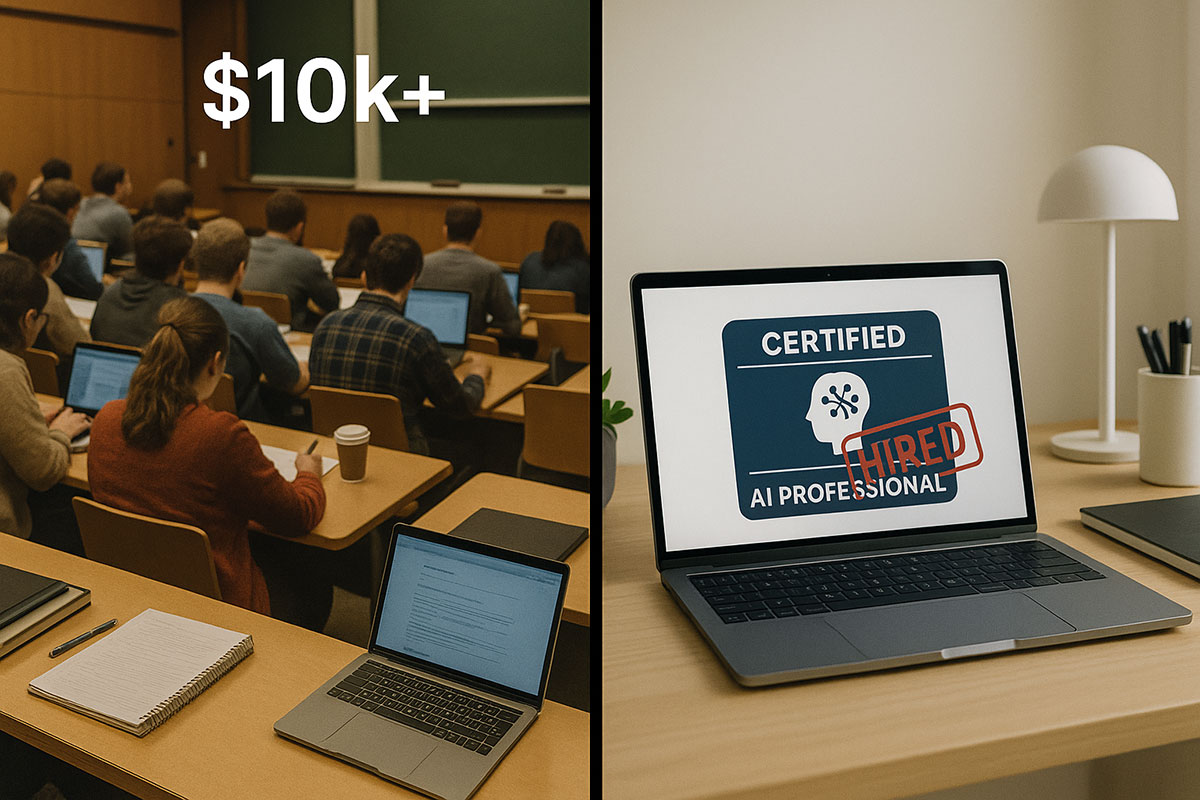
This is the roadmap that actually works. Not the 12-week bootcamp hype. Not the "become an AI expert in 30 days" nonsense. A realistic 5-year learning path from complete beginner to genuine AI expertise.
This is for people serious about AI, not looking for shortcuts.
Phase 1: Foundation (Months 1-3) - The Basics
What You'll Learn
- What AI actually is (not hype)
- How machine learning works (conceptual)
- Python basics (essential tool)
- Statistics fundamentals
Time Commitment
10-15 hours/week learning
Resources
- Python: CodeAcademy (free tier) or Real Python (paid)
- Statistics: Khan Academy (free)
- ML Basics: Andrew Ng's Machine Learning Course (Coursera, audit free)
- Hands-on: Set up Kaggle account, explore datasets
Deliverable
Build one simple project (predict housing prices, classify images)
Phase 2: Core Skills (Months 4-8) - Depth
What You'll Learn
- Machine learning algorithms deep-dive
- Data preprocessing and analysis
- Model evaluation and validation
- Feature engineering
Time Commitment
15-20 hours/week (consider reducing day job)
Resources
- Deep Learning: Fast.ai (free, practical)
- Advanced ML: Stanford CS229 (free online)
- Tools: TensorFlow or PyTorch (pick one, learn deeply)
- Practice: Kaggle competitions (build portfolio)
Deliverable
Build 2-3 projects with real datasets, deploy one to production (AWS, Google Cloud, etc.)
Phase 3: Specialization (Months 9-18) - Your Niche
Choose Your Path
Option A: Computer Vision
- Focus: Image recognition, object detection, segmentation
- Tools: OpenCV, PyTorch, TensorFlow
- Projects: Build image classifier, detector, segmentation model
- Timeline: 6 months to competent
Option B: Natural Language Processing
- Focus: Text analysis, translation, generation
- Tools: Hugging Face, PyTorch, spaCy
- Projects: Sentiment analysis, chatbot, text classifier
- Timeline: 6 months to competent
Option C: Reinforcement Learning
- Focus: Game-playing, optimization, control
- Tools: OpenAI Gym, PyTorch
- Projects: Game-playing AI, optimization algorithm
- Timeline: 8-12 months (harder)
Option D: Data Engineering + ML Ops
- Focus: Pipelines, production ML, infrastructure
- Tools: Kubernetes, Docker, Apache Airflow
- Projects: ML pipeline, production deployment
- Timeline: 6 months to competent
Time Commitment
20+ hours/week (this is serious commitment)
Deliverable
3-5 projects in chosen specialization, deployed to production
Phase 4: Practical Integration (Months 19-30) - Real Skills
What You'll Learn
- How to integrate AI into business problems
- Working with domain experts
- Balancing accuracy vs. simplicity
- Communicating technical to non-technical
How to Get This Experience
- Get a job: Junior ML engineer role (best way)
- Freelance: Build models for clients
- Startup: Co-found AI startup with problem you see
- Kaggle/competitions: High-stakes projects
Time Commitment
Full-time job + continued learning (10 hours/week reading, courses)
Deliverable
1-2 shipped production ML systems with real business impact
Phase 5: Advanced & Leadership (Years 3-5) - Mastery
What You'll Learn
- Advanced algorithms and theory
- Leading AI teams
- Research and innovation
- Strategic AI thinking
Paths at This Level
- Technical Track: Senior ML engineer, principal engineer
- Research Track: Research scientist (consider PhD)
- Leadership Track: ML team lead, director
- Entrepreneurship: Start AI company (built on skills + network)
Resources
- Research papers (ArXiv, reading 5-10/week)
- Advanced courses (Stanford, MIT, CMU)
- Network and mentorship (find senior AI people)
- Speaking/publishing (build reputation)
Deliverable
Leadership role, shipped significant systems, maybe research paper or startup
The Reality Check
Time Commitment Summary
- Phase 1 (3 months): 10-15 hours/week
- Phase 2 (5 months): 15-20 hours/week
- Phase 3 (10 months): 20+ hours/week
- Phase 4 (12 months): Full-time job + 10 hours/week
- Phase 5 (24 months): Full-time + continuous learning
Total: 5 years to genuine expertise
Cost
- Courses/books: $1-3K total
- Cloud computing (AWS, Google Cloud): $50-500/month during learning
- Opportunity cost: Significant (could be doing other things)
- Total: $10-50K (including opportunity cost)
Success Rate
- Start: 1,000 people
- After Phase 1: 800 still going (20% quit)
- After Phase 2: 400 still going (50% quit - gets hard)
- After Phase 3: 150 still going (62% quit - requires real commitment)
- After Phase 4: 50 at advanced level (67% quit - burnout common)
- After Phase 5: 20 true experts (60% quit - perseverance required)
Success rate: 2% of starters → genuine AI expertise
Tips for Success
1. Do Projects, Not Just Courses
Theory important, but projects teach skills courses don't
2. Deploy to Production
Anyone can build model in Jupyter. Production systems are different.
3. Read Papers
After Phase 2, start reading research papers. That's where innovation is.
4. Network
Most opportunities come through people, not job boards
5. Stay Humble
AI moves fast. What you learned last year might be outdated.
6. Focus on Impact
Not every model is interesting. Focus on ones solving real problems.
Conclusion: The Long Game
There are no shortcuts to genuine AI expertise. It takes 5 years of serious commitment. But at the end, you're part of the 2% building the future.
If you're serious, start now. If you're looking for a quick path to riches, this isn't it.
The question isn't whether AI is worth learning. It is. The question is whether you're committed enough to actually do it.
Explore the learning journey at TrendFlash.