Introduction: The Anxiety That Grips Education
It's 2025, and the conversation around AI in classrooms has shifted from "Will this happen?" to "How do we manage it?" The statistics are sobering. Artificial intelligence is now in 59% of educational institutions worldwide. Ninety-two percent of students regularly use AI tools for studying. Sixty-three percent of K-12 teachers have already incorporated generative AI into their teaching workflows.
Yet across staffrooms and dinner tables, a different narrative dominates: fear. Teachers fret about becoming obsolete. Parents wonder if classrooms will soon be staffed by robots. Job-seekers in education question whether their careers have a future. A 2024 EdWeek survey revealed that 42% of educators worry about AI diminishing their professional value. Another study found that 87% of teachers believe there is a moderate to severe risk in using generative AI in classrooms.
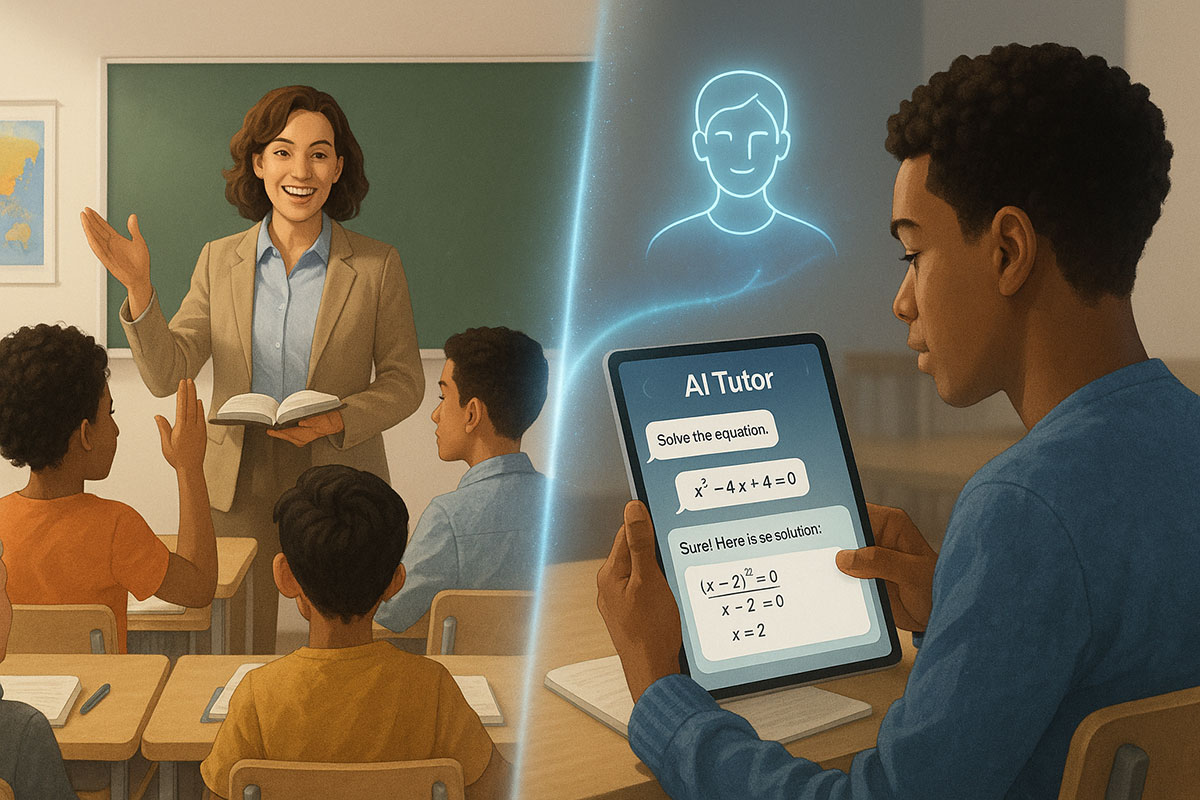
But here's what the data reveals when you dig deeper: human teachers aren't being replaced. They're being redefined.
The Market Reality: Education AI is Exploding—And Teachers Are Leading the Charge
Let's start with the numbers that frame this conversation. The AI in education market hit between $6 billion and $7.57 billion in 2025. That growth trajectory is staggering. Analysts project the sector will reach $30.28 billion by 2029, with a compound annual growth rate of 41.4%. This isn't a niche market. This is mainstream adoption at scale.
But here's what matters more: teachers are driving this, not resisting it. Sixty percent of all teachers now use AI-powered tools in their daily work. In K-12 specifically, 63% of educators have incorporated generative AI technology into their teaching—a 12% increase year-over-year. More importantly, 69% of teachers now say AI tools have improved their teaching methods and skills. That's a far cry from wholesale rejection.
The adoption curve tells a story of pragmatism. Teachers aren't ideological about this. They see tools that save them hours every week—and they're taking them.
What AI Does Brilliantly (And What It Still Can't Touch)
To understand whether human teachers have a future, you need to understand where the genuine boundary lies. AI tutoring systems are exceptional at specific tasks. They excel at:
Personalized pacing and feedback loops. Intelligent tutoring systems can analyze each student's learning pattern, identify misconceptions in real-time, and adjust difficulty dynamically. Research shows students using AI tutoring score significantly higher on post-tests compared to traditional instruction—with effect sizes around 0.63, accounting for ceiling effects. Students also report feeling more engaged and motivated.
Administrative labor reduction. Teachers spend roughly 25-30% of their work hours on grading, attendance tracking, scheduling, and documentation. AI can automate all of this. Teachers report that AI-based tools could take up to 45% of routine tasks off their plates, freeing them for actual teaching.
Scalable tutoring. In regions with teacher shortages or underfunded schools, AI tutoring platforms provide access to personalized instruction that would otherwise be impossible. This is genuinely transformative for equity.
24/7 availability. A human teacher cannot be in five students' homes at midnight answering questions. An AI tutor can.
But here's where the boundary hardens: AI tutoring systems cannot teach judgment. They cannot model intellectual curiosity or ethical reasoning. They cannot detect when a student is struggling emotionally and needs compassion rather than more practice problems. They cannot inspire a child to pursue a field they never considered before. They cannot build the mentor-mentee relationships that often change lives.
One study noted that while AI tutoring outperforms in-class active learning on standardized assessments, what it doesn't do is develop the deeper thinking, argumentation skills, and conceptual flexibility that emerge from dialogue with humans who care about your growth as a person.
The Jobs That Are Safe (And Those That Aren't)
The anxiety about teacher employment often conflates two distinct questions: Will teaching jobs disappear? And will the nature of teaching work transform? The answer to the first is almost certainly no. The answer to the second is absolutely yes.
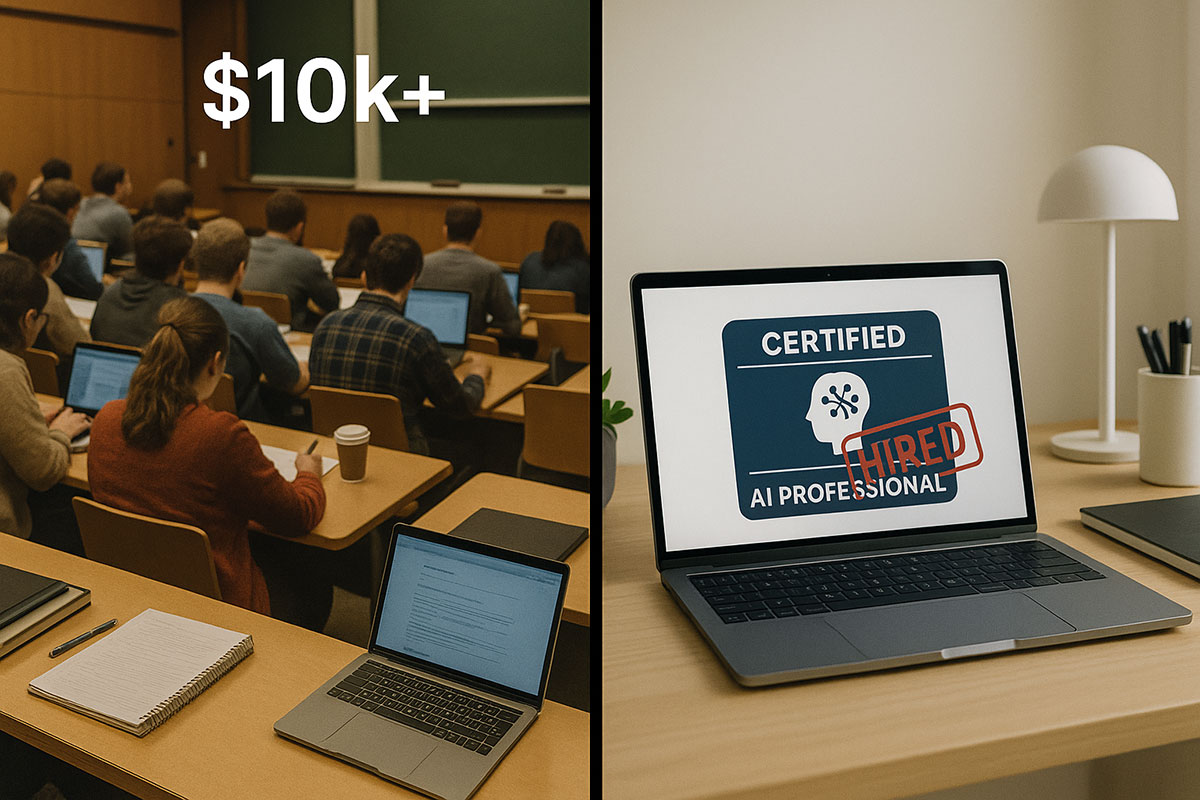
Jobs at highest risk: Traditional tutoring roles are contracting. Students paying $50-100/hour for private tutoring in basic subjects are increasingly opting for AI alternatives at $20/month or less. Administrative roles focused purely on data entry, grading standardized tests, and managing routine compliance documentation are shrinking. Districts are not eliminating these positions; they're redeploying staff into higher-value work.
Jobs experiencing strong demand: Teachers who excel at mentorship, project-based learning, ethical guidance, and emotional support are increasingly valued. Schools using AI-powered learning management systems don't reduce staff. Instead, they expand roles like instructional coaches, learning specialists, and counselors. UNESCO and McKinsey forecasts both predict teacher demand will keep climbing through 2035—largely because personalized learning increases the need for human guidance.
The data shows this empirically. Districts that have rolled out adaptive platforms and AI lesson-planning tools report no staff reductions. What they report instead is role shift: teachers spend less time grading, more time coaching students through complex projects. They become curators of AI-generated resources rather than content creators from scratch. They focus on deeper interventions for struggling students, armed with real-time data about where the gaps are.
The Skills That Make Teachers Irreplaceable
If you're in education or considering it as a career, knowing which skills are becoming more valuable is critical.
Domain expertise still matters, but it's evolving. A physics teacher who simply delivers textbook content is increasingly redundant. A physics teacher who can design experiments, guide discovery, and help students see physics in the real world is increasingly valuable. The shift is from knowledge delivery to knowledge application and synthesis.
Emotional intelligence becomes the core competency. Teachers who can detect when a student is disengaged, frustrated, or struggling emotionally are doing work AI cannot replicate. This isn't soft skill territory anymore. Research on teacher well-being and student outcomes shows that relationships are the foundation of learning, especially for students from disadvantaged backgrounds.
AI fluency and pedagogical integration. Teachers who understand how AI works, where it's useful, and where it's harmful are in demand. Forward-thinking schools are establishing AI competency programs for educators. The teacher of 2025 doesn't have to be a programmer. They do have to understand how to integrate AI tools thoughtfully into their curriculum.
Critical thinking about AI itself. As students increasingly use AI, teachers who can guide responsible use, detect when AI is being misused to bypass learning, and teach students how to evaluate AI outputs are invaluable. This is a new form of literacy that didn't exist five years ago.
Creativity and curriculum design. Once AI handles lesson delivery and basic assessment, teachers who can imagine new ways to engage students—through project-based learning, interdisciplinary units, community partnerships—become central rather than peripheral.
Teacher Anxiety: Real Challenges and Real Solutions
Let's acknowledge something important: teacher anxiety about AI is not irrational paranoia. It's a rational response to genuine disruption, compounded by a critical gap in support.
Research published in 2025 found that educational anxiety had a significant negative effect on teacher well-being. The sources of this anxiety are concrete: competence anxiety (not knowing how to use AI effectively), role anxiety (questioning their professional value), and existential anxiety (whether teaching as they know it will survive).
But the same research identified three factors that dramatically reduce this anxiety:
First, actual experience using AI. Teachers who apply AI technology in their classrooms report significantly lower anxiety than those who haven't tried it. Anxiety often stems from the unknown. Once teachers see AI in action—see how it frees up grading time, see how it generates ideas they wouldn't have thought of—much of the anxiety dissipates.
Second, understanding how AI actually works. Teachers who understand AI's capabilities and limitations are far less anxious than those who believe AI is either all-powerful or entirely useless. The more teachers learn about AI, the lower their anxiety becomes.
Third, organizational support. When schools provide training, create safe spaces to experiment, and establish clear governance about what AI can and cannot be used for, teacher anxiety drops significantly. When schools leave teachers to figure this out alone, anxiety spikes.
The implication is clear: if schools want to retain experienced teachers and attract new ones, they need to invest heavily in training and support. A 2025 Carnegie Learning report found that while 74% of schools provided AI training—a massive increase—51% of educators still identify lack of training and support as a major challenge. The gap between need and provision remains substantial.
The Emerging AI-Education Careers You Haven't Heard Of
While traditional teaching roles are transforming, new specialties are emerging. These represent genuine opportunities for educators and career-shifters.
AI literacy educators: As schools implement AI tools, they need teachers who can train colleagues, design AI integration strategies, and help students use AI responsibly. These roles command premium compensation and offer genuine career growth.
Learning experience designers: Beyond traditional instructional design, schools need professionals who can blend human and AI instruction, deciding when students should work with tutors and when they should work with AI. This is part curriculum expert, part technologist.
Educational data scientists: Schools are swimming in student data from AI systems. They need educators who understand both pedagogy and data analysis to extract insights and improve outcomes.
Ethical AI consultants for education: As AI becomes embedded in education, questions of fairness, bias, privacy, and algorithmic transparency become critical. Educators who can speak both the language of pedagogy and the language of AI ethics are in high demand.
Curriculum architects for AI-augmented learning: Rather than writing lessons, these professionals design frameworks that blend human teaching with AI tutoring, deciding what each does best.
What the Data on Student Outcomes Actually Shows
Here's the critical finding that often gets buried: AI tutoring systems in studies show consistently positive effects on student learning compared to traditional instruction. Meta-analyses examining 28 K-12 studies with nearly 4,600 students found that intelligent tutoring systems led to measurably better learning outcomes.
But—and this is crucial—AI tutoring's advantage is greatest for specific, measurable academic skills: procedural knowledge, test scores, computational fluency. In areas like conceptual understanding, transfer of learning to new contexts, and higher-order thinking, the advantage shrinks.
This is exactly what you'd expect. AI is brilliant at managing practice and feedback. It's less sophisticated at developing the kind of flexible, creative thinking that emerges from dialogue with humans who ask unexpected questions and model intellectual humility.
The implication: students benefit most from a hybrid model. Foundational skill building with AI tutors (faster, more efficient, available 24/7). Conceptual deepening and complex problem-solving with human teachers. Critical thinking and ethical reasoning with human mentors.
Salary Implications: A Clearer Picture
Teacher salaries have stagnated in many developed countries, creating real retention challenges. AI changes this in contradictory ways.
On one hand, entry-level tutoring roles—high school students tutoring middle schoolers, for instance—are being displaced by AI. The economics are simple: one AI system serving 1,000 students costs a fraction of what paying 20 human tutors would cost.
On the other hand, as schools recognize that truly effective education requires human teachers for the high-order cognitive and emotional work, they're beginning to increase compensation for teachers willing to work at this level. Schools that integrate AI aren't cutting teacher salaries across the board. They're consolidating positions, increasing specialization, and raising pay for teachers who manage the human-intensive, high-impact work.
The pattern mirrors what happened in other sectors: when technology displaced routine work, it increased demand for sophisticated expertise. The teaching profession is experiencing this transition now.
Why Human Teachers Become More Important, Not Less
Here's the counterintuitive insight: as AI handles more routine education tasks, human teachers become more valuable, not less. Here's why:
Personalization requires someone to care. An algorithm can personalize the difficulty of a practice problem. It cannot care whether you're struggling because of academic gaps or because your parents just divorced. It cannot adjust its teaching not just to your learning style but to your emotional state, your aspirations, your sense of what's possible for someone like you. This human element is foundational to education.
Motivation and inspiration scale poorly. Algorithms can encourage persistence through rewards and feedback loops. They cannot inspire. They cannot tell you about the time they failed and how they recovered. They cannot share why a subject matters to them personally. These human connections are disproportionately important for students from disadvantaged backgrounds who often don't see themselves in fields like science and mathematics.
Education is about becoming, not just knowing. At its deepest level, education is the transmission of values, intellectual integrity, and a sense of what's possible. This is not content delivery. It's formation. It requires a human who embodies what they're trying to cultivate in others.
As AI handles the knowledge-transfer and skill-building components of education, the formation component—the part that actually matters most for flourishing—becomes the teacher's central work. This is not a demotion. It's recognition of what teaching really is.
The Realistic Outlook for 2025 and Beyond
The honest version: teaching is changing faster than most teachers expected, and not all teachers will adapt comfortably. Some will retire earlier than planned. Some will struggle and ultimately leave the profession. Some will thrive, seeing AI as a powerful tool that lets them do what they love more effectively.
But the research and the data from districts already implementing these systems consistently point to the same conclusion: teaching jobs are not disappearing. Teaching jobs are evolving. The routine, repetitive, knowledge-delivery portions of teaching are being automated. The mentoring, creative, ethical, human portions are becoming more central and more valued.
If you're considering a teaching career, you need to prepare for that evolution. Develop AI literacy now. Think about where your deepest strengths lie—coaching students through complex problems, helping struggling learners, building inclusive communities. Get comfortable with change. Most importantly, remember that the core reason teaching matters hasn't changed: students need humans who believe in them, who model intellectual excellence, who help them become who they're capable of becoming. AI is a tool for that work. It's a powerful tool. But the work itself remains deeply human.
Related Reading