Introduction: A World Divided on AI's Future
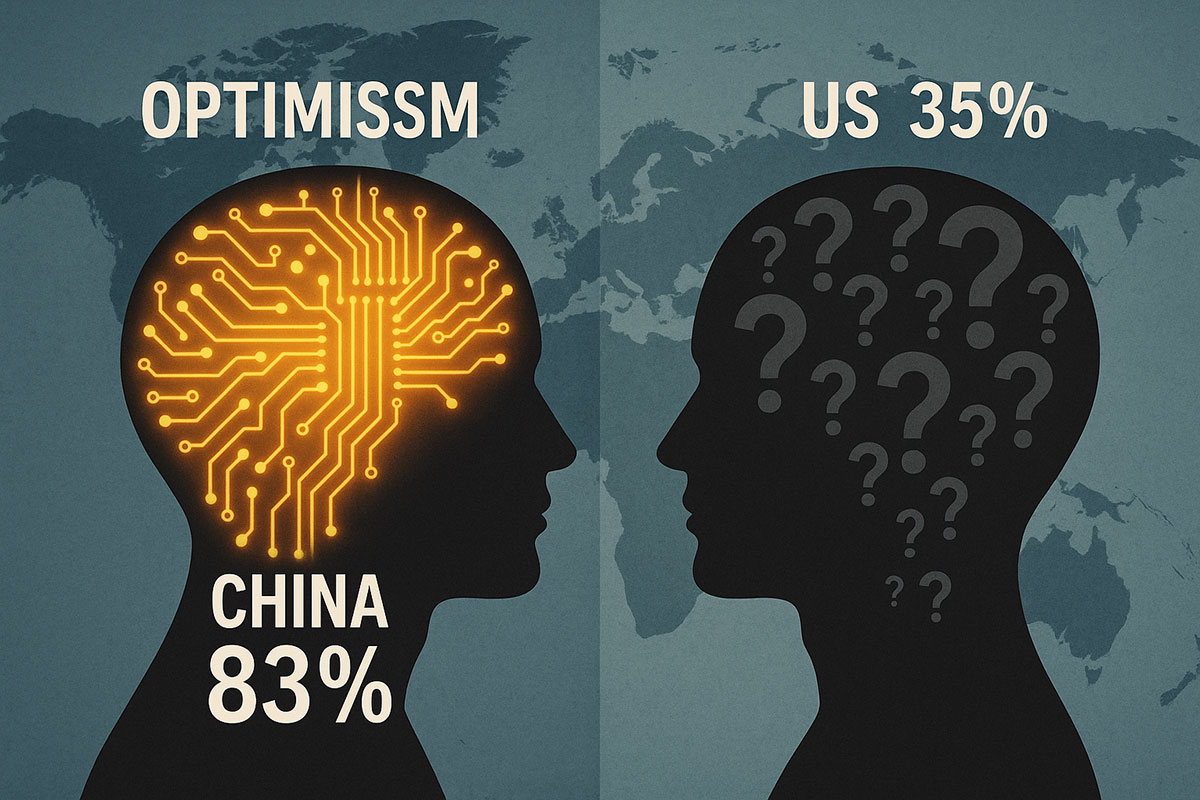
The global conversation about artificial intelligence is not one conversation, but many. In 2025, stark contrasts define the international AI landscape. From the halls of Brussels where the landmark EU AI Act has taken effect, to the tech hubs of Silicon Valley and Shenzhen, nations are forging dramatically different paths toward an AI-powered future. Perhaps most telling is the chasm in public sentiment: while an overwhelming 83% of citizens in China are optimistic about AI's potential, only about 39% in the United States share this positive outlook. This "Global AI Divide"—encompassing regulation, public trust, and strategic ambition—is shaping one of the most significant technological and geopolitical stories of our time.
The Regulatory Battlefield: Three Divergent Paths
The approach to governing AI is a primary fault line in the global divide. The world's major economic powers have adopted distinct regulatory philosophies, each reflecting its unique political, economic, and social values.
The European Union: The Precautionary Regulator
The EU has firmly established itself as the world's most assertive AI regulator with the full implementation of its EU AI Act. This landmark legislation takes a risk-based approach, strictly prohibiting AI systems deemed to pose an "unacceptable risk," such as social scoring by governments. It imposes stringent requirements on "high-risk" AI applications in sectors like employment, critical infrastructure, and law enforcement. The EU's strategy is clear: foster innovation, but only within a robust framework of fundamental rights and safety. This aligns with its broader digital strategy, exemplified by the GDPR, positioning the bloc as a global standard-setter for the responsible use of technology.
The United States: The Innovation-First Player
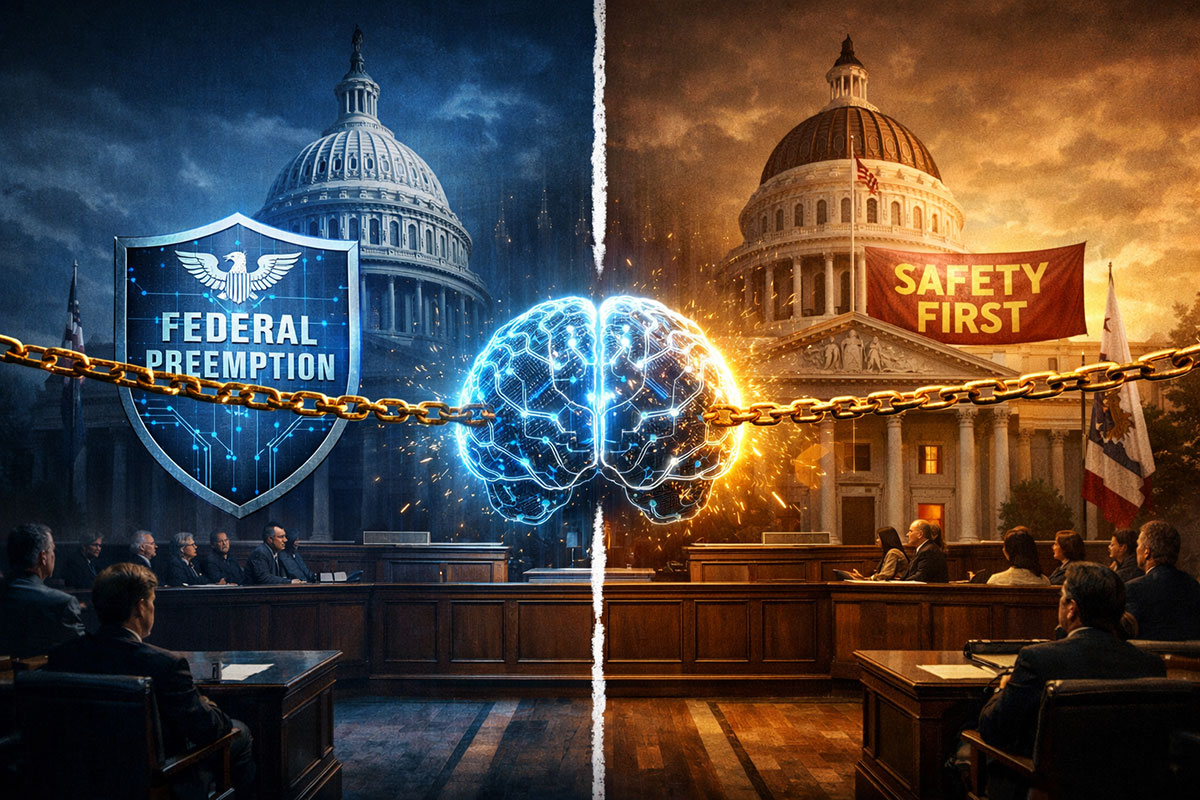
In contrast to the EU's comprehensive legislation, the United States has pursued a more fragmented, "pro-innovation" path. Rather than a single, overarching AI law, governance has been shaped by a pro-innovation Executive Order and a patchwork of state-level regulations and agency-led guidelines. The U.S. strategy emphasizes unleashing private sector innovation and maintaining a competitive edge, particularly against China. The focus is on establishing voluntary standards and investing in AI research and development, with a lighter touch on prescriptive regulation that could stifle the nascent industry.
China: The Sovereign Controller
China's approach to AI is deeply intertwined with its national strategic objectives and concept of cyber sovereignty. Its regulations, which have been rolled out swiftly in recent years, focus on maintaining social stability, national security, and the primacy of the state. Chinese AI governance emphasizes strict content control, data security, and the promotion of its domestic tech industry. The government is a dominant driver of AI development, directing significant resources toward achieving global leadership in key technologies by 2030. For China, AI is not just an economic tool but a foundational element of national power and governance.
The Optimism Gap: A Tale of Two Publics
Beyond government policies, a profound and telling divergence exists in public perception. Data from Stanford's AI Index reveals a staggering gap in optimism: approximately 83% of Chinese citizens express a positive outlook on AI's impact on their lives, compared to a mere 35% of Americans. This 48-percentage-point difference is not just a statistic; it is a powerful indicator of the cultural and informational environments shaping AI's adoption.
Several factors contribute to this chasm:
- Media Narratives: Western media often focuses on AI's disruptive potential—job displacement, algorithmic bias, and existential risk. In China, media coverage is more likely to emphasize AI's benefits in national development, social progress, and technological supremacy.
- Government Messaging: The Chinese government actively promotes AI as essential to the nation's "rejuvenation," framing it as a positive and inevitable force. In the US and EU, public discourse is more contentious and pluralistic, featuring a wide range of skeptical and critical voices.
- Data Culture: Differences in cultural attitudes toward data collection and privacy may also influence public comfort levels with pervasive AI systems.
Sovereign AI: The New Strategic Imperative
A key concept emerging from this divided landscape is Sovereign AI. This refers to a nation's capacity to develop and control its own AI ecosystems, ensuring that its data, models, and compute infrastructure remain within its borders and align with its national interests.
For governments, Sovereign AI means building domestic AI infrastructure to comply with data localization laws and reduce dependency on foreign technology. For enterprises, it means creating vendor-independent AI systems to safeguard proprietary data and maintain operational resilience. As Deloitte notes, "Competitive advantage will depend less on model performance and more on governance, secure infrastructure and resilience amid shifting regulations and ecosystems". The race is no longer just about who has the smartest AI, but who has the most secure, controlled, and self-reliant AI stack.
The Leadership Race: Who Will Win?
The question of who is "winning" the AI race is complex, with leaders emerging in different domains. The United States continues to hold a commanding lead in fundamental model development, private investment, and the concentration of top-tier AI research institutions. China demonstrates formidable strength in practical AI applications, patent filings, and the rapid implementation of AI at a massive societal scale. The European Union, while perhaps behind in sheer technological output, is positioning itself as the world's regulatory superpower, whose rules often become de facto global standards through the "Brussels Effect."
This multipolar competition ensures that the global AI divide will persist. Each bloc is leveraging its comparative advantages, and the lack of a universal governance framework means these divergent paths will continue to shape how AI is built and used around the world.
Challenges on the Horizon
Navigating this divided world presents significant challenges for global enterprises. They must contend with:
- Regulatory Complexity: Complying with conflicting regulations across jurisdictions, such as the EU's strict rules versus more permissive regimes elsewhere.
- Data Residency and Control: Managing data governance to meet sovereign AI requirements in different countries, cited by over 50% of AI leaders as a top challenge.
- Fragmented Markets: Adapting AI products and strategies to fit the legal, cultural, and consumer landscapes of different regions.
Conclusion: Navigating a Multipolar AI World
The global AI divide is not a temporary schism but a defining feature of the 2025 technological era. The stark contrasts in regulation, public optimism, and strategic focus between the US, EU, and China are creating distinct AI ecosystems that will have long-lasting consequences. For businesses, policymakers, and citizens, understanding this fragmented landscape is no longer optional. Success in the age of AI will require a sophisticated, nuanced ability to navigate a world where technology is not just a tool, but a reflection of deep-seated national values and ambitions.
Related Reading