Introduction: Robots Learning to See
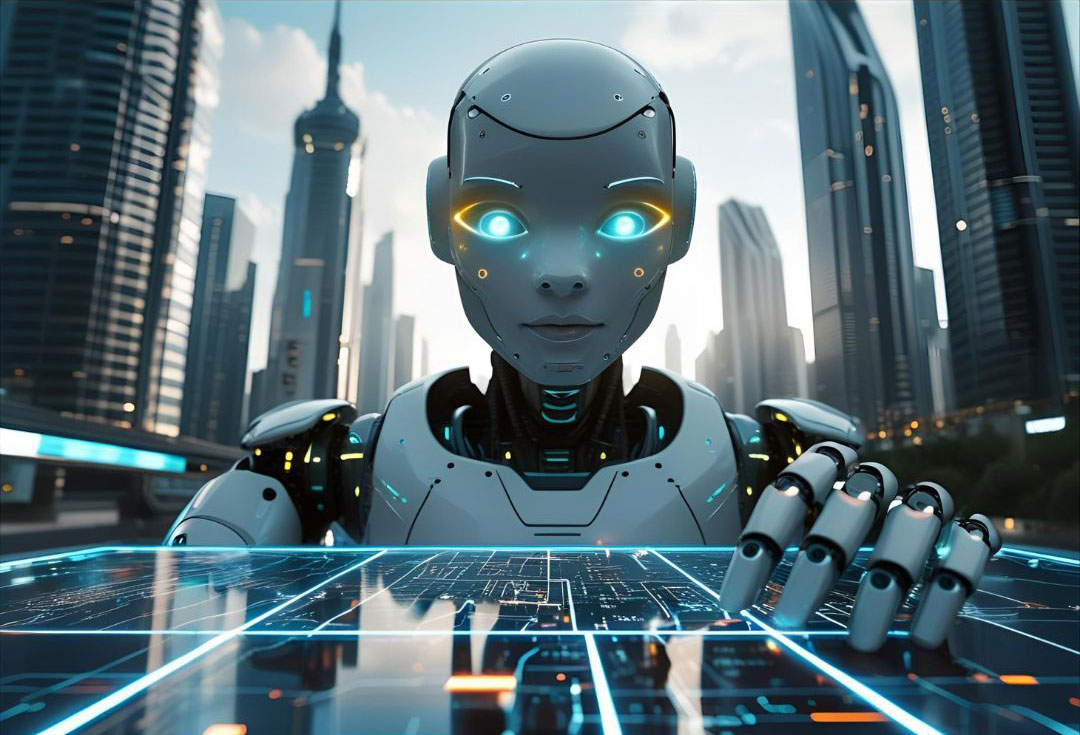
Robots have long been the province of manufacturing—mechanical arms following programmed trajectories, precisely repeating movements millions of times. In 2025, a different breed of robot is emerging. Equipped with computer vision, powered by deep learning, these robots can perceive their environments, understand what they see, and adapt their behavior dynamically.
This transformation is reshaping manufacturing, warehouse operations, healthcare, and research. Understanding how computer vision powers autonomous robots is essential for anyone involved in robotics, manufacturing, or autonomous systems.
What Is Computer Vision?
Core Concept
Computer vision is the AI field focused on enabling machines to see, interpret, and react to visual information. This includes:
- Image Classification: Identifying what is in an image
- Object Detection: Locating and identifying specific objects
- Semantic Segmentation: Pixel-level categorization
- 3D Perception: Understanding depth and spatial structure
- Pose Estimation: Understanding orientation and movement
- Anomaly Detection: Identifying unusual patterns
Why Vision Matters for Robotics
Without vision, robots are blind. They cannot:
- Locate objects they need to manipulate
- Avoid obstacles
- Identify quality issues or defects
- Adapt to environmental variations
- Understand human intentions through gestures
Vision transforms robots from mechanical scripts to adaptive, intelligent systems.
Core Computer Vision Tasks in Robotics
Object Detection and Localization
Robots must find and locate objects. Modern systems use deep learning models (YOLO, Faster R-CNN, RetinaNet) to detect objects and provide their positions and orientations.
Applications:
- Pick-and-place robots in warehouses locating packages
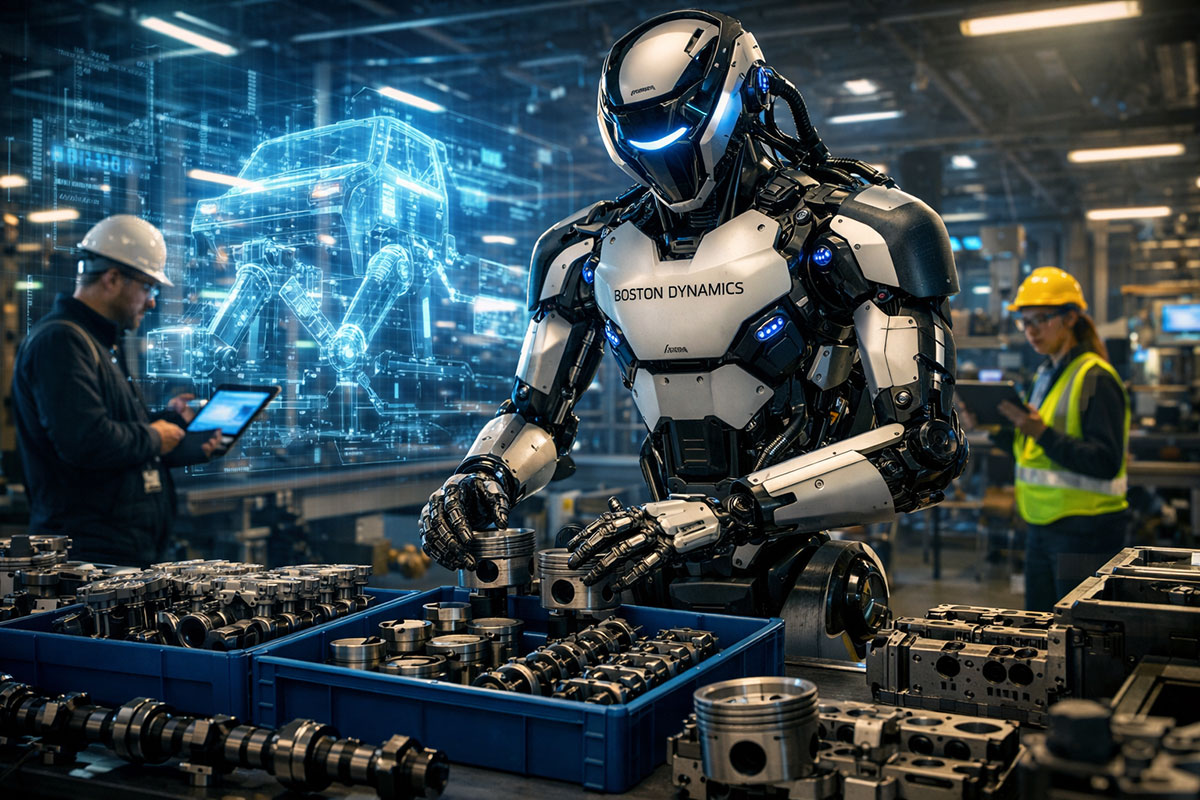
- Manufacturing robots finding components to assemble
- Surgical robots identifying anatomical structures
Pose Estimation
Understanding the 3D position and orientation of objects (or humans). This is critical for manipulation—grasping requires understanding exactly where and how objects are oriented.
Semantic Understanding
Beyond detecting objects, robots need to understand context:
- "That's a fragile object—handle gently"
- "That's a human—move safely"
- "That looks damaged—set aside for inspection"
Semantic segmentation and advanced classifiers enable this contextual understanding.
Real-Time Scene Understanding
Robots need to understand entire scenes, not just individual objects. Scene understanding combines detection, segmentation, and reasoning about relationships.
Technology Enabling Autonomous Robots
Deep Learning Architecture
CNNs dominate robotics vision due to their efficiency, enabling real-time processing on robot hardware. Vision Transformers are emerging for applications where accuracy matters more than latency.
Sensor Fusion
Modern robots combine:
- RGB cameras (color images)
- Depth cameras (3D structure)
- Thermal cameras (heat signatures)
- Lidar (laser-based 3D scanning)
- Proprioceptive sensors (robot joint angles, forces)
Fusing these modalities creates rich understanding of environments.
Real-Time Processing
Robot decisions must be fast. Real-time constraints drive architecture choices—models must run at 30-60 Hz while keeping latency under 100ms.
Sim-to-Real Transfer
Training in simulation then transferring to real robots dramatically reduces real-world training time. Domain randomization helps models trained in perfect simulation work on real, messy environments.
Real-World Applications in 2025
Warehouse Automation
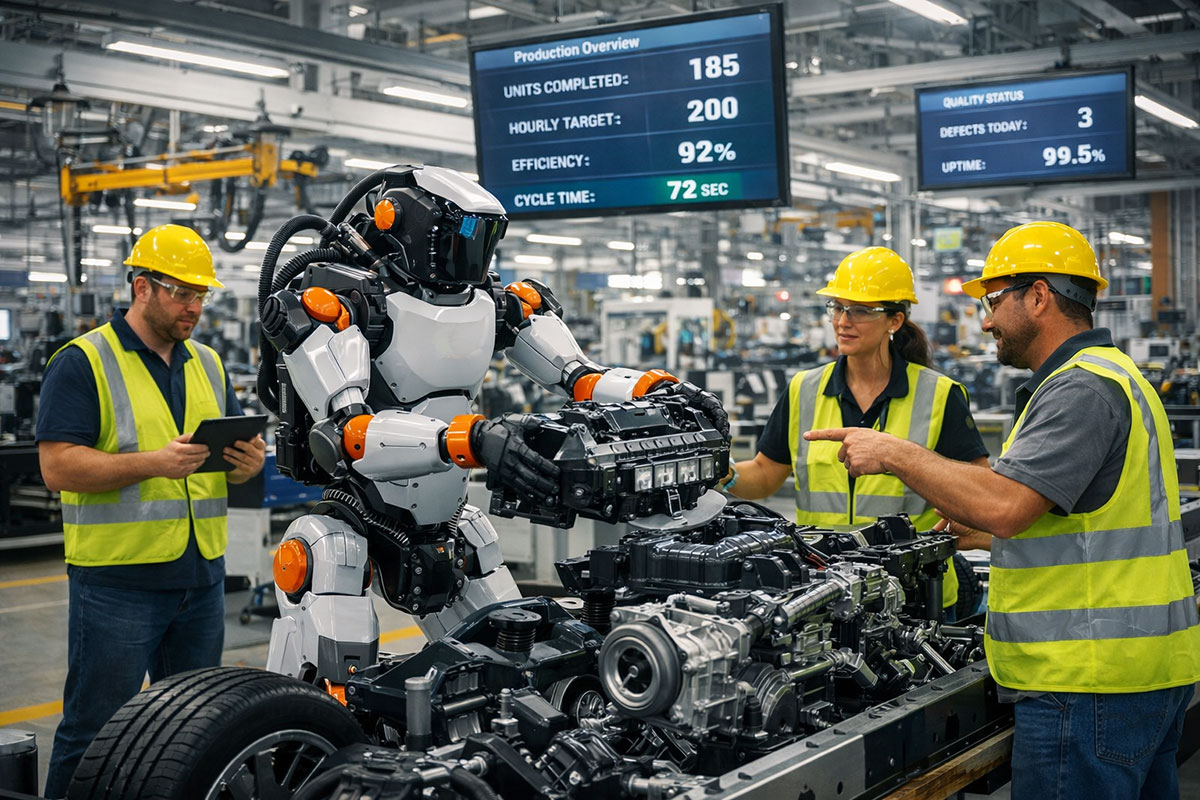
Amazon Robotics uses vision-equipped robots to navigate warehouses, locate packages, and work collaboratively with humans. These robots now handle millions of items daily.
Manufacturing Quality Control
Vision systems inspect products at production line speeds, detecting defects humans would miss. This maintains quality while improving throughput.
Healthcare and Surgery
Surgical robots using computer vision enable minimally invasive procedures. Surgeons see magnified, real-time views while robots provide steady hands and precision.
Autonomous Vehicles
Computer vision powers autonomous vehicle perception, enabling road scene understanding, traffic sign recognition, and obstacle detection.
Inspection and Maintenance
Drones with vision systems inspect infrastructure (power lines, bridges, solar panels) improving safety and reducing human risk.
Research and Exploration
Robots with vision explore challenging environments—caves, space, underwater—gathering data inaccessible to humans.
Challenges and Future Directions
Generalization
Systems trained on one environment often fail in new environments. Enabling robots to generalize across conditions remains challenging.
Long-Horizon Planning
Most systems handle immediate perception and reaction. Multi-step planning involving visual understanding remains frontier research.
Common Sense Reasoning
Humans understand physics, cause-and-effect, and social norms intuitively. Encoding this knowledge into robots is ongoing work.
Safety and Verification
As robots operate autonomously around humans, ensuring safe behavior becomes paramount. Formal verification of vision-based decision-making is an emerging area.
Conclusion
Computer vision is the sense enabling autonomous robots. As vision systems improve and deployment scales, robotics will transition from scripted automation to truly adaptive, intelligent systems that understand and respond to complex environments.
Explore more: warehouse automation, autonomous vehicles, robotics and vision.