Introduction: The New Battleground of AI
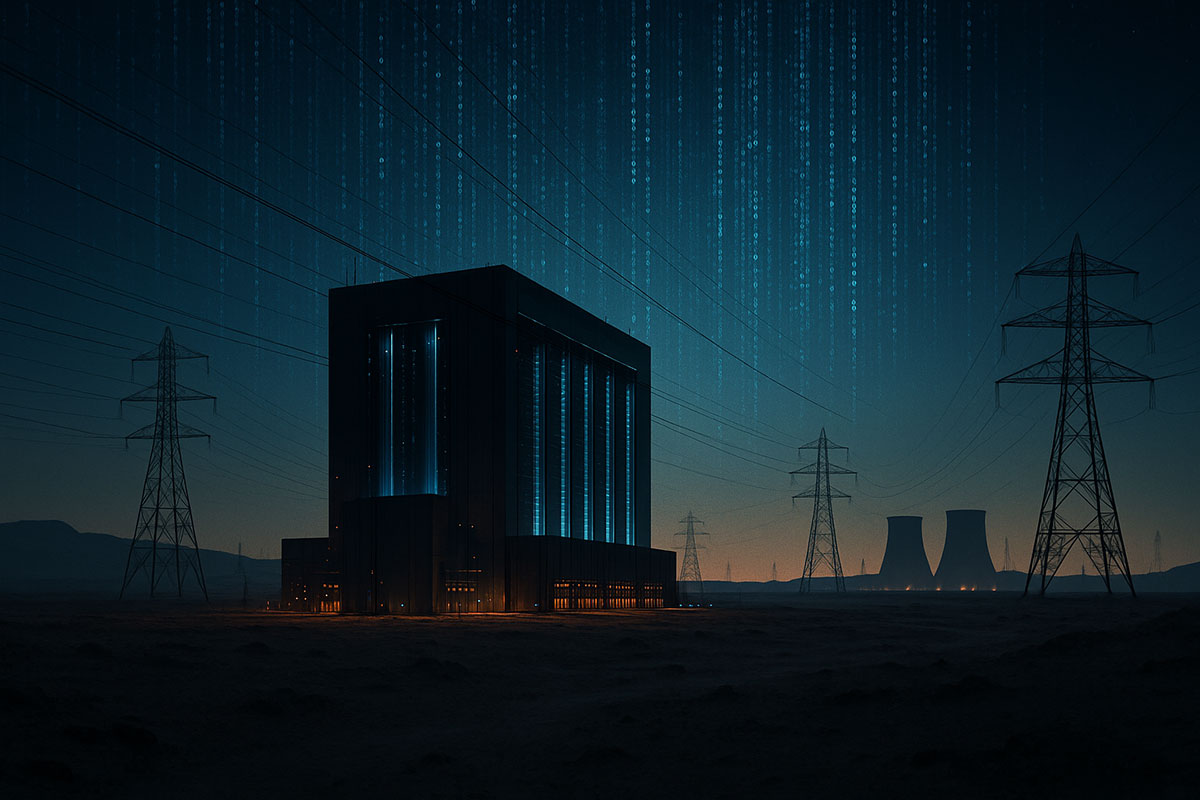
The quest for more powerful artificial intelligence has moved beyond algorithms into the physical world. In 2025, the most significant leaps in AI capability are constrained not by ideas, but by infrastructure—the availability of advanced chips, the construction of massive data centers, and ultimately, access to gigawatts of reliable power. This has triggered an unprecedented global arms race, where tech giants and AI labs are forging multi-billion dollar alliances and launching construction projects of a scale rarely seen before. Understanding this infrastructure layer is key to understanding the future trajectory of AI itself.
The Staggering Scale of Modern AI Deals
To grasp the current moment, one must first appreciate the monumental size of the investments and partnerships being formed. These are no longer simple cloud service agreements; they are long-term strategic commitments that dwarf the IT budgets of many small countries.
The "Stargate" Moonshot
Perhaps the most ambitious project announced is "Stargate," a joint venture between OpenAI, Oracle, and SoftBank. Initially announced as a $500 billion commitment, the project is already ahead of schedule. As of late 2025, the partners have announced five new U.S. sites, bringing the total planned capacity to nearly 7 gigawatts and the investment to over $400 billion within the next three years. This single initiative aims to create a distributed AI infrastructure platform that will power OpenAI's research for the next decade.
Oracle's Landmark $300 Billion Agreement
In a deal that highlights the immense capital required, Oracle revealed a five-year, $300 billion cloud services agreement with OpenAI, set to begin in 2027. The sheer scale of this contract is stunning—it is more than Oracle's total cloud revenue for the entire previous fiscal year. This partnership cements Oracle's position as a leading AI infrastructure provider and signals the hyperscale demand that leading AI labs are forecasting.
NVIDIA's $100 Billion GPU Bet
NVIDIA, the dominant force in AI chips, has committed up to $100 billion to OpenAI in a deal that will deploy 10 gigawatts of GPU-powered compute capacity using its Vera Rubin platform. The first gigawatt is expected to come online in late 2026. This partnership gives NVIDIA a preferred role in OpenAI's infrastructure roadmap and includes deep technical integration. Analysts have noted the circular nature of the deal: OpenAI receives capital from NVIDIA, which it then uses to purchase NVIDIA chips.
The Hyperscalers' Own Build-Outs
Meanwhile, other tech giants are pursuing their own massive builds. Meta is building a 2,250-acre site in Louisiana, dubbed "Hyperion," which will cost an estimated $10 billion and consume about half as much electricity as the entire city of New York at peak power. Amazon has also launched a gigawatt-scale data center in Indiana, reserving all of its power for its partner Anthropic to train the Claude model.
Energy: The Looming Bottleneck
The single greatest constraint on the growth of AI is no longer just the supply of chips—it's the availability of electrical power. The International Energy Agency projects that global data-center electricity demand could more than double by 2030, representing roughly 3% of worldwide electricity usage.
This has created a frantic search for power sources. Utilities are struggling to accurately forecast this new demand, as AI companies often shop the same large project to multiple utilities seeking the quickest access to power. The result is a complex situation where billions in grid investment hang in the balance. Some companies, like Meta, are eschewing the grid entirely, opting to build their own natural gas power plant next to their data centers. As Nvidia CEO Jensen Huang noted, "Data center self-generated power could move a lot faster than putting it on the grid and we have to do that".
How Infrastructure is Shaping the Future of AI Models
The scale of available infrastructure directly influences the kind of AI models that can be built. The "scaling laws" that have driven progress suggest that each meaningful step forward in model quality requires roughly 10x more compute and power. While early models like ChatGPT 3 were trained with less than 10 MW of power, the most advanced models of 2025 used 100 MW. Projects like Stargate are now aiming for 1,000 MW (1 gigawatt) training runs. This means that without access to gigawatt-scale infrastructure, it will be impossible to train the next generation of frontier models, effectively locking all but a few well-funded entities out of the race.
Comparative Table of Major AI Infrastructure Projects in 2025
| Project/Company | Key Partners | Estimated Scale/Cost | Status/Notes |
| Stargate | OpenAI, Oracle, SoftBank | $400B+ / ~7 GW (scaling to 10 GW) | Multiple U.S. sites announced; ahead of schedule |
| Oracle-OpenAI Deal | OpenAI, Oracle | $300B / 4.5 GW | Five-year cloud services deal starting 2027 |
| Meta Hyperion | Meta | $10B / ~2.5 GW | Louisiana data center powered by a dedicated gas plant |
| NVIDIA-OpenAI Agreement | NVIDIA, OpenAI | $100B / 10 GW | GPU-powered compute via Vera Rubin platform |
Conclusion: An Accelerating Race with Real-World Limits
The AI infrastructure arms race shows no signs of slowing. Hyperscale cloud companies are projected to spend hundreds of billions on AI-ready data centers in 2025 alone. However, this breakneck pace is now colliding with the physical limits of the electrical grid, supply chains for critical components, and environmental considerations. The companies and nations that can successfully navigate these constraints—by securing reliable power, innovating in data center design, and forging strategic partnerships—will be the ones that define the next chapter of artificial intelligence. The race for digital supremacy is being built, one gigawatt at a time.
Related Reading